Turkey
Turkeys, specifically the common turkey, are distinguished from other birds by several unique physical features, particularly in adult males. These birds are…
What are the main physical characteristics of turkeys that distinguish them from other birds?
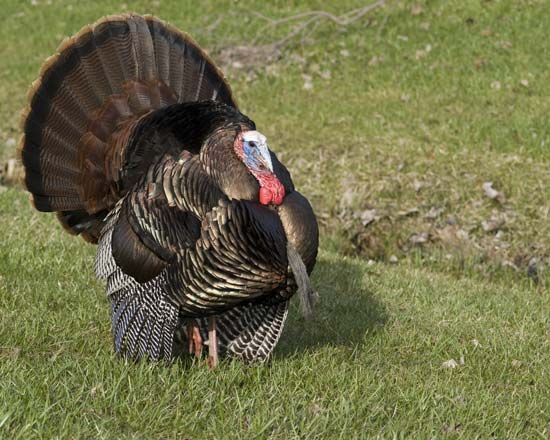
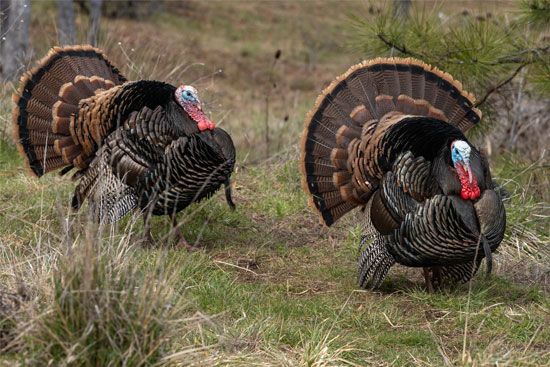
Turkeys, specifically the common turkey, are distinguished from other birds by several unique physical features, particularly in adult males. These birds are characterized by a naked, heavily carunculated (bumpy) head that shifts in color from bright red to white, blue, and red when the bird is excited.1
Other defining anatomical traits include:
- Snood: A long, fleshy ornament extending from the forehead over the bill.1
- Wattle: A fleshy growth located on the throat.1
- Beard: A tuft of coarse, black, hairlike feathers projecting from the breast.1
- Spurs: Prominent growths on the legs.1
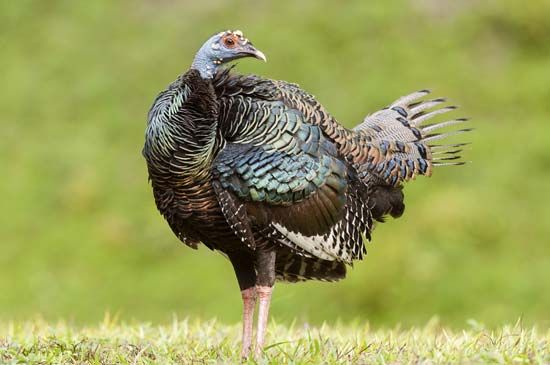
Generally, turkeys are heavy-bodied birds with iridescent bronze and green plumage. While they are the heaviest members of the order Galliformes, they are adapted for ground life and can only fly strongly for short distances. Females are typically smaller than males, weighing about half as much, and possess less warty heads. The ocellated turkey of Central America is further distinguished by a yellow-tipped knob on its crown and peacock-like, bright-tipped feathers.12
How are wild turkeys different from domesticated turkeys?
Wild and domesticated turkeys differ significantly in their physical development, breeding capabilities, and purpose. While wild turkeys are native game birds adapted for life in woodlands, domesticated strains have been selectively bred for meat production.4
Key Differences
- Size and Weight: Domesticated turkeys, particularly modern commercial hybrids, are bred to be much heavier than their wild counterparts to maximize meat yield. While a wild tom typically weighs up to 10 kg (22 pounds), commercial toms can reach market weights of 16–19 kg (35–42 pounds) in a matter of weeks.41
- Breeding: Wild turkeys engage in natural courtship displays and mating behaviors. In contrast, modern hybrid turkeys are often too large for natural breeding and must be artificially inseminated to maintain the population.41
- Purpose and Environment: Wild turkeys are foragers that eat seeds, insects, and small vertebrates, and they are capable of running rapidly or flying short distances to escape danger. Domesticated turkeys are raised in specialized poultry farming environments, ranging from open pastures with agriculture infrastructure to environmentally controlled rearing houses.41
What is the origin and meaning of the term ‘turkey’ for this bird?
The name “turkey” for the North American bird is the result of a linguistic mix-up during the 16th century. When Spanish explorers brought the common turkey from Mexico to Europe, the bird eventually reached England by 1541.56
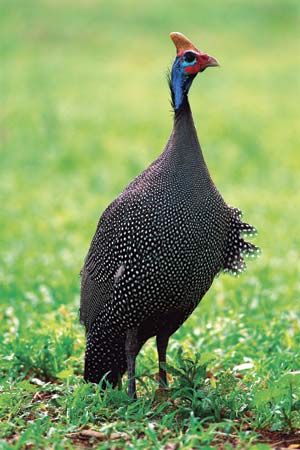
At that time, the English were already familiar with the guinea fowl, which was imported into Europe through the Ottoman Empire. Because the guinea fowl was associated with “Turkish” lands, it was commonly referred to as a “turkey-cock.” When the new, exotic bird from the Americas arrived, the English transferred this existing name to it.6
This naming convention was part of a broader trend in the 16th century where the English attributed many new or exotic imports to the Turks, regardless of their actual origin. For instance, pumpkins were often called “Turkish cucumbers,” and maize was referred to as “Turkish wheat”. Consequently, the name “turkey-cock”—later shortened to “turkey”—became permanently attached to the New World bird, despite its lack of any actual connection to the country of Turkey.51
What are some common predators of turkeys in the wild?
The provided search results discuss the predators of the turkey vulture (Cathartes aura) rather than the wild turkey (Meleagris gallopavo). It is important to distinguish between these two species, as they are biologically unrelated.
According to the available information, the eggs of the turkey vulture are frequently targeted by mammalian predators such as raccoons and foxes. While adult turkey vultures have few natural enemies, they may occasionally fall victim to eagles, hawks, and owls.3
The Britannica knowledge base does not currently contain specific information regarding the predators of the wild turkey (Meleagris gallopavo).
Sources
- Turkey — Encyclopædia Britannica
- Galliform - Size range and diversity of structure — Encyclopædia Britannica
- Turkey vulture — Encyclopædia Britannica
- Poultry farming - Turkeys — Encyclopædia Britannica
- How the Turkey Got Its Name — Merriam-Webster
- turkey — Merriam-Webster
Published on · 3 min read