Udi-Nsukka Plateau
The Udi-Nsukka Plateau is primarily recognized for its geological features and its role in Nigeria's industrial and educational history rather than as a site…
Are there any important cultural or historical sites located on the Udi-Nsukka Plateau?
The Udi-Nsukka Plateau is primarily recognized for its geological features and its role in Nigeria’s industrial and educational history rather than as a site of ancient monuments.
Key locations of historical and cultural significance include:
- Enugu: The capital of Enugu state, this town was founded following the discovery of coal in 1909. Its name is derived from the Igbo words enu Ugwu, meaning “at the top of the hill.” Historically, it served as the regional capital of Eastern Nigeria and was briefly the provisional capital of the secessionist Republic of Biafra in 19671.1
- Nsukka: This town is home to the University of Nigeria, which was founded in 1960 as the first university established in Nigeria after the country gained independence. The area is also known for traditional local crafts, such as weaving.23
While the plateau is defined by its steep escarpments and role in the development of the Nigerian coal industry, it remains a vital center for the Igbo people, who maintain their agricultural traditions across the region.413
How does the climate of the Udi-Nsukka Plateau compare to other regions in Nigeria?
The provided search results do not contain information regarding the specific climate of the Udi-Nsukka Plateau or how it compares to other regions in Nigeria. While the documents detail the plateau’s geography, relief, and economic history, they do not provide data on temperature, rainfall, or climatic classification.
What are the main geographical features of the Udi-Nsukka Plateau?
The Udi-Nsukka Plateau is a nearly continuous elevated region in south-central Nigeria, characterized by the following geographical features:
- Topography and Elevation: The region consists of two main plateaus. The Nsukka Plateau forms an eastward-facing escarpment extending about 80 miles (130 km), while the Udi Plateau continues southward for approximately 100 miles (160 km). The average elevation exceeds 1,000 feet (300 m), reaching a maximum of 1,897 feet north-northwest of Enugu.15
- Escarpments: The plateau is defined by steep, spectacular escarpments to the north and east. The southern end features the Awgu-Okigwi Cuesta.15
- Drainage: The plateau serves as a vital watershed. Tributaries of the Cross River flow over the eastern escarpment, while the headwaters of the Anambra, Adada, and Mamu rivers rise in the west. Additionally, several streams flow north toward the Benue River, and the Imo River originates at the southern scarp.1
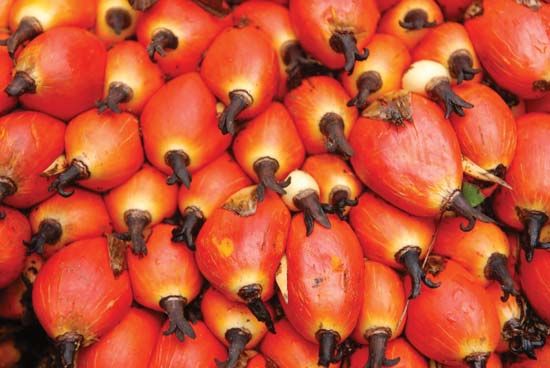
- Landscape and Soil: The terrain is marked by small, round-topped hills and is primarily covered by open grassland with occasional woodlands and oil palm trees. The soil is generally sandy, acidic, and prone to severe erosion.12
What is the significance of the Udi-Nsukka Plateau for the local population and economy?
The Udi-Nsukka Plateau holds significant historical and economic importance for Nigeria. Its discovery of coal in 1909, with mining operations beginning near Enugu in 1915, established Nigeria as the first coal-producing nation in West Africa. This industry was so vital that the railway from Port Harcourt was originally constructed specifically to export coal from these fields.1
For the local population, the plateau is a center of agricultural activity. Despite challenges like poor, acidic, sandy soils and severe erosion, residents cultivate yams and oil palm products as primary crops, alongside cassava, corn, taro, and fruits. However, high population density in the south has led to overworking the land, creating pressure for people to seek livelihoods outside of farming.12
Beyond agriculture and mining, the region supports diverse industries, including food processing, brewing, and furniture manufacturing. The area is also a hub for education, notably home to the University of Nigeria, founded in Nsukka in 1960.2
Sources
- Udi-Nsukka Plateau — Encyclopædia Britannica
- Enugu — Encyclopædia Britannica
- Enugu — Encyclopædia Britannica
- Nsukka — Encyclopædia Britannica
- Nigeria - Relief — Encyclopædia Britannica
- Namib - Drainage — Encyclopædia Britannica
Published on · 3 min read