Aleutian Range
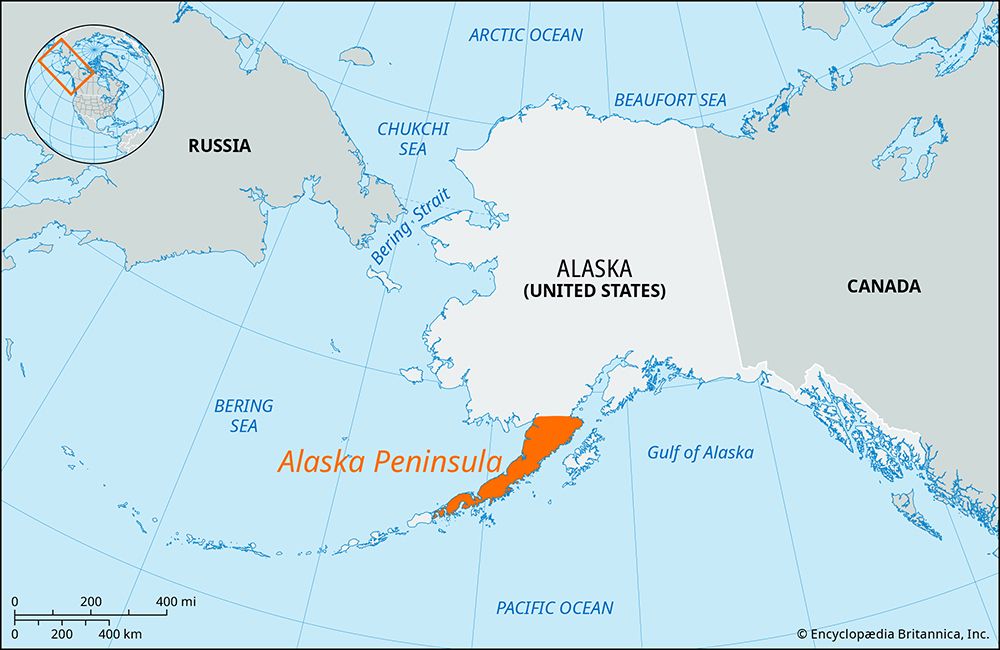
The Aleutian Range is a segment of the Pacific mountain system located in southwestern Alaska, U.S. It extends approximately 600 miles (1,000 km)…
What is Aleutian Range?
The Aleutian Range is a segment of the Pacific mountain system located in southwestern Alaska, U.S. It extends approximately 600 miles (1,000 km) southwestward from the Alaska Range to the head of Cook Inlet.123
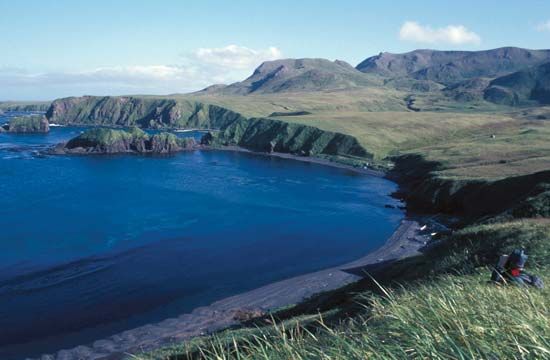
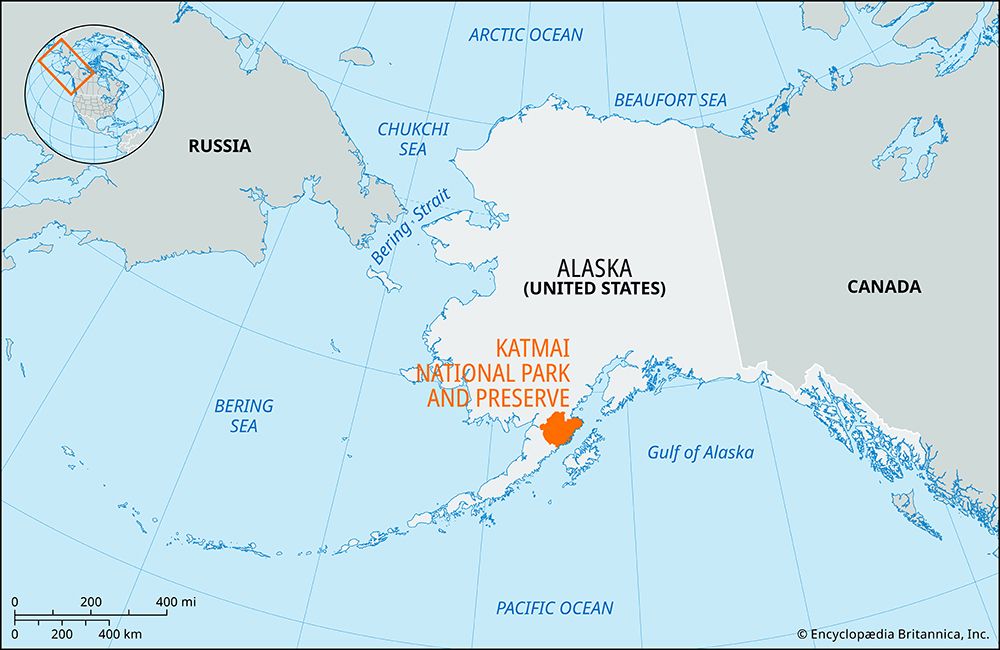
The range stretches the length of the Alaska Peninsula, with the Aleutian Islands serving as its southwestern extension. Characterized by numerous volcanoes, the range includes notable peaks such as Mount Redoubt, Mount Veniaminof, and Mount Katmai., and Mount Katmai. The area is home to several protected regions, including Katmai National Park and Preserve—which contains the Valley of Ten Thousand Smokes—Lake Clark National Park and Preserve, and the Aniakchak National Monument and Preserve. The range is named for the Aleut people who inhabit the region.123
How do volcanoes in the Aleutian Range form?
The volcanoes of the Aleutian Range are formed through the process of subduction, a tectonic event occurring where two of the Earth’s lithospheric plates converge.15
Specifically, the massive Pacific Plate is being forced downward beneath the overriding continental crust of southern Alaska and the Aleutian Islands. As this oceanic plate descends into the mantle, it carries seafloor sediments rich in water and carbon dioxide. These compounds act as fluxes, lowering the melting temperature of the mantle rocks and generating magma.153
This magma, being less dense than the surrounding rock, rises by buoyancy through the overriding plate. As it ascends, the magma may undergo fractional crystallization or assimilate continental crust, which increases its silica content and contributes to the highly explosive nature of these volcanoes. This ongoing convergence and subduction process creates the volcanic chain that defines the Aleutian Range and the Aleutian Islands.5316
What is the significance of the Valley of Ten Thousand Smokes?
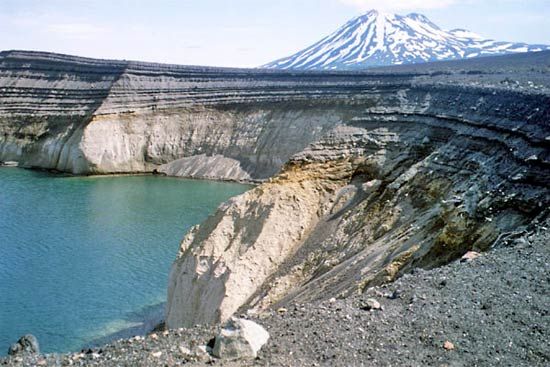
The Valley of Ten Thousand Smokes is a significant volcanic region in southern Alaska, created by the 1912 eruption of Novarupta and Mount Katmai. This event, the largest volcanic eruption of the 20th century, transformed a lush valley into a desolate wasteland covered in up to 700 feet of ash and volcanic debris.1011
Its significance lies in several areas:
- Scientific Research: The valley has been a critical site for geologic and seismological studies, helping scientists understand complex volcanic processes, such as the interaction between magma chambers and the formation of hybrid pumice.10
- Global Climate Impact: The 1912 eruption ejected massive amounts of ash and aerosols into the atmosphere, which reduced solar heat in the northern temperate zone by an estimated 10 percent that summer and likely influenced global weather patterns, including monsoons and droughts.1011
- Historical and Training Value: In the 1960s, the valley’s scarred, moon-like landscape was used to train U.S. astronauts for lunar missions.10
How does the Aleutian Range influence the climate of the region?
The Aleutian Range plays a significant role in shaping the regional climate by acting as a geographic barrier and interacting with complex atmospheric and oceanic systems.
The range falls within a transitional climatic zone, characterized by relatively small temperature variations, significant cloudiness, and frequent precipitation. As moist air from the Pacific is forced upward over the mountains, it undergoes orographic precipitation, where the air cools and releases moisture as rain or snow on the windward side.1213
Furthermore, the region is deeply influenced by the Aleutian low, a persistent low-pressure center formed by the interaction of warm Alaska Current waters with the cold waters of the Bering Sea. This atmospheric system is a primary driver of the maritime polar air masses that dictate weather patterns across the region. The mountains also help define the boundaries between Alaska’s distinct climatic zones, separating the more moderate maritime conditions of the coast from the extreme continental climate of the interior.141512
Sources
- Aleutian Range — Encyclopædia Britannica
- Aleutian Range — Merriam-Webster
- Alaskan mountains - Physiography of the southern ranges — Encyclopædia Britannica
- Alaska - Relief — Encyclopædia Britannica
- mountain - The North American Cordillera — Encyclopædia Britannica
- Alaskan mountains — Encyclopædia Britannica
- island arc — Encyclopædia Britannica
- North America - Cenozoic volcanic fields — Encyclopædia Britannica
- volcano - Subduction volcanoes — Encyclopædia Britannica
- Valley of Ten Thousand Smokes — Encyclopædia Britannica
- Novarupta — Encyclopædia Britannica
- Alaskan mountains - Climate of the Alaskan mountains — Encyclopædia Britannica
- Aleutian low — Encyclopædia Britannica
- Alaska - Climate of Alaska — Encyclopædia Britannica
- Orographic precipitation — Encyclopædia Britannica
- Aleutian Current — Encyclopædia Britannica
Published on · 3 min read