Veratrum
Veratrum is a genus of poisonous perennial herbs belonging to the family Melanthiaceae. Comprising approximately 25 to 30 species, the genus includes plants…
What is Veratrum?
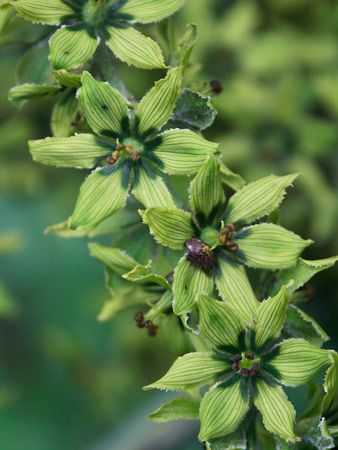
Veratrum is a genus of poisonous perennial herbs belonging to the family Melanthiaceae. Comprising approximately 25 to 30 species, the genus includes plants such as the American hellebore, the European hellebore, and the false hellebore.1
These plants are characterized by flowers that range in color from greenish white to brownish purple, and they are often cultivated as ornamentals. While the plants are toxic, their chemical properties have been utilized for commercial purposes, specifically in the production of insecticides and various medicines. Historically, the term has been associated with various poisonous or medicinal plants, including those in the genus Helleborus.12
Why are Veratrum plants considered poisonous?
Veratrum plants are considered poisonous primarily due to the presence of toxic alkaloids, such as the mixture known as veratrine. These chemical compounds act as potent irritants, which is why the plants are hazardous if ingested or handled improperly.13
While these alkaloids are dangerous to humans and animals, their toxicity is the very property that gives them commercial utility. The same substances that make the plants poisonous are extracted and processed for use in insecticides and certain medicinal applications, where they have historically served as counterirritants.13
We could dive deeper into the specific physiological effects of these alkaloids or explore other poisonous plants that have been historically used in medicine.
What are the differences between true hellebores and false hellebores?
The term “hellebore” is often used to describe two distinct groups of poisonous plants that belong to different botanical families. Distinguishing between them is important due to their unique characteristics and classifications.4
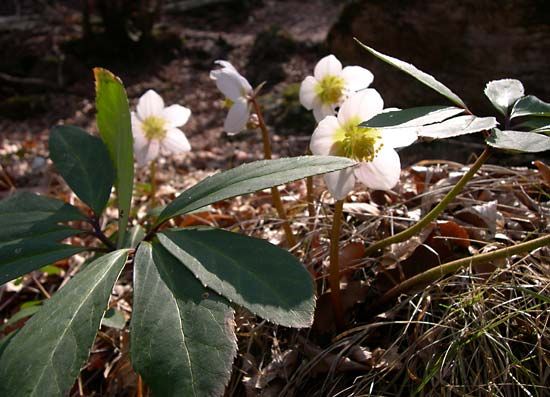
True Hellebores (Helleborus)
True hellebores belong to the buttercup family (Ranunculaceae). Key features include:
- Origin: Native to Eurasia.4
- Structure: These are typically nearly stemless perennial herbs featuring thick roots and long-stalked, divided leaves.4
- Flowers: They produce showy flowers with five petal-like sepals that bloom above the foliage.4
- Examples: Includes the Christmas rose (H. niger), Lenten rose, and stinking hellebore.4
False Hellebores (Veratrum)
False hellebores belong to the family Melanthiaceae. Key features include:
- Origin: Native to damp areas across the Northern Hemisphere.4
- Structure: These plants possess simple, parallel-veined leaves.4
- Flowers: They produce terminal clusters of small, greenish-white to brownish-purple flowers.41
- Examples: Includes European white hellebore and American white hellebore (itchweed).4
How are plant toxins used in modern medicine?
Plant toxins, particularly a class of nitrogen-containing organic compounds known as alkaloids, have been utilized in modern medicine for centuries due to their diverse physiological effects on the human body. While these substances can be highly toxic in their natural state, scientists have harnessed their properties to create life-saving treatments and therapeutic agents.5
The medicinal applications of these plant-derived compounds are extensive:
- Pain Management: Morphine, isolated from the opium poppy, remains a powerful narcotic for pain relief, while its derivative, codeine, is widely used as an effective analgesic.5
- Cardiovascular Health: Quinidine, obtained from Cinchona plants, is used to treat arrhythmias, and ephedrine acts as a blood-vessel constrictor to relieve symptoms of asthma and sinusitis.5
- Surgery: Tubocurarine, derived from the South American arrow poison curare, is used as a muscle relaxant during surgical procedures.5
- Oncology: Certain alkaloids, such as vincristine and vinblastine, are essential chemotherapeutic agents used to treat various types of cancer.5
These examples highlight how substances that function as defensive mechanisms for plants in nature can be refined and regulated to serve vital roles in human healthcare.56
Sources
- Veratrum — Encyclopædia Britannica
- veratrum — Merriam-Webster
- veratrine — Merriam-Webster
- hellebore — Encyclopædia Britannica
- toxins Are Often Found in Nature — Merriam-Webster
- alkaloid — Encyclopædia Britannica
- poison - Classification based on origin — Encyclopædia Britannica
- poison - Poisons of biological origin — Encyclopædia Britannica
- poison - Painkillers — Encyclopædia Britannica
Published on · 3 min read