Verbenaceae
The classification of Verbenaceae has evolved as botanical taxonomy has refined the understanding of plant relationships within the order Lamiales. While…
How has the classification of Verbenaceae changed over time with advancements in plant taxonomy?
The classification of Verbenaceae has evolved as botanical taxonomy has refined the understanding of plant relationships within the order Lamiales. While older systems, such as those referencing the order Polemoniales, once grouped these plants based on broad morphological traits like opposite leaves and irregular flowers, modern molecular and structural analysis has clarified its distinction from the closely related Lamiaceae (the mint family).123
Taxonomists now distinguish Verbenaceae from Lamiaceae primarily through reproductive anatomy. In Verbenaceae, the style arises from the top of the ovary, which is typically unlobed or only shallowly lobed. In contrast, Lamiaceae exhibit a style that arises from a deep central depression in the ovary, and their fruits characteristically separate into four distinct nutlets upon maturity. Furthermore, while Verbenaceae fruits may split, they frequently manifest as berries or drupes, reflecting a different evolutionary specialization compared to the mint family. These advancements have helped stabilize the family, which currently comprises approximately 30 to 31 genera and over 900 species.134
How do the flower structures of Verbenaceae plants differ from other plant families?
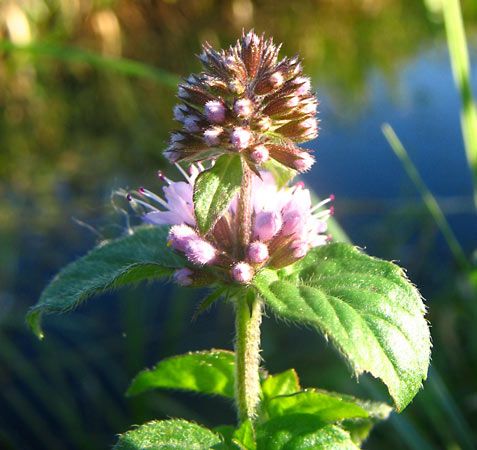
The flower structures of Verbenaceae are characterized by specific morphological traits that distinguish them from other members of the Lamiales order, particularly the Lamiaceae family.13
Key Structural Characteristics
- Symmetry and Arrangement: Like many plants in the Lamiales order, Verbenaceae possess bilaterally symmetric flowers with a single plane of symmetry. These flowers are typically aggregated into spikes, clusters, or racemes, which are generally more loosely arranged than the dense clusters found in mints.143
- Floral Morphology: The flowers usually feature a tube that flares into four or five nearly equal lobes. They typically contain two or four stamens.41
- Ovary and Style Position: A primary diagnostic feature is the position of the style. In Verbenaceae, the style arises from the top of the ovary, which is unlobed or only shallowly lobed. This contrasts sharply with Lamiaceae, where the style emerges from a deep central depression within the ovary.13
- Fruit Development: While both families share a similar ovary structure—two carpels divided into four chambers—their fruits differ. Verbenaceae fruits may split, but they frequently develop into berries or drupes, whereas Lamiaceae fruits consistently separate into four dry nutlets.13
What role do Verbenaceae plants play in various ecosystems?
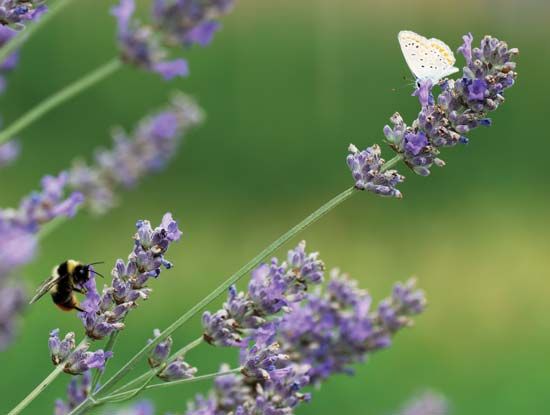
Plants in the Verbenaceae family play diverse roles within their native tropical and subtropical ecosystems in South America, Africa, and beyond. As a group, they contribute significantly to biodiversity and provide essential resources for various pollinators, including insects and birds, which are attracted to their nectar-rich, often brightly colored flowers arranged in spikes, clusters, or racemes.35
Beyond their ecological function as nectar sources, members of the family serve various roles in their environments:
- Habitat and Ground Cover: Species such as Lippia canescens act as effective matting ground covers, helping to stabilize soil and provide habitat structure in their native South American ranges.3
- Forest Composition: The family includes significant woody species, most notably teak (Tectona grandis), which is a vital component of Southeast Asian forest ecosystems and a major timber tree.3
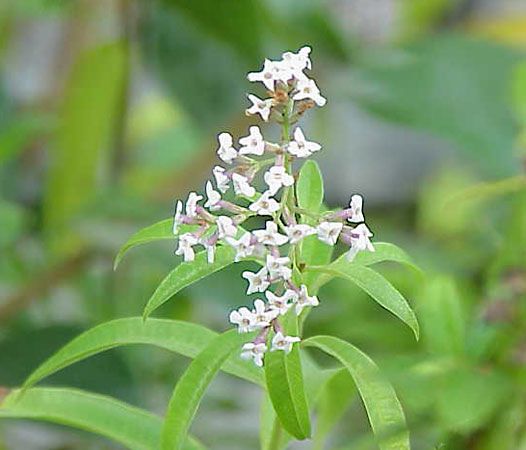
- Ornamental and Aromatic Utility: Many species, such as lemon verbena and various glory-bowers, are valued for their fragrant oils or aesthetic contributions to landscapes, often supporting local pollinator populations in both wild and cultivated settings.35
Which important genera are included in the Verbenaceae family?
The Verbenaceae family comprises approximately 30 to 31 genera and over 900 species, primarily distributed across tropical and subtropical regions. Several genera within this family are notable for their ornamental, medicinal, or economic significance.
Key genera include:
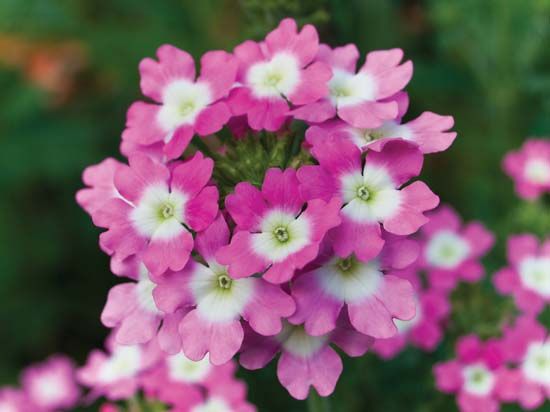
- Verbena: The type genus, containing 200–250 species, mostly native to the Western Hemisphere. It includes various plants often referred to as vervains.36
- Glandularia: A genus closely related to Verbena, which now includes several species formerly classified under Verbena, such as the common garden verbena (Glandularia × hybrida).6
- Tectona: A genus of trees native to India, Malaysia, and the Philippines, most notably including teak (Tectona grandis), a vital timber source.37
- Lippia: A genus of about 220 species, including lemon verbena (Aloysia triphylla), valued for its fragrant oil.34
- Clerodendrum: Commonly known as glory-bower, these are often cultivated for their ornamental value.3
- Petrea: Includes the woody evergreen vine known as purple wreath or sandpaper vine (P. volubilis).34
- Caryopteris: Includes shrubs such as blue spirea or bluebeard (C. incana).3
- Duranta: Known as pigeon berry or golden dewdrop, often grown as an ornamental.3
- Lantana: Includes the common lantana (Lantana camara).4
- Holmskioldia: Includes the Chinese hat plant (H. sanguinea).3
Sources
- Lamiales - Main families — Encyclopædia Britannica
- Verbenaceae — Merriam-Webster
- Verbenaceae — Encyclopædia Britannica
- Lamiales - Verbenaceae — Encyclopædia Britannica
- Angiosperm - Pollination — Encyclopædia Britannica
- Verbena — Encyclopædia Britannica
- Tectona — Merriam-Webster
Published on · 4 min read