Glory-bower
Glory-bower refers to the genus Clerodendrum (also spelled Clerodendron), a diverse group comprising approximately 400 species of herbs, vines, shrubs, and…
What is Glory-bower?
Glory-bower refers to the genus Clerodendrum (also spelled Clerodendron), a diverse group comprising approximately 400 species of herbs, vines, shrubs, and trees native to tropical regions. Belonging to the verbena family (Verbenaceae) within the order Lamiales, many of these plants are cultivated for their ornamental value in gardens.12
The genus includes several notable varieties:
- Common glory-bower (C. speciosissimum): An Asian shrub reaching up to 120 cm, known for its flame-orange flowers and large, heart-shaped leaves.1
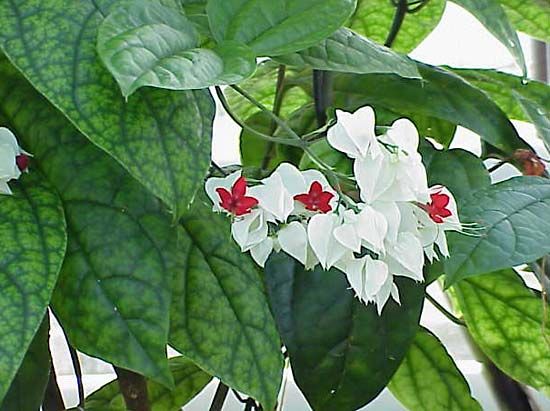
- Bleeding heart glory-bower (C. thomsonae): A woody African vine featuring sprays of blooms that resemble the bleeding heart flower.1
- Scarlet glory-bower (C. splendens): Another African vine characterized by clusters of red-orange flowers.1
Additionally, C. speciosum is a popular hybrid frequently found in tropical gardens, recognized for its red-violet flowers.1
What are the main characteristics of the Verbenaceae plant family?
The Verbenaceae family, also known as the verbena or vervain family, is a diverse group within the order Lamiales consisting of approximately 30 to 31 genera and over 900 species. These plants are primarily distributed across tropical and subtropical regions, though some are native to temperate areas.345
Key Characteristics
- Vegetative Features: Members of this family include herbs, shrubs, vines, and trees. They typically feature opposite or whorled leaves that are usually undivided.36
- Floral Structure: The flowers are generally bilaterally symmetric, consisting of a tube that flares into four or five lobes. They are often aggregated into spikes, clusters, or racemes.34
- Reproductive Anatomy: A defining feature is the ovary, which is unlobed or only shallowly lobed at the top, with the style arising from the terminal position. The ovary is divided into four chambers, each containing one ovule.45
- Fruit: Unlike the mint family, which consistently produces nutlets, the fruit of Verbenaceae is more varied, often appearing as berries or drupes.45
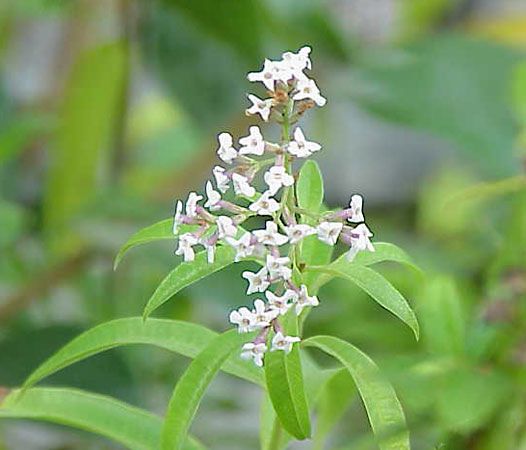
Notable members include teak, lemon verbena, and glory-bower.35
How do tropical plants adapt to their environments?
Tropical plants have evolved a diverse array of adaptations to survive in competitive, resource-dense, and herbivore-heavy environments like the rainforest. These adaptations generally fall into strategies for light acquisition, nutrient management, and defense against consumption.
Light Acquisition and Growth Strategies
Because only about 1 percent of sunlight reaches the forest floor, plants compete intensely for light.7
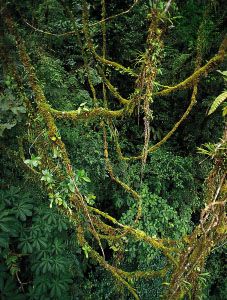
- Climbing and Support: Many plants avoid the energy cost of building large trunks by using other plants for support. Lianas use hook-like devices to climb toward the canopy, while stranglers like the fig tree begin as epiphytes before developing roots that eventually sheath and replace the host tree.7
- Canopy Gaps: Many species remain as dormant seeds or slow-growing saplings in the shade, accelerating their growth only when a gap in the canopy—caused by tree falls—increases light availability.7
- Epiphytism: Epiphytes grow on other plants to access sunlight high in the canopy, obtaining water and nutrients from rain and organic debris rather than the soil.87
Nutrient Management
Nutrients are often scarce at depth, so many plants rely on shallow root systems and symbiotic mycorrhizal associations with fungi to efficiently absorb phosphorus and other minerals from the surface humus.7
Defense Against Herbivory
To counter constant pressure from insects and mammals, plants employ various defenses:9
- Chemical Defenses: Many produce toxic substances like alkaloids, terpenes, or sticky latex to deter herbivores7.
- Structural Defenses: Plants may develop toughened leaves, spines, thorns, or crystalline substances like oxalic acids to make tissues difficult to consume.9
- Strategic Growth: Some plants produce new leaves synchronously to satiate herbivores, while others protect developing leaves with high concentrations of chemical defenses, as young leaves are softer and more nutritious.9
What are some other popular flowering vines grown in gardens?
Beyond the well-known clematis, there are many popular flowering vines frequently used in gardens to soften architectural lines, provide shade, or cover structures like a trellis.
Common woody perennial climbers include:
- Wisteria: Known for its cascading, fragrant flower clusters.
- Trumpet creeper: Valued for its vibrant, tubular blossoms.
- Climbing roses: A classic choice for arbors and fences, offering extended blooming periods.
- Honeysuckle: Popular for its sweet-smelling flowers and ability to attract pollinators.
- Ivies: Often used for their dense, evergreen foliage.
For those seeking rapid, temporary coverage, annual herbaceous vines such as morning glory are excellent options, as are ornamental gourds. These plants utilize various methods to climb, including tendrils or twining stems, allowing them to scale vertical surfaces effectively.1213
Sources
- Glory-bower — Encyclopædia Britannica
- glory-bower — Merriam-Webster
- Verbenaceae — Encyclopædia Britannica
- Lamiales - Main families — Encyclopædia Britannica
- Lamiales - Verbenaceae — Encyclopædia Britannica
- Verbenaceae — Merriam-Webster
- Eating the rainforest — Encyclopædia Britannica
- Tree - Leaf adaptations — Encyclopædia Britannica
- Epiphyte — Encyclopædia Britannica
- Tropical rainforest - General structure of the rainforest — Encyclopædia Britannica
- Angiosperm - Uptake of water and mineral nutrients from the soil — Encyclopædia Britannica
- Clematis — Encyclopædia Britannica
- gardening - Shrubs and vines (climbers) — Encyclopædia Britannica
- vine — Encyclopædia Britannica
- trellis — Encyclopædia Britannica
Published on · 3 min read