What’s the Difference Between Global Warming and Climate Change?
While the terms are often used interchangeably, they refer to distinct concepts. Global warming specifically describes the increase in Earth’s average…
What’s the Difference Between Global Warming and Climate Change?
While the terms are often used interchangeably, they refer to distinct concepts. Global warming specifically describes the increase in Earth’s average surface air temperatures over the past one to two centuries, primarily driven by human activities that release heat-trapping greenhouse gases through the burning of fossil fuels.12
Climate change is a broader term that encompasses global warming but refers to a wider range of long-term shifts in temperatures and weather patterns. While these shifts can occur naturally, human-induced climate change includes consequences of global warming such as:13
- Rising sea levels1
- Shrinking mountain glaciers1
- Accelerated ice melt in the Arctic, Antarctica, and Greenland1
- Altered biological cycles, such as shifts in plant blooming times1
In essence, global warming is a specific component of the more comprehensive phenomenon of climate change.1
What are the primary greenhouse gases contributing to these changes?
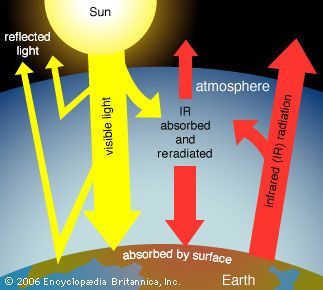
The primary greenhouse gases contributing to global warming and climate change are those that absorb infrared radiation and reradiate it back toward Earth’s surface, thereby trapping heat in the atmosphere. The most significant of these include:45
- Water vapor: The most potent greenhouse gas, its concentration is primarily determined by air temperature rather than direct human activity. As the planet warms, increased evaporation leads to higher concentrations of water vapor, which further amplifies the greenhouse effect.4
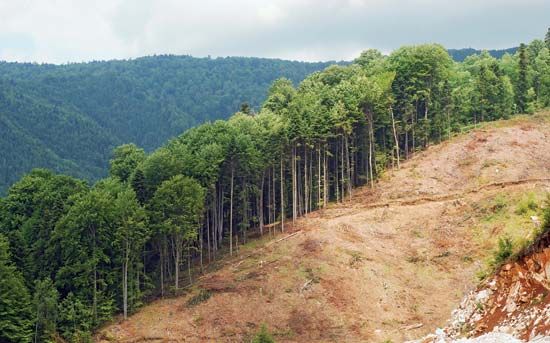
- Carbon dioxide (CO₂): The most prominent greenhouse gas, its levels have risen significantly due to human activities such as the burning of fossil fuels, deforestation, and cement production.46
- Methane (CH₄): While present in lower concentrations than CO₂, methane is a more potent greenhouse gas. Human sources, including livestock farming, rice cultivation, and landfills, account for approximately 70 percent of annual emissions.4
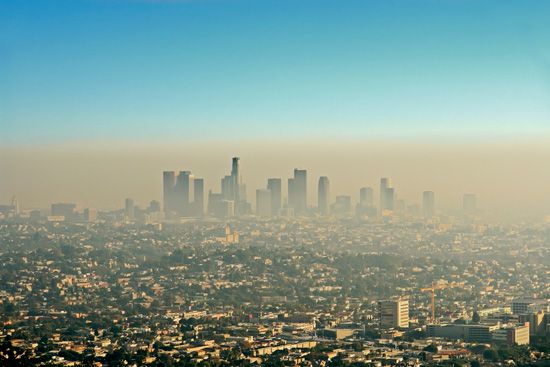
- Surface-level ozone: Unlike stratospheric ozone, this low-level gas is a pollutant primarily formed through photochemical reactions involving human-generated emissions.4
- Nitrous oxide (N₂O) and fluorinated gases: These include substances like hydrofluorocarbons and sulfur hexafluoride, which are largely produced by industrial activities.47
How do rising sea levels impact coastal communities?
Rising sea levels pose severe threats to coastal communities, primarily through increased flooding, storm surges, and erosion, which can displace residents and damage critical infrastructure.8
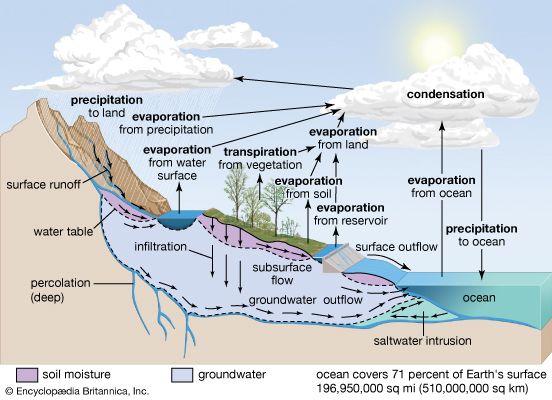
A significant consequence is saltwater intrusion, where seawater infiltrates freshwater supplies. This process contaminates groundwater and aquifers, leading to a scarcity of potable water for drinking and irrigation9. The resulting high salinity can ruin agricultural land, forcing farmers to abandon traditional crops or experiment with salt-tolerant varieties. Furthermore, the contamination of water supplies poses direct health risks, as elevated sodium levels are linked to hypertension, heart disease, and other medical conditions.9
Beyond human health and agriculture, these changes disrupt coastal ecosystems, often leading to the loss of arable land and the degradation of habitats. Mitigation efforts, such as building desalination plants or sea walls, are often extremely costly for local communities.89
What is the difference between weather and climate?
The primary difference between weather and climate is duration. While both are determined by the same atmospheric elements—such as temperature, humidity, precipitation, and wind—they operate on vastly different timescales.1011
- Weather refers to the state of the atmosphere at a specific location over a limited, short-term period, such as throughout a single day or even hour-to-hour. It is highly volatile and changes frequently.10
- Climate describes the long-term summation of atmospheric conditions over an extended period, typically 30 years or more. Rather than just an “average,” climate encompasses the range of variability, extreme values, and the frequency of occurrences within a region.1011
An effective way to visualize this relationship is to compare weather to a single inning in a baseball game, while climate represents the entire game. Because climate provides a stable baseline for a region, even minor shifts can have severe consequences for ecosystems and human agriculture, leading to increased risks from drought or flooding.10
Sources
- Climate change - What are climate change and global warming? — Encyclopædia Britannica
- climate change — Merriam-Webster
- global warming — Merriam-Webster
- 5 Notorious Greenhouse Gases — Encyclopædia Britannica
- Global warming - The greenhouse effect — Encyclopædia Britannica
- Climate change - Human activities — Encyclopædia Britannica
- Global warming - Nitrous oxides and fluorinated gases — Encyclopædia Britannica
- sea level rise: Top Questions — Encyclopædia Britannica
- saltwater intrusion — Encyclopædia Britannica
- What’s the Difference Between Weather and Climate? — Encyclopædia Britannica
- climate — Merriam-Webster
- weather — Merriam-Webster
- Climate — Encyclopædia Britannica
Published on · 3 min read