Volute
A volute is a spiral or scroll-shaped form. This term is used across several fields:
What is volute?
A volute is a spiral or scroll-shaped form. This term is used across several fields:1
- Architecture: It refers to the spiral, scroll-shaped ornament that serves as the defining feature of the Ionic capital.1
- Engineering: In fluid mechanics, a volute centrifugal pump utilizes a spiral-shaped casing to collect fluid thrown radially outward by an impeller, helping to convert velocity head into pressure head.23
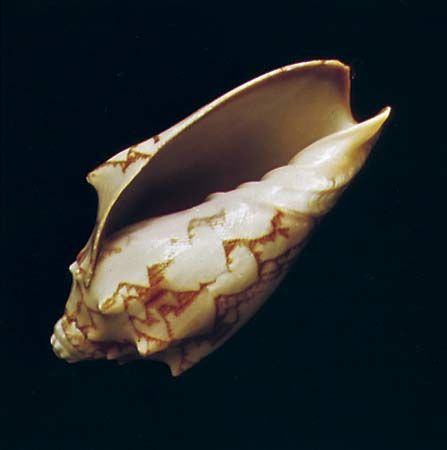
- Biology: The term also describes various marine gastropod mollusks in the family Volutidae, which are characterized by their thick, short-spired shells.1
The word derives from the Latin voluta, meaning to roll.1
What are the different types of classical architectural columns?
In classical architecture, the order refers to a style defined by the specific design of the column and its entablature. There are five major classical orders, each with distinct characteristics:4
- Doric order: The most robust and simplest order. It features a sturdy, tapered shaft (often with 20 flutes) and a capital consisting of a simple necking, a convex echinus, and a square abacus. The frieze is uniquely marked by alternating triglyphs and metopes.4
- Ionic order: Distinguished by its capital, which features scroll-like volutes. The shaft is more slender than the Doric, typically featuring 24 flutes, and the base consists of two convex moldings separated by a concave scotia.4
- Corinthian order: The most elegant and slender order. Its defining feature is an ornate capital decorated with two rows of stylized acanthus leaves and four small scrolls.4
- Tuscan order: A Roman adaptation of the Doric, this order is the plainest and most solid in appearance, characterized by an unfluted shaft and a simple capital.4
- Composite order: A late Roman development that combines the Ionic volutes with the acanthus-leaf decoration of the Corinthian order.4
How does a centrifugal pump convert velocity into pressure?
A centrifugal pump converts velocity into pressure by utilizing the geometry of its casing to slow the fluid down after it has been accelerated by the impeller.
In a standard volute centrifugal pump, the process occurs in two main stages:
- Acceleration: Fluid enters the pump near the center of a high-speed rotating impeller. The impeller’s vanes throw the fluid radially outward, imparting a high velocity (kinetic energy) to the liquid or gas.52
- Conversion: The fluid is then discharged into the surrounding pump casing. This casing is designed with an outlet that widens progressively in a spiral, or volute, fashion. As the flow area increases, the velocity of the fluid decreases. According to the principles of fluid dynamics—specifically the relationship described by Bernoulli’s theorem—this reduction in velocity results in a corresponding increase in pressure head.526
Alternatively, some pumps use a ring of fixed vanes, known as a diffuser, to provide a more controlled diffusion of the fluid, which can lead to a more efficient conversion of velocity into pressure.2
What are some other examples of spiral shapes found in nature?
Spiral shapes are prevalent throughout the natural world, appearing across vastly different scales, from microscopic structures to massive celestial bodies. These forms often follow mathematical patterns, most notably the logarithmic spiral, where the distance between successive turns increases in a geometric progression.7
Examples of these shapes in nature include:
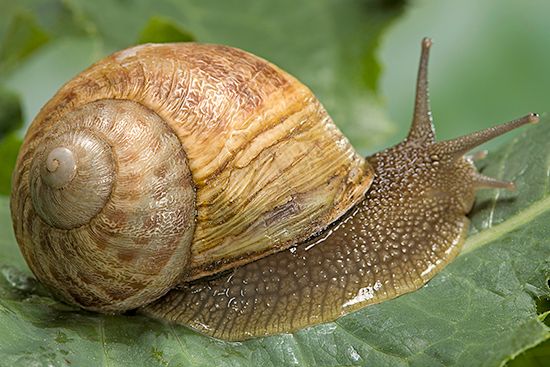
- Gastropods: Many snails exhibit shells based on the logarithmic spiral. These range from flatly coiled forms like Planorbis to elongated, spike-shaped shells such as Turritella or the globose structures of Pomacea.8
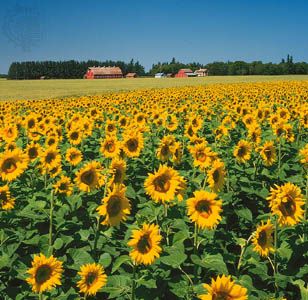
- Plants: The seed heads of sunflowers and daisies feature interpenetrating spirals. These are governed by the Fibonacci numbers and the golden angle, which allow for the most efficient packing of seeds as they grow.9
- Galaxies: Spiral galaxies are characterized by a bright nucleus surrounded by a disk with a superimposed spiral structure. These are classified as either normal spirals or barred spirals, with arms that vary in their degree of coiling and pitch angle.1011
- Other occurrences: Approximate spiral curves are also observed in spiderwebs and certain types of flowers.7
Sources
- volute — Merriam-Webster
- pump - Kinetic pumps . — Encyclopædia Britannica
- volute pump — Merriam-Webster
- Order — Encyclopædia Britannica
- centrifugal pump — Encyclopædia Britannica
- Bernoulli’s theorem — Encyclopædia Britannica
- number symbolism - Nature’s numbers — Encyclopædia Britannica
- spiral — Encyclopædia Britannica
- gastropod - Size range and diversity of structure — Encyclopædia Britannica
- spirals — Merriam-Webster
- Galaxy - Spiral galaxies — Encyclopædia Britannica
- spiral — Merriam-Webster
- Galaxy - Sb galaxies — Encyclopædia Britannica
Published on · 3 min read