Turritellid
A turritellid refers to any gastropod (snail) belonging to the family Turritellidae or the genus Turritella. These marine mollusks are characterized by their…
What is turritellid?
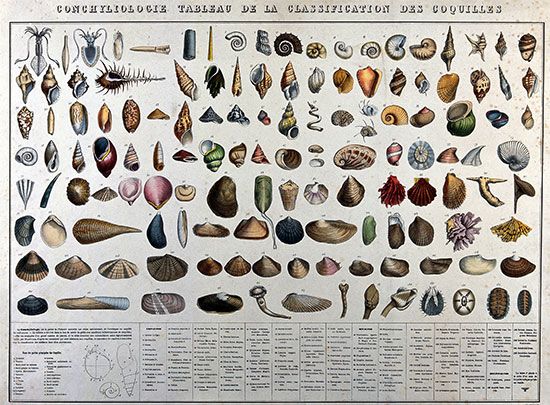
A turritellid refers to any gastropod (snail) belonging to the family Turritellidae or the genus Turritella. These marine mollusks are characterized by their distinctive, elongated, and turreted shells, which feature many whorls that narrow significantly toward the apex. The shells are often decorated with various ridges, lines, or grooves.12
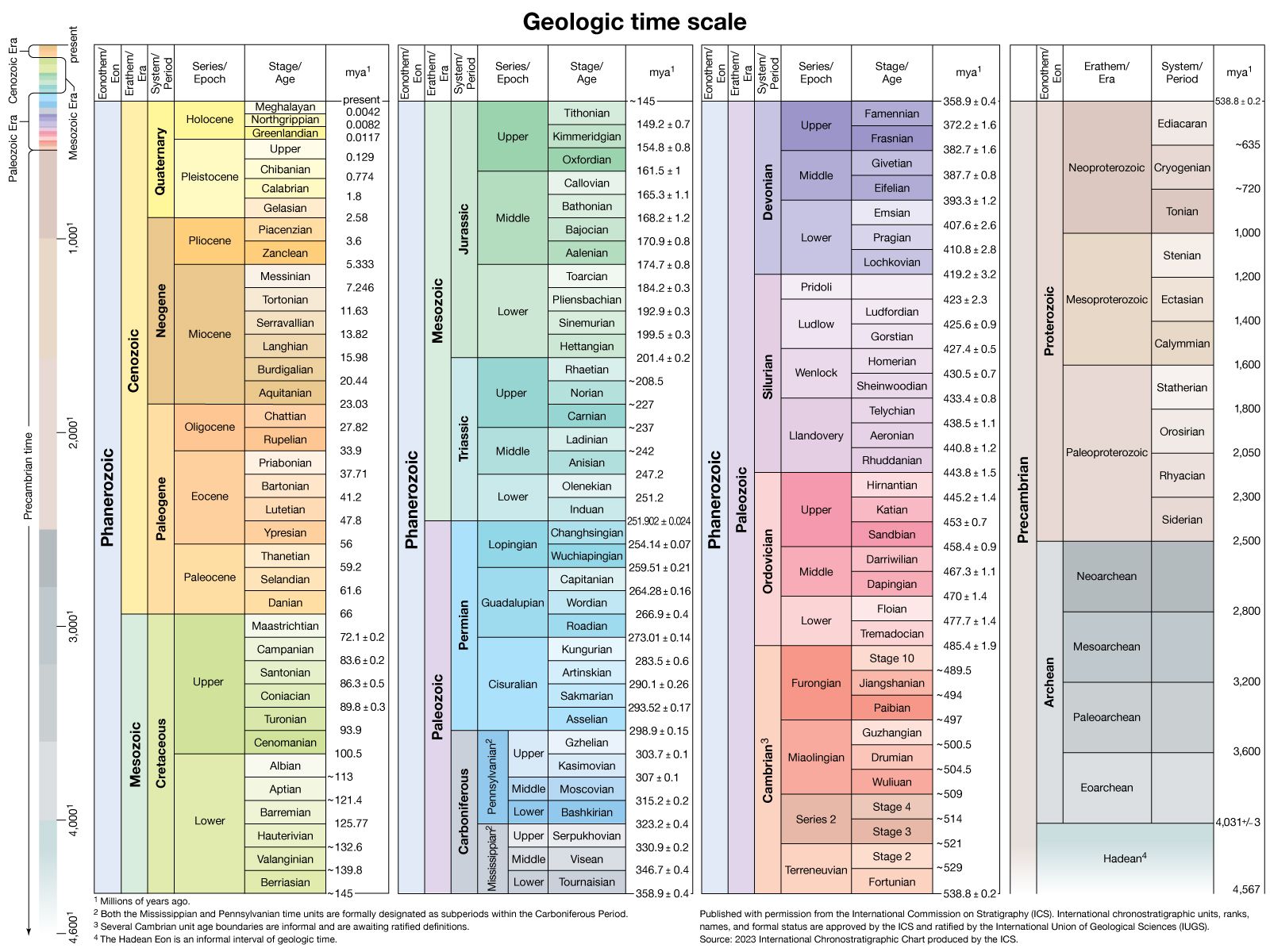
These organisms have a long evolutionary history, with an abundant fossil record dating back to the Cretaceous Period, which began approximately 144 million years ago. They remain present in marine environments today. Because of their elongated shape, they are sometimes referred to as “screw shells”.12
How do scientists use fossils to date rock layers?
Scientists use fossils to determine the relative age of rock layers through the principle of faunal succession, which observes that different rock strata are characterized by unique assemblages of fossils that follow a specific, predictable order of appearance and disappearance over time.45
To effectively date these layers, geologists rely on index fossils (or guide fossils). An ideal index fossil is:
- Distinctive: Easily recognizable to prevent misidentification.64
- Abundant: Sufficiently common to be discovered reliably.64
- Widespread: Found across broad geographic areas.64
- Short-lived: Existed for a brief span of geologic time, allowing for precise correlation of strata.64
By identifying these fossils in separated rock outcrops, geologists can correlate the layers, assuming that strata containing the same index fossils were formed contemporaneously. While this method establishes relative age, it is often calibrated using radiometric dating—which measures the decay of radioactive isotopes—to provide absolute ages for the rock units. Together, these techniques allow scientists to reconstruct the geologic time scale and the history of life on Earth.4578
What are the main differences between gastropods and other mollusks?
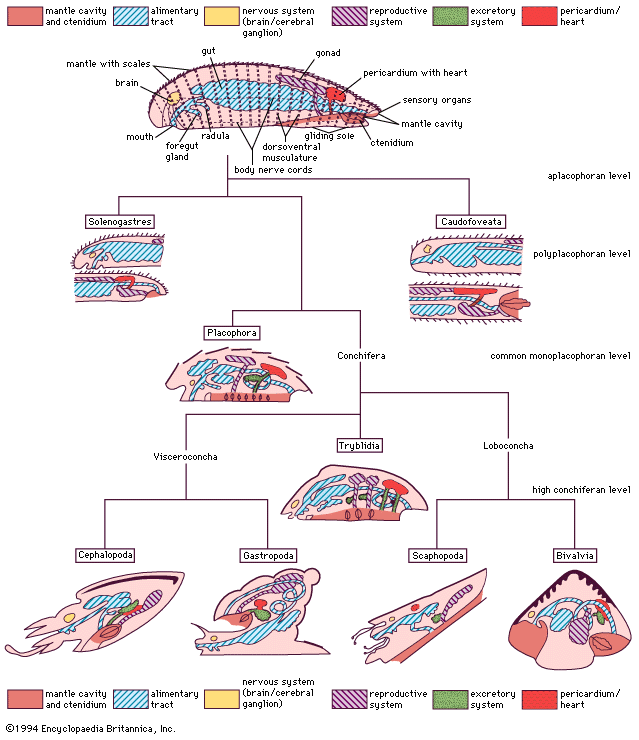
Gastropods represent the largest and most ecologically diverse class within the phylum Mollusca. While all mollusks share fundamental traits—such as a soft body, a mantle that typically secretes a calcium carbonate shell, and a radula for feeding—gastropods are distinguished by several unique evolutionary and structural characteristics.91011
Key Differences
- Torsion: A defining feature of gastropods is torsion, a developmental process where the visceral mass rotates up to 180 degrees relative to the foot. This brings the mantle cavity and anus to a position above the head, a trait not found in other mollusks.11
- Shell and Body Form: While many mollusks have specialized shells (such as the two hinged valves of bivalves or the eight plates of chitons), gastropods typically possess a single, often coiled shell. Many species also feature an operculum, a calcified disk on the foot that seals the shell opening for protection.113
- Habitat Versatility: Gastropods are unique among mollusks for their successful colonization of all major habitats, including marine, freshwater, and terrestrial environments. While other mollusks are almost exclusively aquatic, gastropods have evolved specialized structures like the pulmonary cavity (“lung”) in pulmonates to thrive on land.9123
- Structural Reduction: In many gastropod groups, such as slugs and certain opisthobranchs, the shell has been significantly reduced or entirely lost, a level of morphological flexibility less common in other mollusk classes.9133
How do marine snails protect themselves from predators?
Marine snails employ a diverse array of defensive strategies to survive predation, ranging from physical barriers to chemical warfare and behavioral adaptations.
Physical Defenses
- Shell Protection: The primary defense for many snails is the calcareous shell. When threatened, they can withdraw inside, often sealing the aperture with a hardened plate on the foot called an operculum.1415
- Shell Morphology: Some species have evolved elaborate surface sculptures, such as knobs and spines, to deter predators. In environments with strong currents or waves, snails may adopt a low-profile, cap-shaped form, such as a limpet, to adhere firmly to substrates.1614
- Burrowing: Many gastropods seek safety by burying themselves in sand or mud to hide from predators.14
Chemical and Visual Defenses
- Secretions: Snails may secrete slippery mucus to escape larger predators like sea stars. Others produce noxious chemicals or distasteful acids from mantle cells or salivary glands to discourage consumption.14
- Camouflage and Coloration: Many gastropods use camouflage to blend into their surroundings. Some nudibranchs even ingest the pigments of their food source, such as coral, to match their background perfectly as coral, to match their background perfectly. Conversely, some species use warning coloration to signal their toxicity to potential predators.141718
- Defensive Fluids: Certain gastropods, such as the sea hare, can release colored fluids to distract or confuse attackers.14
Sources
- turritellid — Encyclopædia Britannica
- turritella — Merriam-Webster
- mollusk - Habitats, feeding habits, and associations — Encyclopædia Britannica
- index fossil — Encyclopædia Britannica
- dating - Principles and techniques — Encyclopædia Britannica
- geologic time — Encyclopædia Britannica
- dating - Distinctions between relative-age and absolute-age measurements — Encyclopædia Britannica
- Tertiary Period - Correlation of Tertiary strata — Encyclopædia Britannica
- gastropod — Encyclopædia Britannica
- mollusk — Encyclopædia Britannica
- mollusk - Annotated classification — Encyclopædia Britannica
- gastropod - Evolution and paleontology — Encyclopædia Britannica
- gastropod - Size range and diversity of structure — Encyclopædia Britannica
- mollusk - Features of defense — Encyclopædia Britannica
- gastropod - The shell — Encyclopædia Britannica
- bivalve - Features of defense and aggression — Encyclopædia Britannica
- gastropod - Ecology and habitats — Encyclopædia Britannica
- gastropod - Features of defense — Encyclopædia Britannica
- coloration - Background matching — Encyclopædia Britannica
Published on · 3 min read