Walrus
Walruses are significantly affected by both human activities and the ongoing impacts of climate change in the Arctic.
How are walruses affected by climate change and human activities?
Walruses are significantly affected by both human activities and the ongoing impacts of climate change in the Arctic.
Human Activities
Historically, walrus populations were severely reduced by commercial hunting for their blubber, hide, and ivory tusks. While they are now protected from commercial sealers, they remain subject to subsistence hunting by aboriginal groups. Additionally, broader human industrial activities in the Arctic—such as road building, mining, and the development of oil and gas fields—have caused large-scale surface disturbances and habitat degradation.12
Climate Change
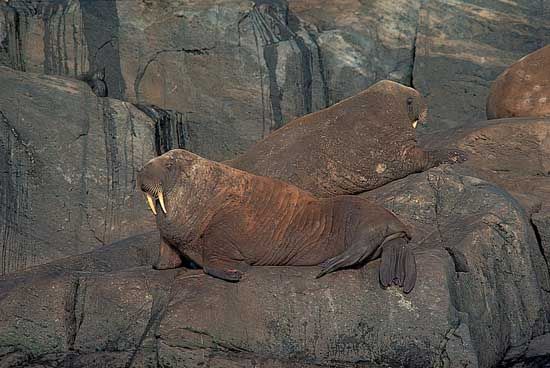
Climate change poses a critical threat to the walrus through the loss of sea ice, which serves as a vital platform for the animals to rest and bask. As global warming causes Arctic sea ice to thin and recede farther north during the summer, the walrus loses essential habitat. This loss of ice cover forces them to alter their natural behaviors, potentially increasing their vulnerability to environmental stressors.134
We could dive deeper into the specific conservation efforts currently in place to protect Arctic wildlife, or explore how other marine mammals are adapting to these changing conditions.
What do walruses eat, and how do they hunt for food?
Walruses are primarily bottom-feeders that forage at depths of less than 80 metres, typically focusing their efforts between 10 and 50 metres below the surface.1
Diet
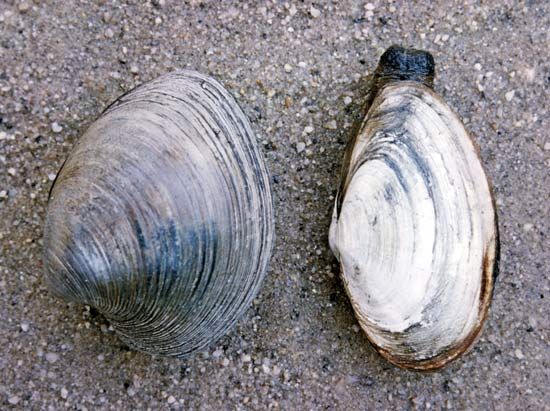
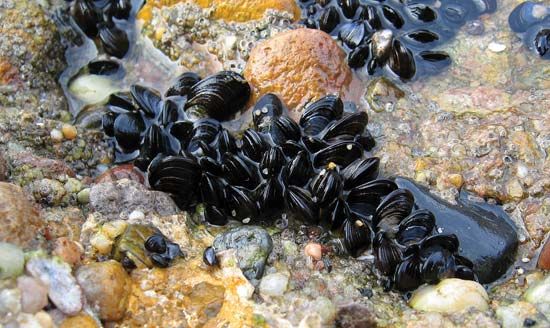
The walrus consumes a diet consisting largely of clams and mussels. While these mollusks make up the bulk of their intake, they also occasionally eat fish and, on rare occasions, small seals.1
Hunting Method
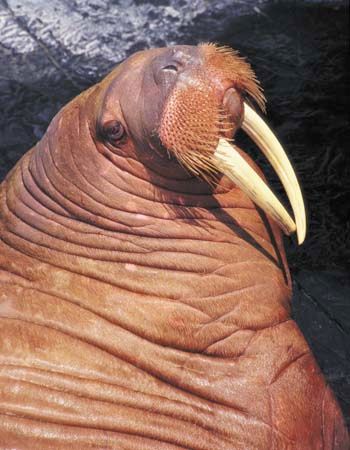
Contrary to popular belief, walruses do not use their tusks to dig for food. Instead, they root along the ocean floor using their snouts. They rely on their highly sensitive, quill-like whiskers—known as vibrissae—to identify and locate prey in the sediment.1
What are the main predators of walruses in the wild?
In the wild, adult walruses have very few natural predators. On rare occasions, they may be killed by polar bears or killer whales.1
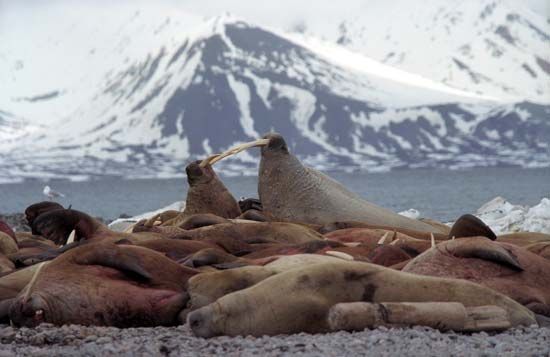
While polar bears are formidable predators in the Arctic, they generally face significant challenges when attempting to hunt a healthy adult walrus due to the walrus’s massive size and defensive capabilities. Walruses use their long, sharp tusks primarily for mating displays and as a means of defense against other walruses and potential threats, such as polar bears.15
How long do walruses typically live, and what is their life cycle like?
Walruses typically live for slightly more than 40 years in the wild.1
Life Cycle
The life cycle of the walrus is characterized by specific reproductive and developmental stages:
- Mating: Males mate with multiple females during the winter. Dominance is determined by body and tusk size, with males performing underwater displays that include clicking and bell-like sounds to attract females.1
- Gestation: Following fertilization, the species undergoes delayed implantation, resulting in a total gestation period of 15 to 16 months.1
- Birth and Development: A single pup is born weighing approximately 60 kg (130 pounds). The calf remains with its mother for two to three years.1
- Maturity: Females generally reach sexual maturity between six and seven years of age, while males reach maturity between eight and ten years of age.1
As a gregarious species, walruses spend much of their lives in groups, hauling themselves onto ice floes or beaches to rest between foraging sessions in Arctic waters.1
Sources
- walrus — Encyclopædia Britannica
- sea ice - The emerging impacts of recent changes to sea ice — Encyclopædia Britannica
- Arctic - Environmental concerns — Encyclopædia Britannica
- Alaska - Climate of Alaska — Encyclopædia Britannica
- polar bear — Encyclopædia Britannica
- 14 Questions About Aquatic Animals Answered - Why is the walrus nicknamed “tooth walker”? — Encyclopædia Britannica
Published on · 3 min read