Polar Bear
The average lifespan of a polar bear varies depending on its environment:
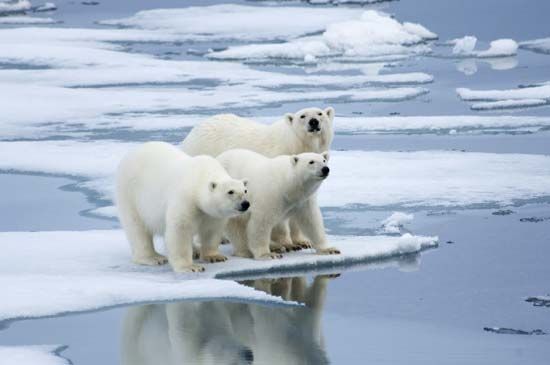
What is the average lifespan of a polar bear in the wild versus in captivity?
The average lifespan of a polar bear varies depending on its environment:
- In the wild: Polar bears typically live between 25 and 30 years.1
- In captivity: Several individuals have been recorded living for more than 35 years.1
While captive environments can sometimes extend longevity, it is important to note that zoos are a subject of ongoing ethical debate. Some studies suggest that certain zoo enclosures may be detrimental to the physical health of large carnivores, potentially leading to issues such as high infant mortality rates for polar bears or other health complications for various species.2
How does the diet of polar bears differ from other bear species?
The primary difference between the diet of polar bears and other bear species is that polar bears are overwhelmingly carnivorous, whereas most other ursids are omnivorous.142
While most bears consume a varied diet including ants, bees, seeds, roots, nuts, berries, and various small animals, the polar bear’s diet is strictly dictated by the Arctic environment, where vegetation is scarce. Their primary prey consists of pinnipeds, specifically ringed seals and bearded seals1. They are also opportunistic predators known to hunt beluga whales and scavenge on stranded whale carcasses or human refuse.451
In contrast, other bear species exhibit specialized dietary preferences:
- Giant pandas: They are unique for their specialized diet consisting almost exclusively of bamboo.62
- Spectacled bears: They are largely herbivorous, favoring assorted vegetation.62
- Sloth bears: They are particularly adapted to feeding on termites and larvae.4
How are polar bears affected by climate change and melting sea ice?
Global warming poses a severe threat to polar bears primarily by reducing the extent and thickness of Arctic sea ice, which serves as their essential habitat for hunting, traveling, and mating.178
The impacts of this habitat loss are multifaceted:
- Reduced Hunting Success: Polar bears rely on sea ice to stalk seals. As ice fragments and melts, the gaps necessary for hunting widen, making it significantly more challenging for bears to capture their primary prey.17
- Nutritional Stress: Longer ice-free seasons have been linked to increased rates of starvation. Ecological studies indicate that bears are increasingly forced to forage for lower-quality food sources, such as berries and seabird eggs, which require more energy to obtain than their traditional seal-based diet.1
- Reproductive Decline: Declining sea ice coverage reduces encounter rates between males and females, which can negatively impact mating success. Furthermore, significant drops in physical condition and reproductive success have been documented in populations like those in western Hudson Bay1.8
Given these compounding pressures, model forecasts suggest that polar bear populations could decline by one-third by 2050.1
What are the unique physical adaptations that allow polar bears to survive in the Arctic?
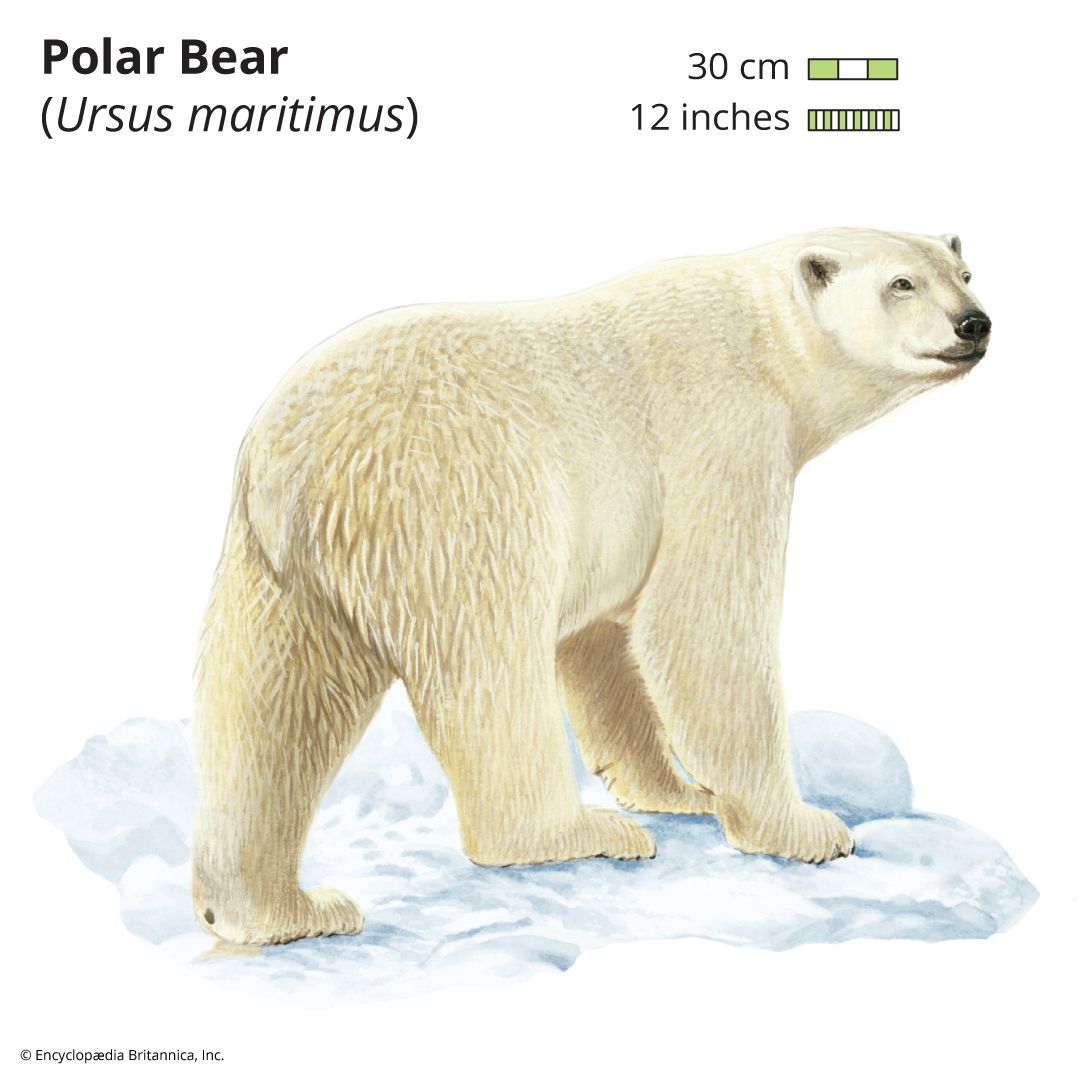
Polar bears possess remarkable physical adaptations that allow them to thrive in the extreme cold of the Arctic:
- Insulation and Heat Absorption: Their fur is composed of hollow, transparent hairs that trap air for insulation and scatter light, giving the bear its white appearance for camouflage. Beneath this, they have a thick layer of fat (up to 4 inches deep) and black skin that absorbs heat from sunlight.115
- Locomotion on Ice: Their broad feet feature hairy soles for insulation and protection. The soles also have uneven skin texture to prevent slipping on ice, while strong, sharp claws provide necessary traction and are used for hunting.5
- Aquatic Specialization: Polar bears are excellent swimmers. Uniquely among four-legged mammals, they use only their front limbs for propulsion while swimming.15
- Hunting Tools: Their physical build, including a long neck and powerful frame, supports their role as apex predators. Their claws are essential for digging through ice and capturing seals, their primary prey.5
Sources
- polar bear — Encyclopædia Britannica
- bear: Top Questions — Encyclopædia Britannica
- Zoos - Con 2: Zoos are detrimental to the animals’ physical health. — Encyclopædia Britannica
- bear - Natural history — Encyclopædia Britannica
- polar bear: Top Questions — Encyclopædia Britannica
- bear — Encyclopædia Britannica
- Global warming: Top Questions — Encyclopædia Britannica
- All 81 References in Fall Out Boy’s “We Didn’t Start the Fire,” Explained - Polar bears got no ice — Encyclopædia Britannica
- sea ice - The emerging impacts of recent changes to sea ice — Encyclopædia Britannica
- Alaska - Climate of Alaska — Encyclopædia Britannica
- Why are polar bears white? — Encyclopædia Britannica
Published on · 3 min read