What Is the Largest Bengal Tiger Ever Recorded?
The largest Bengal tiger on record was an unnamed male killed in Uttar Pradesh in 1967. This tiger measured 3.38 meters (11.1 feet) in length when measured…
What Is the Largest Bengal Tiger Ever Recorded?
The largest Bengal tiger on record was an unnamed male killed in Uttar Pradesh in 1967. This tiger measured 3.38 meters (11.1 feet) in length when measured over the curves of its body and weighed approximately 389 kg (about 858 pounds). Experts believe its exceptional weight was likely influenced by a large meal of buffalo consumed shortly before it was killed.1
Prior to this, a famous tiger known as the “Bachelor of Powalgarh” held the record for over 30 years. Measured at 3.23 meters (10.6 feet), he was a well-known inhabitant of the forests near Pawalgarh in what is now Uttarakhand before being shot by the hunter Jim Corbett in 1930.1
While these individuals were massive, it is important to note that the Siberian tiger is generally considered the largest of all tiger subspecies, capable of reaching even greater lengths and weights.23
How do Siberian tigers differ from Bengal tigers in their physical adaptations?
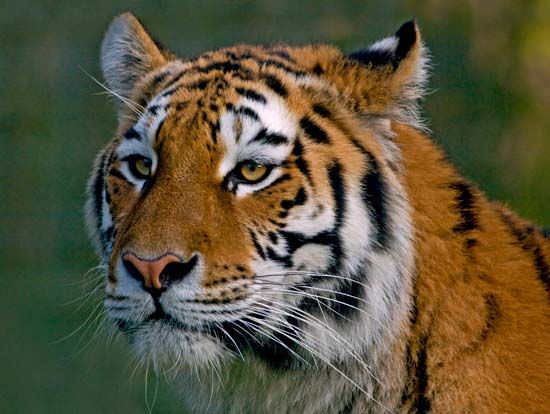
Siberian and Bengal tigers exhibit distinct physical adaptations shaped by their respective environments.
Climate-Driven Adaptations
The Siberian tiger, which inhabits the cold forests of far-eastern Russia and northeastern China, has evolved to conserve heat. Its primary adaptations include:
- Insulation: They possess dense, coarse fur and a layer of body fat that can reach up to 4 cm (about 1.5 inches) in thickness.2
- Size: Their larger body mass helps in heat conservation within the harsh, cold taiga biome.42
Adaptations for Tropical Environments
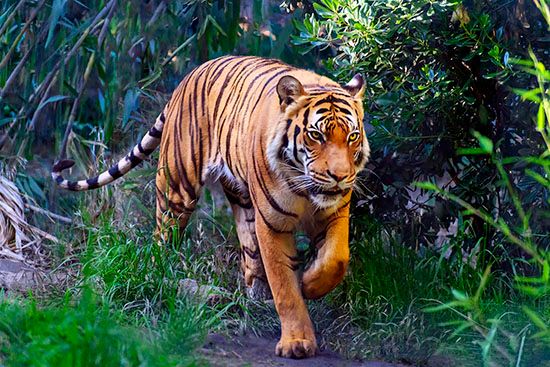
In contrast, the Bengal tiger resides in the hot, humid forests and wetlands of India, Bangladesh, Bhutan, and Nepal. Their physical traits are optimized for these conditions:
- Agility: A slightly smaller body size is more advantageous for navigating dense vegetation and swampy terrain.4
- Appearance: They are distinguished by a more vibrant orange coat compared to the muted tones of the Siberian tiger.2
While both are apex predators, these evolutionary differences highlight how each subspecies has specialized to thrive in its specific geographic range.42
What are the primary threats contributing to the endangerment of wild tiger populations?
The endangerment of wild tiger populations is driven by a combination of human-induced pressures that threaten their survival even in the absence of direct hunting. The primary threats include:
- Habitat Loss and Fragmentation: As human populations grow, vast areas of forest and grassland are cleared for agriculture. This reduces both the quantity and quality of available habitat, forcing tigers into smaller, isolated territories that cannot support viable populations.5
- Poaching and Illegal Trade: Despite being legally protected, tigers are frequently poached for their skins, claws, teeth, and bones. These parts are highly valued in underground markets for use in traditional medicines, tonics, and as status symbols or talismans.56
- Prey Depletion: The reduction of natural prey populations in tiger habitats forces tigers to rely on domestic livestock. This shift often leads to human-wildlife conflict, resulting in retaliatory killings by local communities.5
- Biological Vulnerability: As large apex predators, tigers naturally exist at low population densities and require extensive home ranges. Their low reproductive rates mean that once a population declines, it requires significant time and space to recover, making them highly susceptible to extinction from human activity.7
Why do tigers hold such a significant place in Asian art and mythology?
Tigers hold a profound place in Asian art and mythology, largely due to the deep sense of awe and respect their strength and ferocity have inspired for millennia. This cultural significance manifests in several ways:53
- Mythological and Religious Symbolism: In Hindu mythology, the tiger serves as the vahana (vehicle) of the goddess Durga, symbolizing divine power. Furthermore, some animist communities continue to worship the tiger as a sacred figure.5310
- Cultural Traditions: The tiger is a central figure in the Chinese calendar, where every 12th year is dedicated to the animal. Children born during this year are traditionally believed to be especially powerful and lucky.53
- Historical Representation: Tigers have been depicted in art since the Indus civilization. They were also symbols of imperial authority, such as on the gold coins of the Gupta emperor Samudra, and were used as potent symbols of resistance by figures like Tippu Sultan figures like Tippu Sultan.53
This enduring fascination also drives the persistent, though scientifically unfounded, belief in the medicinal and talismanic power of tiger parts, which continues to influence human interaction with the species today.53
Sources
- What Is the Largest Bengal Tiger Ever Recorded? — Encyclopædia Britannica
- Which is bigger: A Siberian tiger or a Bengal tiger? — Encyclopædia Britannica
- 9 of the World’s Deadliest Mammals - Tigers ( Panthera tigris ) — Encyclopædia Britannica
- Siberian tiger — Encyclopædia Britannica
- tiger - Tigers and humans — Encyclopædia Britannica
- poaching — Encyclopædia Britannica
- tiger: Top Questions — Encyclopædia Britannica
- conservation - Body size and related reproductive characteristics — Encyclopædia Britannica
- tiger - Natural history — Encyclopædia Britannica
- vahana — Encyclopædia Britannica
Published on · 3 min read