What Was the Little Ice Age?
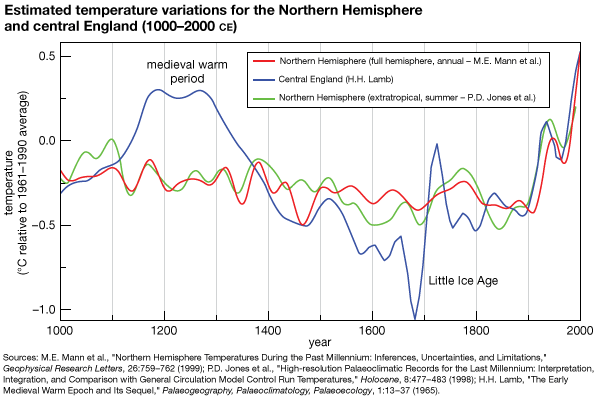
The Little Ice Age (LIA) was a period of global climate variability that occurred roughly between 1300 and 1850 CE, following the Medieval Warming Period.…
What Was the Little Ice Age?
The Little Ice Age (LIA) was a period of global climate variability that occurred roughly between 1300 and 1850 CE, following the Medieval Warming Period. While often associated with cooling, the era was characterized by increased fluctuations in temperature and precipitation across the globe.1
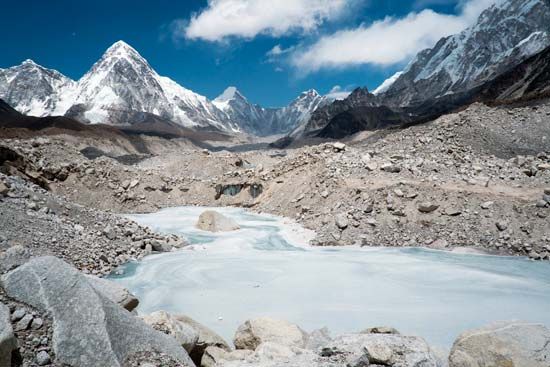
During this time, mountain glaciers expanded in regions such as the European Alps, Alaska, and New Zealand. The period significantly impacted human civilization, particularly in Europe and the North Atlantic, where harsh winters and wet summers led to famines and the collapse of Norse colonies in Greenland.1
The exact causes remain debated, but scientists point to a combination of factors:
- Reduced solar output: Notably during the Spörer Minimum and Maunder Minimum.1
- Atmospheric circulation: Shifts in the North Atlantic Oscillation.1
- Volcanism: Explosive eruptions that reflected solar radiation away from Earth.1
What is the Medieval Warming Period?
The Medieval Warm Period (MWP), also known as the Medieval Climate Anomaly, was a hypothesized climatic interval occurring roughly between 900 and 1300 CE. During this time, relatively warm conditions were reported across parts of the Northern Hemisphere, particularly in the North Atlantic region, Europe, and parts of Asia.3
The existence and extent of this period remain subjects of scientific debate. While some paleoclimatologists argue it was a global phenomenon, others maintain that evidence is limited to specific regions or that data does not show significant global temperature changes. Unlike modern climate trends, the MWP was not a climatically uniform period; for example, while northern regions experienced mild conditions, other areas—such as the North American steppe—faced extended droughts.34
In Europe, the period is often associated with increased agricultural productivity, such as wheat cultivation and vineyards at higher latitudes and elevations than are common today. These conditions likely supported Norse expansion into Iceland, Greenland, and the coasts of North America. Scientists often attribute these warmer conditions to increased solar radiation and a relative lack of volcanic activity.34
How do scientists use ice cores to study past climates?
Scientists use ice cores—long cylinders of glacial ice drilled from sheets in places like Antarctica and Greenland—as vital “proxy records” to reconstruct Earth’s past climate. By analyzing these cores, researchers can look back over 100,000 years to understand historical shifts in temperature and atmospheric composition.56
Key methods of analysis include:
- Isotopic Analysis: Scientists measure the ratio of oxygen and hydrogen isotopes in the ice. Because these ratios are influenced by air temperature and the source of moisture at the time of snowfall, they serve as a direct indicator of past climate variations.15
- Atmospheric Sampling: Tiny air bubbles trapped within the ice preserve samples of the ancient atmosphere. By extracting and measuring these gases, researchers can determine historical concentrations of carbon dioxide and methane, revealing links between greenhouse gases and climate change.15
- Dust and Chemical Analysis: The presence of microparticles and dust helps scientists track atmospheric circulation patterns, while measuring sulfate concentrations allows them to identify and date historical volcanic eruptions that influenced global temperatures.15
What is the North Atlantic Oscillation?
The North Atlantic Oscillation (NAO) is an irregular fluctuation of atmospheric pressure over the North Atlantic Ocean that significantly influences winter weather patterns across Europe, Greenland, northeastern North America, and North Africa.7
The phenomenon is characterized by a “seesaw” shift in pressure between two primary systems: the Azores high in the central North Atlantic and a low-pressure system near Iceland.78
- Positive Mode: A strong pressure gradient exists between the high and low systems. This strengthens westerly winds, funneling storms toward northern Europe and bringing warmer, wetter winters to that region and northeastern North America.7
- Negative Mode: The pressure gradient is weak, which slows the westerly winds. This allows cold, dry Arctic air to penetrate northern Europe and often results in harsher, snowier winters for eastern North America.7
Scientists use the NAO index to track these shifts, which can occur annually or persist over decades. Some researchers suggest that long-term “locking” into these modes may have influenced historical climate events, such as the Medieval Warm Period and the Little Ice Age.7
Sources
- Little Ice Age — Encyclopædia Britannica
- Little Ice Age — Merriam-Webster
- Medieval warm period — Encyclopædia Britannica
- Climate change - Centennial-scale variation — Encyclopædia Britannica
- Pleistocene Epoch - Ice-core records — Encyclopædia Britannica
- ice core — Encyclopædia Britannica
- North Atlantic Oscillation — Encyclopædia Britannica
- Atlantic Ocean - The North Atlantic — Encyclopædia Britannica
- North Atlantic Oscillation — Merriam-Webster
Published on · 3 min read