Peace Lily
The peace lily (genus Spathiphyllum) is a group of flowering plants native to tropical regions of the Americas and Southeast Asia. Despite their name, they…
What is Peace lily?
The peace lily (genus Spathiphyllum) is a group of flowering plants native to tropical regions of the Americas and Southeast Asia. Despite their name, they are not true lilies and do not cause the acute kidney failure associated with Lilium or Hemerocallis species.12
Characteristics
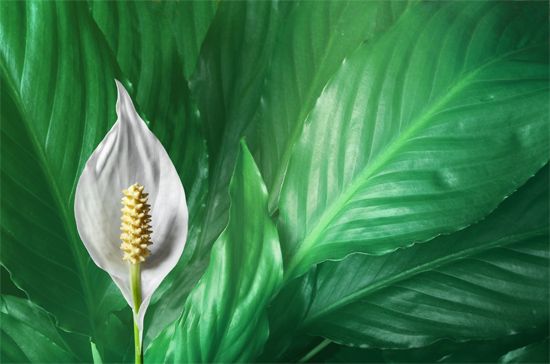
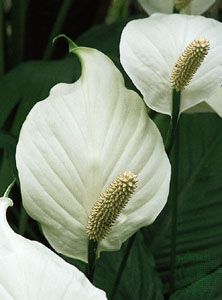
Peace lilies are perennial monocots known for their shiny, dark-green foliage. Their signature appearance comes from a white, petal-like bract called a spathe, which surrounds a cream-colored spike known as a spadix where the actual, minute flowers are located.1
As a Houseplant
Popular as houseplants, they are valued for their ease of care and ability to thrive in low light. They are also noted for their air-purifying qualities, having been shown to remove chemicals such as benzene and formaldehyde from indoor airbenzene) and formaldehyde from indoor air.13
Safety Note
While not as deadly as true lilies, peace lilies are mildly toxic to humans and pets. They contain calcium oxalate crystals that can cause skin irritation, burning sensations in the mouth, and nausea if ingested.12
What is the difference between a peace lily and a true lily?
The primary difference between a peace lily and a true lily is that they belong to entirely different plant families and possess distinct biological characteristics. Despite the shared name, peace lilies (Spathiphyllum species) are not true lilies (Lilium species).12
Key Differences
- Classification: Peace lilies are members of the aroid family, whereas true lilies belong to the family Liliaceae.12
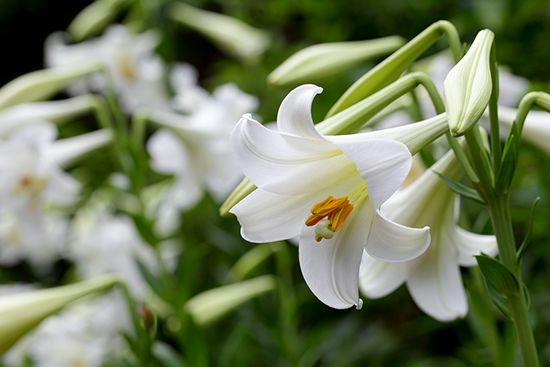
- Flowering Structure: Peace lilies feature a unique inflorescence consisting of a white, petal-like bract called a spathe that surrounds a cream-colored spike known as a spadix. True lilies typically have large, showy, trumpet-shaped flowers.12
- Toxicity: This is a critical distinction for pet owners. True lilies and daylilies are highly toxic to cats and can cause fatal acute [kidney failure]. While peace lilies are also toxic, they contain calcium oxalate crystals that cause localized irritation (such as burning in the mouth or skin irritation) rather than the systemic kidney failure associated with true lilies.21
How do the spathe and spadix function in a plant’s reproduction?
The spathe and spadix are specialized structures that work together to facilitate the pollination of plants in the family Araceae, such as the peace lily, calla lily, and titan arum.45
- The Spadix: This is a fleshy, thickened spike that serves as the reproductive center of the inflorescence. It is densely packed with minute, often unisexual or bisexual flowers.45
- The Spathe: This is a modified, often showy bract (a leafy or fleshy structure) that surrounds or accompanies the spadix. It functions primarily to protect the flowers and attract pollinators.45
These structures often employ sophisticated strategies to ensure reproduction:
- Attraction: Many species use the spathe’s color and shape, combined with heat generation or the emission of foul odors, to mimic rotting flesh and attract insects like carrion beetles and flesh flies.56
- Entrapment: Some plants, such as the cuckoopint, use the spathe to temporarily trap insects. The insects are forced to crawl over the spadix, where they either pick up or deposit pollen before being released.6
What are raphides and how do they protect plants from being eaten?
Raphides are needle-shaped crystals, typically composed of calcium oxalate, that develop as metabolic by-products within plant cells. They serve as a sophisticated internal defense mechanism against herbivores.1011
These crystals are stored within specialized cells known as idioblasts, which function like botanical landmines. When a predator begins to eat the plant, the physical act of chewing breaches these cells, causing them to “detonate” and fire the barbed crystals into the tissues of the predator’s mouth.11
In many plants, such as the dieffenbachia, this process is further enhanced by the release of enzymes analogous to reptilian venom. The combination of the mechanical irritation from the sharp crystals and the chemical reaction can cause significant pain, swelling, and even temporary paralysis or loss of speech in the predator, effectively deterring further consumption.11
Sources
- Peace lily — Encyclopædia Britannica
- Why Are Lilies Toxic to Cats? — Encyclopædia Britannica
- Peace lily: Top Questions — Encyclopædia Britannica
- 'Pistil,' 'Stamen,' and Other Flower Part Name Origins | Spadix/Spathe — Merriam-Webster
- Araceae — Encyclopædia Britannica
- Botanical Sex: 9 Alluring Adaptations — Encyclopædia Britannica
- spathe — Merriam-Webster
- Plant development - Preparatory events — Encyclopædia Britannica
- Plant reproductive system - Physiology of plant reproduction — Encyclopædia Britannica
- raphide — Merriam-Webster
- Botanical Barbarity: 9 Plant Defense Mechanisms — Encyclopædia Britannica
- raphidiferous — Merriam-Webster
- Malvales - Neuradaceae , Thymelaeaceae, and Sphaerosepalaceae — Encyclopædia Britannica
Published on · 3 min read