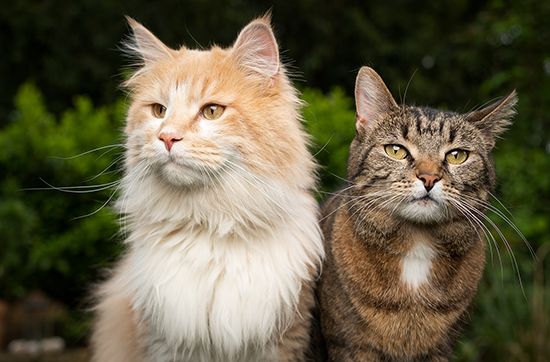
Why Are Orange Cats More Likely to Be Male?
The reason orange cats are more likely to be male lies in the genetics of the sex chromosomes. The gene responsible for orange fur is located on the X…
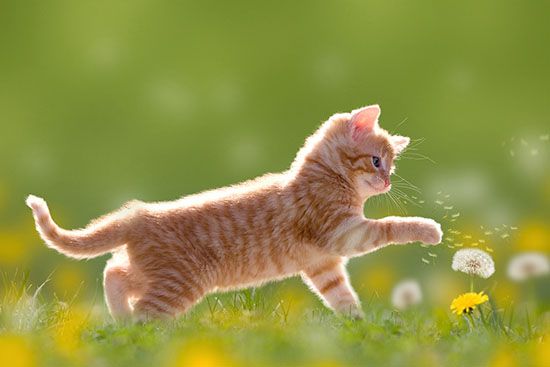
Why are orange cats more likely to be male?
The reason orange cats are more likely to be male lies in the genetics of the sex chromosomes. The gene responsible for orange fur is located on the X chromosome.12
Because male cats have only one X chromosome (paired with a Y chromosome), they only need to inherit one copy of the orange gene from their mother to display the color. In contrast, female cats possess two X chromosomes. To be orange, a female must inherit the orange gene on both X chromosomes—one from each parent—which is statistically less likely. Consequently, only about 1 in 5 orange cats are female.1
This same genetic mechanism explains why calico or tortoiseshell patterns are almost exclusively found in females; they require both an orange-coding and a black-coding gene, which can only occur simultaneously in cats with two X chromosomes.12
What causes a cat to have a calico or tortoiseshell pattern?
Calico and tortoiseshell patterns in cats are primarily the result of sex-linked genetics involving the X chromosome.21
The genes that code for black and orange fur are located on the X chromosome. Because female cats possess two X chromosomes, they can inherit a gene for orange fur on one and a gene for black fur on the other, resulting in the mixed-color tortoiseshell pattern. If the cat also possesses a separate, non-sex-linked gene for white spotting, the result is the calico pattern, which features patches of white, black, and orange.2314
Male cats typically have only one X chromosome (paired with a Y chromosome), meaning they can carry the gene for either black or orange, but not both simultaneously. Consequently, these patterns are almost exclusively found in females. Rare exceptions occur in males with an XXY chromosomal anomaly, though such individuals are typically sterile.2314
How does X-inactivation work in female mammals?
In female mammals, X-inactivation is a biological process that ensures gene dosage balance between the sexes. Because females possess two X chromosomes while males possess only one, one of the two X chromosomes in each somatic cell is randomly inactivated during early development.25
This inactivated chromosome condenses into a structure known as a Barr body, which is a densely staining mass of chromatin. This process is essentially permanent for the cell and its descendants, meaning that different cells throughout the body may express genes from either the maternal or paternal X chromosome. In cats, this random inactivation is what allows for the expression of different color-coding genes in different patches of skin, resulting in the mosaic appearance of calico or tortoiseshell coats.21
What is a chromosomal anomaly like XXY?
A chromosomal anomaly like XXY, known as Klinefelter syndrome, occurs when a male possesses an extra X chromosome, resulting in a 47,XXY karyotype instead of the typical 46,XY. This condition arises from an unequal distribution of sex chromosomes shortly after fertilization.67
Because individuals with this condition have two X chromosomes, they undergo X inactivation—a process where one X chromosome in each somatic cell becomes transcriptionally silent—which helps mitigate the impact of the extra genetic material. Consequently, the clinical effects are generally mild.6
Common characteristics of Klinefelter syndrome include:
- Physical traits: Increased stature, long limbs, and sometimes gynecomastia (partial breast development).67
- Reproductive health: Small, firm testes and infertility.7
- Health considerations: Potential for decreased testosterone levels and, in some cases, difficulties with social adjustment or learning.67
Treatment with androgens can help manage symptoms by increasing strength and libido. While rare, more complex variants like 48,XXXY or 49,XXXXY can occur, often leading to more severe physical and intellectual challenges.76
Sources
- Why are orange cats more likely to be male? — Encyclopædia Britannica
- Why are most calico cats female? — Encyclopædia Britannica
- cat - Tortoiseshell cats — Encyclopædia Britannica
- calico cat — Encyclopædia Britannica
- Barr body — Merriam-Webster
- human genetic disease - Abnormalities of the sex chromosomes — Encyclopædia Britannica
- Klinefelter syndrome — Encyclopædia Britannica
- ploidy — Encyclopædia Britannica
- chromosomal disorder — Encyclopædia Britannica
- XYY-trisomy — Encyclopædia Britannica
- sex chromosome — Encyclopædia Britannica
Published on · 3 min read