Why Do Cats Rub Against Your Legs?
Cats rub against your legs primarily as a form of communication and marking behavior. This action serves several purposes:
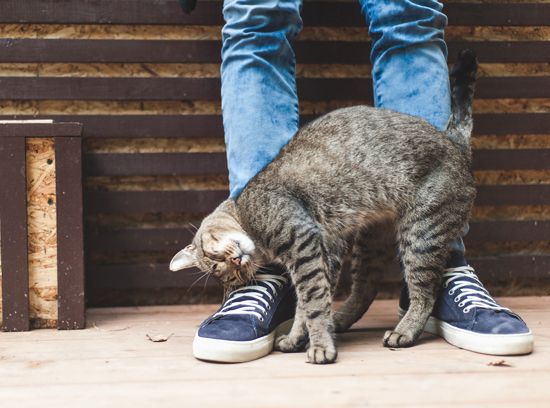
Why do cats rub against your legs?
Cats rub against your legs primarily as a form of communication and marking behavior. This action serves several purposes:
- Marking Territory: By rubbing against you, cats transfer their scent from glands located around their head, the base of their tail, and their paws. This marks you as part of their social group or territory.
- Affection and Bonding: This behavior is a sign of a greeting or affection, helping to strengthen the bond between you and your feline companion.
- Attention Seeking: Cats are observant creatures and often use physical contact to communicate specific needs, such as a desire to be fed, played with, or petted. This is frequently accompanied by vocalizations like meowing or purring to ensure they are noticed.1
This instinctual behavior is a key way for your cat to reinforce its connection with you as a trusted companion.1
What does a slow blink from a cat mean?
A slow blink from a cat is a form of nonverbal communication that signifies trust, affection, and a sense of security. Because cats are naturally cautious and alert to potential threats, closing their eyes—even momentarily—demonstrates that they feel safe in your presence.2
This behavior is often described as a soft, lazy wink or a series of half-closed blinks. While a direct stare can sometimes signal aggression or fear, squinty, half-shut eyes and slow blinks indicate that a cat is relaxed and open to friendly interaction. Interestingly, cats may mimic this behavior; if you blink slowly at your cat, they may reciprocate, which can help strengthen the bond and sense of companionship between you.2
Why do cats groom each other?
When cats groom one another, a behavior known as allogrooming, it serves as a vital social function. This activity helps to reinforce social connections and strengthen the bond between cats living in the same household.3
Beyond its social importance, allogrooming acts as a mechanism to reduce tension and conflict among cats, promoting a more harmonious environment. While self-grooming is primarily focused on hygiene—such as removing debris, regulating body temperature, and distributing sebaceous oils—allogrooming is a soothing, communal activity that helps cats relax and manage stress. By engaging in this mutual care, cats maintain both their physical well-being and their social stability within their group.3
How do cats use their tails to communicate?
Cats use their tails as a primary tool for animal communication, conveying a wide range of emotions and intentions through various positions and movements.75
Common Tail Signals
- Erect/Raised: Holding the tail high is generally a friendly greeting, signaling that the cat feels calm, confident, and happy.75
- Tucked: When a tail is tucked close to the body or between the hind legs, it indicates fear, insecurity, submission, or defeat.75
- Swishing or Lashing: Moving the tail from side to side often signals anger, irritation, or that the cat is preparing to attack in a predatory manner.5
- Twitching: A tail held still with only the tip twitching typically indicates mild irritation or that the cat is on guard.75
- Arching: When a cat is frightened or angry, it may bend its tail into an upside-down “U” shape to appear larger and more ferocious.5
- Swiveling: A female cat in heat may hold her tail to one side as a sexual invitation.5
Additionally, cats use the scent glands located at the root of the tail for scent marking, which helps them communicate territory and social information to other cats.5
Sources
- Why do cats rub against your legs? — Encyclopædia Britannica
- Why do cats blink slowly? — Encyclopædia Britannica
- Why do cats clean themselves so much? — Encyclopædia Britannica
- cats as pets - Play — Encyclopædia Britannica
- cat - Body language and communication — Encyclopædia Britannica
- cats as pets - Grooming cats — Encyclopædia Britannica
- 16 Questions About Pets Answered - How does a cat’s tail help keep the animal balanced? — Encyclopædia Britannica
- wags — Merriam-Webster
Published on · 3 min read