Why Do Crickets Chirp at Night?
Male crickets chirp primarily to establish territory and attract mates. This sound, known as stridulation, is produced by rubbing a scraper on one forewing…
Why do crickets chirp at night?
Male crickets chirp primarily to establish territory and attract mates. This sound, known as stridulation, is produced by rubbing a scraper on one forewing against a row of teeth on the other.12
Different songs serve specific social functions:
- Calling songs: Attract females.12
- Courtship songs: Induce a female to mate.12
- Fighting songs: Repel other males.12
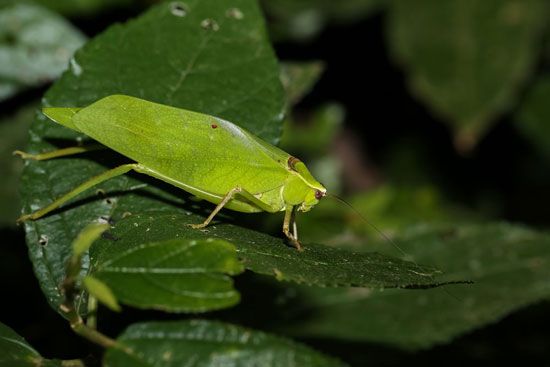
While some species, such as house and field crickets, chirp both day and night, many tree- and bush-inhabiting species prefer the night. Nocturnal activity offers these insects a generally safer environment with fewer predators. Interestingly, there is a direct relationship between the rate of chirping and the ambient temperature, as the frequency of the sound increases as the temperature rises. Because of this, the snowy tree cricket is often called the “thermometer cricket,” as one can estimate the temperature by counting its chirps.12
How does temperature affect the speed of a cricket’s chirp?
There is a direct relationship between the ambient temperature and the rate of a cricket’s chirp, with the frequency of the chirping increasing as the temperature rises.1
This phenomenon is most famously observed in the snowy tree cricket, which is often referred to as the “thermometer cricket.” You can estimate the approximate temperature in degrees Fahrenheit by counting the number of chirps produced in 15 seconds and adding 40 to that total.1
This correlation exists because crickets are ectothermic, meaning their metabolic processes—including the muscular activity required for stridulation—are influenced by the surrounding environment. As the temperature increases, the cricket’s muscles can contract more rapidly, leading to a faster rate of chirping.1
What is the process of stridulation?
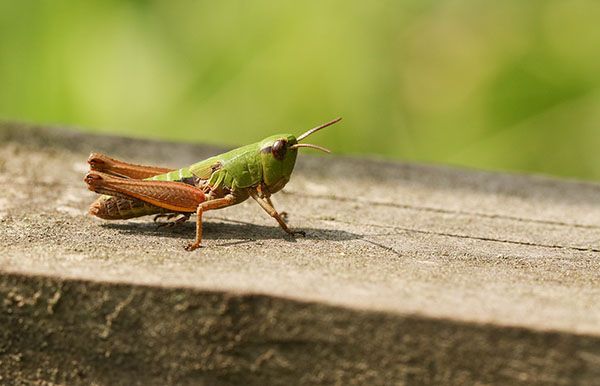
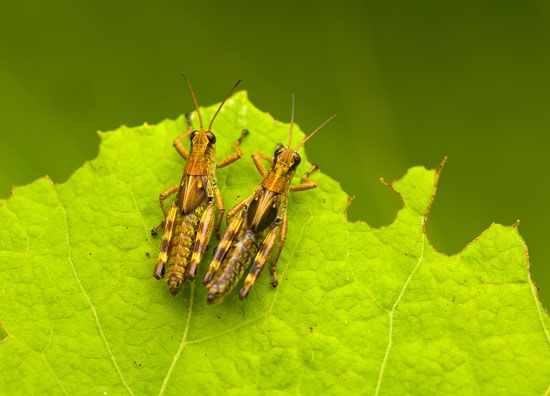
Stridulation is a biological process used primarily by insects, such as crickets, katydids, and grasshoppers, to produce sound by rubbing together specially modified body parts.34
Because small animals often struggle to produce loud sounds using standard muscle contractions, they utilize frequency multiplication through stridulation. The process generally involves two components:5
- The File: A structure featuring a row of teeth or a serrated surface.46
- The Scraper: A sharp edge or ridge that rasps against the file.46
In crickets and katydids, this mechanism is located on the forewings. One wing bears an enlarged transverse vein with teeth (the file), while the other wing possesses a sharp edge (the scraper). During the process, the wings are lifted and shuffled, causing the scraper to move across the file. This action forces the wing membranes to vibrate, creating the characteristic sounds used for communication, such as attracting mates or defending territory.465
How do female crickets hear the sounds made by males?
Female crickets hear the sounds produced by males through specialized auditory structures known as tympanal organs, which are located on the front tibiae (the upper part of the first walking legs).148
These organs consist of a thin tympanic membrane backed by an air sac, which allows the membrane to vibrate in response to sound waves. When these vibrations occur, they stimulate sensory cells connected to auditory nerves, which transmit the information to the cricket’s central nervous system.1
This sense of hearing is essential for mating, as sexually receptive females use these organs to localize and move toward the specific calling songs of males. Research has shown that if both tympanal organs are removed, females are unable to locate chirping males, and the removal of even one organ significantly reduces their ability to navigate toward the sound source. While these organs are the primary means of hearing, some insects also rely on sensory hairs on their body or antennae to detect vibrations.681
Sources
- Why do crickets chirp at night? — Encyclopædia Britannica
- cricket — Encyclopædia Britannica
- stridulation — Merriam-Webster
- Orthoptera - Sound production and hearing — Encyclopædia Britannica
- heteropteran - Sound production and reception — Encyclopædia Britannica
- sound reception - Behavioral observations — Encyclopædia Britannica
- Animal communication - Signal production — Encyclopædia Britannica
- sound reception - Organs of sound reception in invertebrates — Encyclopædia Britannica
- sound reception - Electrophysiological observations — Encyclopædia Britannica
Published on · 3 min read