Why Do Lions Roar?
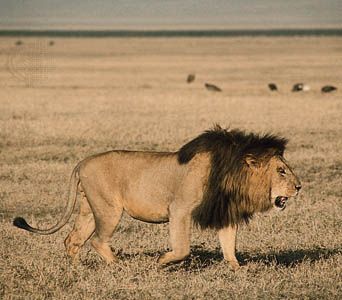
Lions roar primarily to proclaim their territory and assert dominance. This vocalization is a vital tool for male lions to signal their presence, deter…
Why do lions roar?
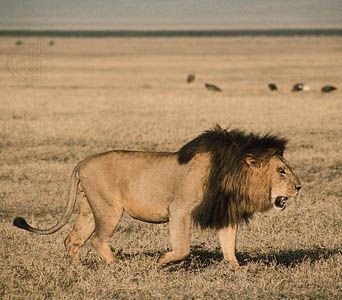
Lions roar primarily to proclaim their territory and assert dominance. This vocalization is a vital tool for male lions to signal their presence, deter rivals, and maintain the safety of their pride.1
Beyond territorial defense, roaring is essential for social cohesion. Because pride members are often scattered across large areas, roaring helps them locate one another and regroup for hunting or sharing meals. By coordinating these movements, the roar strengthens social bonds and supports the collective survival of the group. Lions typically deliver these roars in the evening before hunting and again at dawn.1
How far can a lion’s roar travel?
What other sounds do lions make to communicate?
Beyond roaring, lions utilize scent marking as a primary method of communication to proclaim their presence and territory.1
Male lions specifically use chemical signals to mark their domain by urinating on trees, bushes, or the ground, which leaves a pungent scent that serves as a clear warning to others. Additionally, lions engage in other forms of scent marking, such as defecation and rubbing their bodies against vegetation, which leave distinct markers that help define their territory boundaries. While roaring serves as an auditory signal for coordination and dominance, these scent-based methods provide a persistent, non-vocal way for lions to communicate their status and territorial claims to other members of their species.12
How do lion prides work together to hunt?
Lions are unique among cats for their social structure, living in groups called prides. While hunting strategies vary, group cooperation is a highly effective method for securing food.34
Cooperative Hunting Tactics
When hunting in groups, lions utilize coordinated maneuvers to increase their success rate:
- Encircling and Flanking: Pride members may surround a herd or approach from opposite directions to trap their prey.32
- Creating Panic: By closing in from multiple sides, the lions induce panic within the herd. This confusion, often referred to as the “beater effect,” helps isolate individual animals, making them easier to capture.5
- Isolation: The primary goal of these tactics is to separate one or a few animals from the larger group, allowing the predators to corner and bring down the target.5
Despite these sophisticated cooperative foraging techniques, many hunts still fail because lions tire quickly and often ignore wind direction, which can alert prey to their presence. Once a kill is made, pride members typically crowd around to feed, often competing for access to the meal.32
Sources
- Why do lions roar? — Encyclopædia Britannica
- lion - Prides — Encyclopædia Britannica
- lion - Hunting — Encyclopædia Britannica
- Cooperative foraging — Encyclopædia Britannica
- 9 of the World’s Deadliest Mammals - Lions ( Panthera leo ) — Encyclopædia Britannica
Published on · 2 min read