Why Do Gorillas Beat Their Chests?
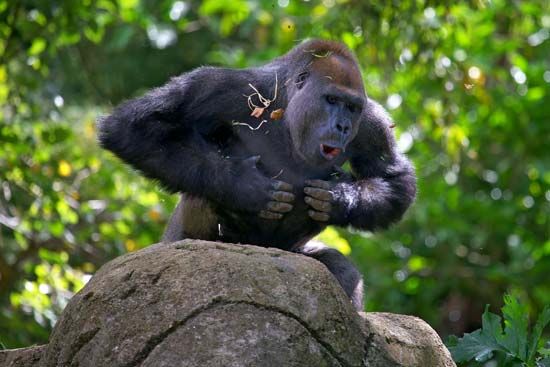
Chest beating is a vital form of communication for gorillas, serving as both a defensive mechanism and a social tool. While both sexes perform the behavior…
Why do gorillas beat their chests?
Chest beating is a vital form of communication for gorillas, serving as both a defensive mechanism and a social tool. While both sexes perform the behavior, it is most prominent in males, who possess air sacs in the chest and throat that amplify the sound.1
For silverback males, chest beating is a key display of aggression used to protect their group. When encountering an intruder, a silverback may combine chest beating with vocalizations and short charges to intimidate and discourage potential threats.1
Beyond defense, this behavior is essential for maintaining the dominance hierarchy within a troop. Often accompanied by actions like running sideways or slapping the ground, these rituals help reinforce social structure and dynamics among group members.1
What is the role of a silverback in a gorilla troop?
A silverback is a mature, dominant male gorilla characterized by a distinctive “saddle” of gray or silver hair on its lower back. These males serve as the primary leaders of stable family groups, which typically consist of 6 to 30 individuals, including females, infants, juveniles, and younger males known as blackbacks.2
The role of the silverback involves several critical responsibilities:
- Leadership and Protection: Silverbacks lead the group through their daily activities, including foraging and traveling. They are responsible for protecting their dependents from intruders; when threatened, a silverback may perform aggressive displays—such as chest beating, vocalizing, or charging—to intimidate threats and ensure the safety of the troop.2
- Social Stability: These males maintain the dominance hierarchy within the group. While a group is often led by a single silverback, it may sometimes be led by two or more related males, such as a father and his son or brothers.2
- Reproduction: Silverbacks are the primary breeders within their groups. While some males leave their birth group to form their own, others may remain to serve as a second silverback, eventually assuming leadership when the primary male ages or dies.2
How do gorillas communicate using vocalizations?
Although gorillas are generally quiet animals, they utilize a diverse repertoire of vocalizations to communicate within their social groups and with outsiders. Their vocal range includes:
- Grunts and Hoots: These sounds are commonly used for general communication within the troop.
- Alarm Barks: Gorillas emit a distinct, intense alarm bark, which serves as a warning signal when the group is threatened or disturbed.
- Roars: This powerful vocalization is primarily produced by aggressive males during confrontations or displays.
These vocalizations are often integrated into broader social rituals. For instance, a silverback male may combine vocalizations with chest beating and short charges to intimidate intruders and protect his dependents. Beyond defense, these displays are essential for maintaining the dominance hierarchy and reinforcing the social structure of the group. While these behaviors can appear aggressive, studies indicate that gorillas are typically shy and unaggressive unless they are unduly disturbed.13
What other animals use displays to show dominance?
Many animals utilize ritualized display behaviour to establish dominance and resolve conflicts without the energy expenditure or physical risk of actual combat. These displays allow individuals to assess their relative status, often resulting in a subordinate animal deferring to a dominant one to avoid injury.678
Examples of animals that use displays to show dominance include:
- Wolves: Dominant individuals adopt an upright stance with raised ears and tail, while subordinates flatten their bodies and lower their tails to signal submission.89
- Red Deer: Stags engage in “parallel walking,” where they strut side-by-side to assess each other’s size, often preceded by an exchange of deep roars.8
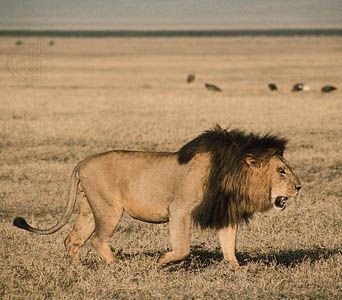
- Lions: Males use loud roaring to signal their presence and assert dominance over their territory, deterring rivals.1011
- Birds: Many species use “badges of status,” such as the black throat patch of a house sparrow or the chest stripe of a great tit, to signal dominance and secure preferential access to resources.812
- Howler Monkeys: Resident males produce loud vocalizations to warn off intruders and defend their territory.6
Sources
- Why do gorillas beat their chests? — Encyclopædia Britannica
- silverback — Merriam-Webster
- gorilla — Encyclopædia Britannica
- chimpanzee - Social behaviour — Encyclopædia Britannica
- Vocalization — Encyclopædia Britannica
- Display behaviour — Encyclopædia Britannica
- Pelecaniform - Courtship behaviour — Encyclopædia Britannica
- Animal social behavior - Dominance — Encyclopædia Britannica
- Why do lions roar? — Encyclopædia Britannica
- Aggressive behaviour - The nature of animal aggression — Encyclopædia Britannica
- Dominance hierarchy — Encyclopædia Britannica
- lion - Prides — Encyclopædia Britannica
- mammal - Social behaviour — Encyclopædia Britannica
- Submissive behaviour — Encyclopædia Britannica
- Aggressive behaviour - Cost-benefit analysis — Encyclopædia Britannica
Published on · 3 min read