Why Do Llamas Spit?
Llamas spit primarily as a defensive mechanism or a way to assert social standing within their herd. This behavior serves several specific purposes:
Why do llamas spit?
Llamas spit primarily as a defensive mechanism or a way to assert social standing within their herd. This behavior serves several specific purposes:
- Self-Defense and Dominance: Llamas may spit when they feel threatened, annoyed, or wish to establish dominance over others.1
- Social Interactions: During mating season, males often spit at one another while competing for females, while females may spit at males to discourage unwanted advances.1
- Human Interaction: While it is uncommon for them to spit at humans, they may do so if they feel mistreated or overloaded.1
It is important to note that this is not merely saliva; when a llama spits, it forcefully regurgitates partially digested stomach contents. This substance can be projected accurately at distances of up to 33 feet (10 meters).1
What are the differences between llamas and alpacas?
While llamas and alpacas are both members of the camel family and share a common ancestry as lamoids, they are distinct species with notable differences in physical characteristics, temperament, and historical use.234
Physical Differences
The most immediate way to distinguish the two is by size and facial features:
- Size: Llamas are significantly larger, standing about 120 cm (47 inches) at the shoulder and weighing roughly 113 kg (250 pounds). Alpacas are smaller, standing about 90 cm (35 inches) at the shoulder and weighing between 55 and 65 kg (121 to 143 pounds).24
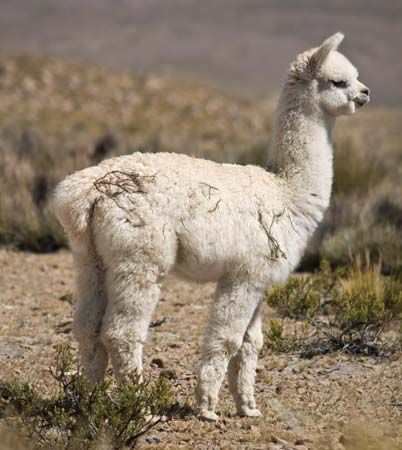
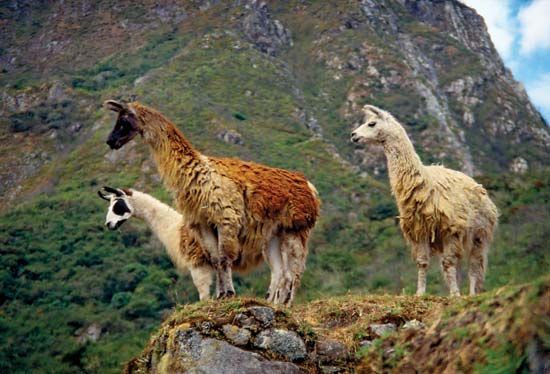
- Face and Ears: Alpacas have small, blunt faces with short ears, whereas llamas possess more elongated faces with distinctive banana-shaped ears.2
- Hair: Alpacas are prized for their fine, shaggy fleece, which is highly valued for textile production. Llama hair is coarser and generally considered inferior for high-quality wool products.254
Temperament and Utility
These physical and behavioral differences have shaped how humans have interacted with them for thousands of years:
- Role: Llamas were primarily domesticated as pack animals capable of carrying heavy loads across rugged terrain. Alpacas were specifically tamed for their superior fleece.254
- Disposition: Llamas are often used as guard animals for livestock due to their size and protective nature. While generally gentle, they may spit, kick, or lie down if they feel overloaded or mistreated. Alpacas are typically more timid and prefer to remain within their herd.24
How do llamas communicate with each other besides spitting?
Sorry, the Britannica knowledge base does not contain specific information regarding the various methods llamas use to communicate with each other beyond the behaviors mentioned, such as spitting, hissing, kicking, or lying down when annoyed or maltreated.
What is the social structure of a llama herd?
Llamas are described as gregarious animals, meaning they naturally live in groups or herds. While the provided information confirms their social nature and tendency to graze together, the Britannica knowledge base does not contain specific details regarding the internal hierarchy or complex social structure of a llama herd.2
Sources
- Why do llamas spit? — Encyclopædia Britannica
- What’s the Difference Between Llamas and Alpacas? — Encyclopædia Britannica
- llama — Encyclopædia Britannica
- 12 Pairs of Commonly Confused Animal Words | Llama/Alpaca — Merriam-Webster
- alpaca — Encyclopædia Britannica
Published on · 2 min read