Why Is the North Sea So Dangerous?
The North Sea is considered a perilous environment for maritime activity due to a combination of physical and meteorological factors:
Why is the North Sea so dangerous?
The North Sea is considered a perilous environment for maritime activity due to a combination of physical and meteorological factors:
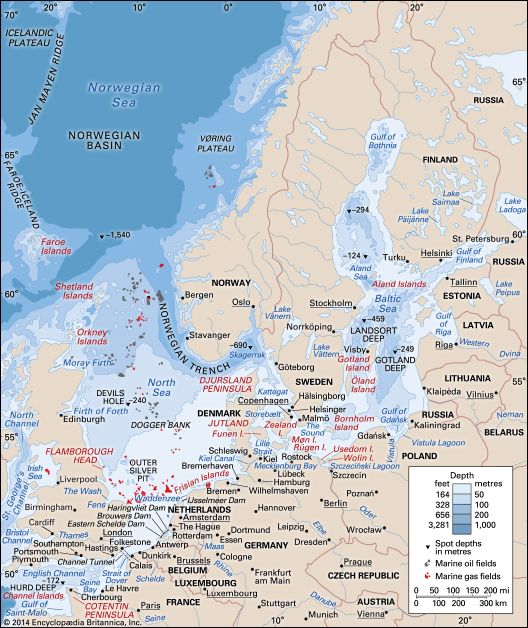
- Shallow Depths and Hazards: Much of the sea is quite shallow, with southern regions measuring less than 120 feet (35 meters) deep. These areas contain shifting banks of glacial origin, such as the Dogger Bank, which pose significant navigational risks to vessels.12
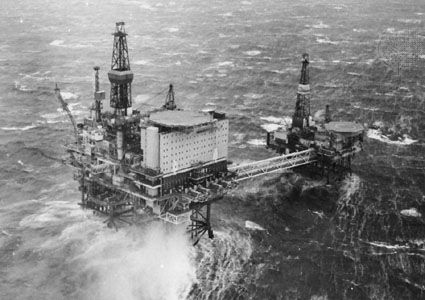
- Harsh Weather: The region is notorious for frequent, severe storms, particularly during winter. High winds and gales, combined with low temperatures, create dangerous conditions for ships.1
- Tidal Currents: Strong tidal currents, with ranges of 13 to 20 feet (4 to 6 meters) along southern coasts, complicate navigation and increase the risk of accidents.1
- Rogue Waves: The North Sea is known for the occurrence of rogue waves. In 1995, a laser gauge on the Draupner E oil platform recorded a massive 25.9-meter (85-foot) wave, providing the first indisputable evidence of these unpredictable, high-energy phenomena.3
What is the Dogger Bank and why is it significant for navigation?
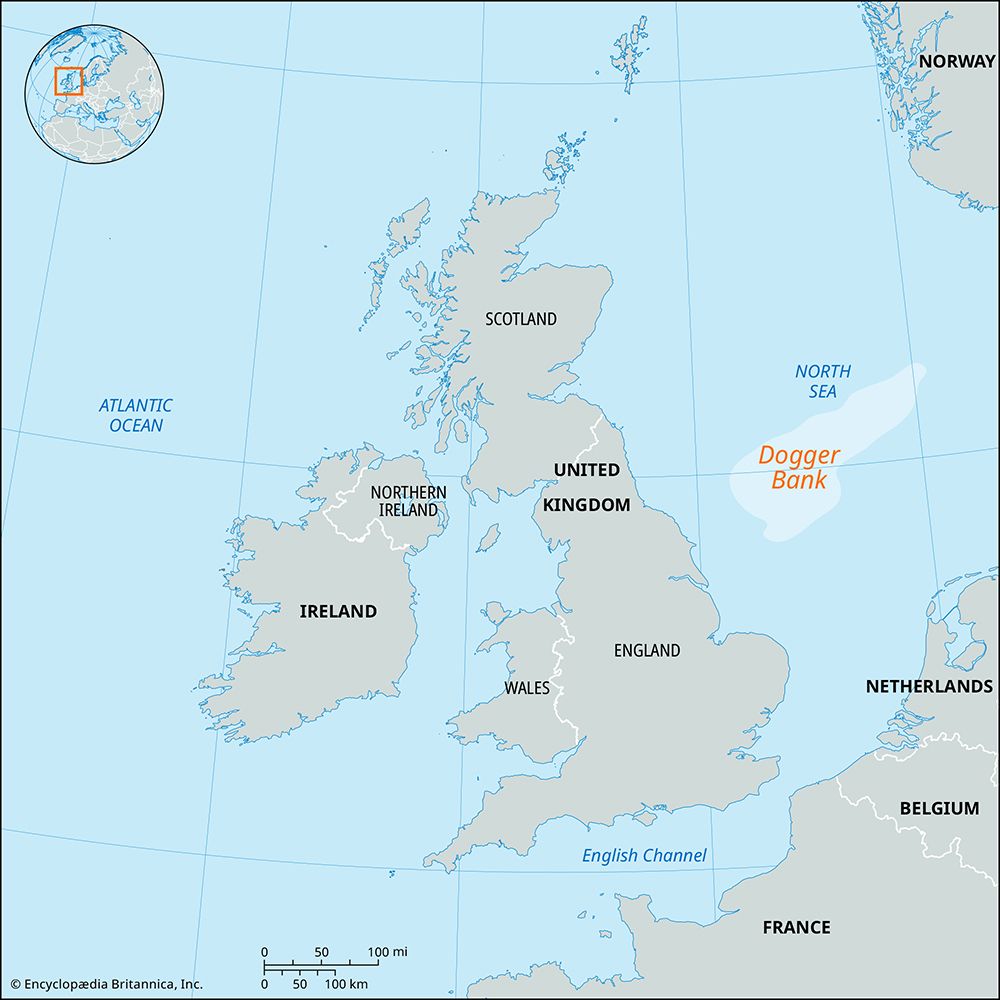
The Dogger Bank is an extensive, isolated shoal located in the North Sea, approximately 60 miles off the northeastern coast of England. It is a massive moraine—a deposit of earth and stones—formed at the southern limit of the last glaciation.67
Regarding navigation, the Dogger Bank is considered a significant hazard. Because it rises significantly above the surrounding seafloor, it creates shallow areas where the water depth is only 50 to 100 feet (15 to 30 meters). These shallow depths, combined with the presence of other shifting banks in the region, complicate maritime travel and increase the risk of accidents for vessels navigating the North Sea.671
Beyond its navigational challenges, the bank is historically and economically significant as one of the most productive fishing grounds in the North Sea, supporting large populations of species such as cod, herring, and plaice.6
How do storm surges impact coastal communities near the North Sea?
Storm surges in the North Sea pose a severe threat to coastal communities, characterized by hurricane-force winds that drive walls of water toward land, causing widespread flooding, property destruction, and loss of life. The 1953 North Sea flood remains the most catastrophic example, resulting in thousands of deaths and the inundation of vast agricultural lands in the Netherlands and England. Beyond immediate casualties, these surges cause long-term damage, such as the contamination of farmland by salt water and the destruction of livestock.89
In response to these dangers, nations have implemented massive engineering projects to protect vulnerable coastlines:
- Delta Works: This Dutch project closed off major river estuaries with a system of dams and dikes, significantly shortening the coastline exposed to the sea. It includes adjustable gates that allow for normal tidal flow while providing the ability to seal off the coast during severe storms.101
- Thames Barrier: Completed in 1982, this structure protects London from tidal flooding by closing off the Thames estuary when necessary.81
These efforts reflect a commitment to safeguarding human life and infrastructure against the unpredictable power of the sea.810
What are the main differences between rogue waves and tsunamis?
Rogue waves and tsunamis are both powerful maritime phenomena, but they differ fundamentally in their origins and physical characteristics.
Origins
- Rogue Waves: These are wind-driven waves that form on the ocean’s surface. They are typically caused by the constructive interference of multiple wave crests or the interaction between waves and currents, which can cause smaller waves to coalesce into a single, unexpectedly large surge.1112
- Tsunamis: These are caused by the displacement of large volumes of water, usually resulting from submarine earthquakes, underwater or coastal landslides, or volcanic eruptions.122
Characteristics
- Rogue Waves: Often described as “freak” or “monster” waves, they are relatively unpredictable and can appear in otherwise calm seas. They are defined by heights at least 2.2 times the significant wave height of the surrounding area and are primarily a hazard to ships and offshore structures at sea.1112
- Tsunamis: These manifest as a series of waves—a “train” of waves—that travel across the ocean. As they approach shallow coastal water, friction with the seafloor slows their velocity, shortens their wavelength, and causes their height to increase dramatically, leading to catastrophic flooding when they reach land.2
Sources
- Why is the North Sea so dangerous? — Encyclopædia Britannica
- rogue wave — Encyclopædia Britannica
- North Sea — Encyclopædia Britannica
- North Sea - The impact of human activity — Encyclopædia Britannica
- North Sea - Physiography — Encyclopædia Britannica
- Dogger Bank — Encyclopædia Britannica
- Dogger Bank — Merriam-Webster
- North Sea flood — Encyclopædia Britannica
- Delta Works — Encyclopædia Britannica
- North Sea - Reclamation and flood-control projects — Encyclopædia Britannica
- What Makes a Wave Go Rogue? — Encyclopædia Britannica
- tsunami — Merriam-Webster
- How Do Scientists Predict Tsunamis After Earthquakes? — Encyclopædia Britannica
Published on · 3 min read