Willow Oak
The willow oak (Quercus phellos) is a North American tree recognized for its distinctive, willow-like leaves and its classification within the red oak…
What are the unique characteristics of willow oak wood, and how is it used in woodworking or construction?
The willow oak (Quercus phellos) is a North American tree recognized for its distinctive, willow-like leaves and its classification within the red oak subgenus.
Characteristics of the Wood
The wood of the willow oak is characterized as being light-brown in color. Physically, it is noted for being both soft and strong, while also possessing a heavy density. In the broader lumber trade, timber harvested from the red oak group—which includes the willow oak—is collectively referred to as “red oak.”
Uses in Construction
Due to its structural properties, willow oak wood is utilized in construction applications. While it is frequently planted as an ornamental shade or street tree in the southern United States because of its rapid growth and symmetrical crown, its timber remains a functional resource for building purposes.
Where is the willow oak native to, and in what types of habitats does it thrive?
The willow oak (Quercus phellos) is native to North America, specifically found across the Atlantic and Gulf coastal plains as well as the Mississippi River valley region.1
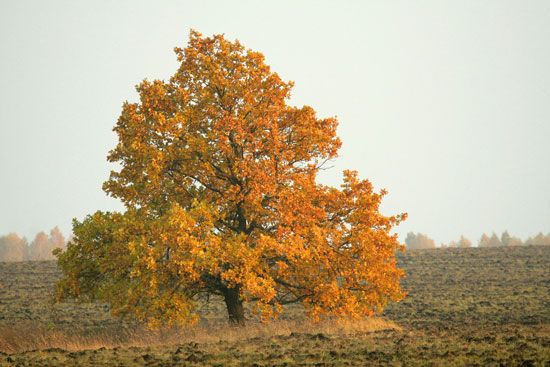
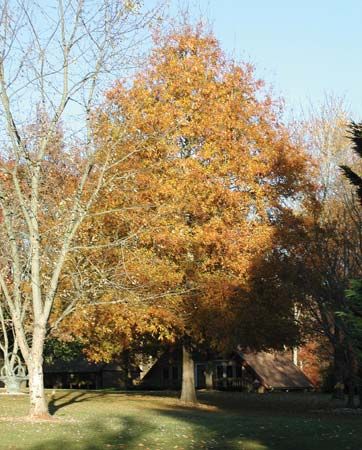
Regarding its habitat, the tree thrives in poorly drained areas. It is a resilient species that can live for more than 100 years and is frequently cultivated as a shade or street tree in the southern United States due to its rapid growth rate and symmetrical, conical crown.1
How does the willow oak differ from other oak species in terms of its leaves and acorns?
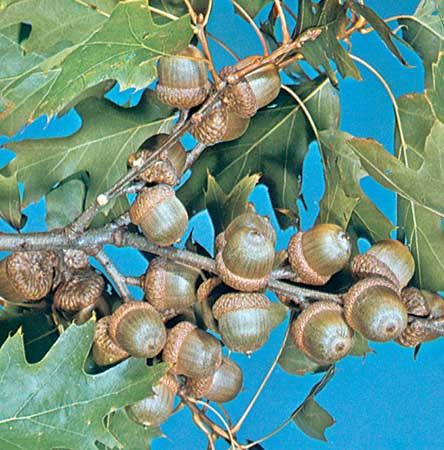
The willow oak (Quercus phellos) is distinct from many other oak species primarily due to its unique foliage. While most oaks are characterized by lobed or toothed leaves, the willow oak possesses slender, lanceolate, or linear leaves that resemble those of a willow tree. These leaves are entire, meaning they lack the lobes or teeth commonly found in other members of the genus.14
In terms of its classification and reproductive features, the willow oak belongs to the red oak subgenus (Erythrobalanus). Like other red oaks, it produces acorns that feature a hairy lining inside the shell and contain bitter seeds that require two growing seasons to mature. However, the willow oak is specifically noted for producing small acorns, which contrast with the varied sizes and shapes found across the broader red oak group.321
How long does a willow oak typically live, and how fast does it grow compared to other oak species?
The willow oak (Quercus phellos) is recognized for its relatively rapid growth rate, which distinguishes it from many other oak species that are often slower to mature. Because of this quick development, it is frequently selected for use as a street or shade tree in the southern United States.1
In terms of longevity, the willow oak is a long-lived species, typically surviving for more than 100 years. While the provided information highlights the willow oak’s rapid growth compared to the general characteristics of the genus, specific comparative growth rates for other individual oak species are not detailed in the available data.1
Sources
Published on · 2 min read