Wood Thrush
The wood thrush (Hylocichla mustelina) is a songbird native to the broadleaf forests of eastern North America. Measuring approximately 8 inches (20 cm) in…
What is Wood thrush?
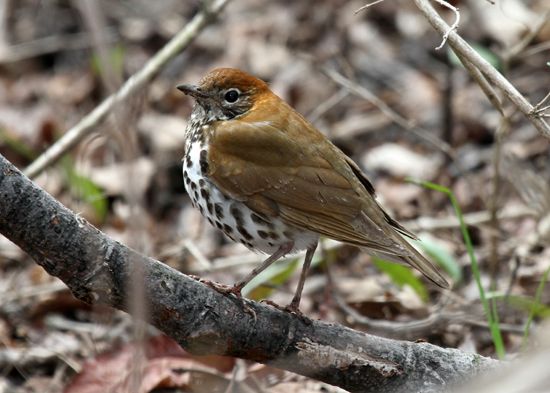
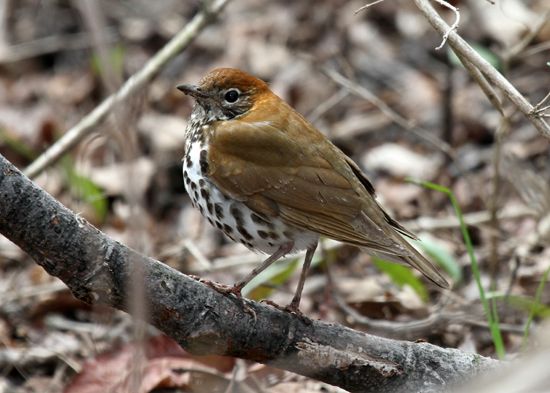
The wood thrush (Hylocichla mustelina) is a songbird native to the broadleaf forests of eastern North America. Measuring approximately 8 inches (20 cm) in length, it is characterized by a rusty-colored head and back, with white underparts marked by distinct black spots.12
Often referred to as a nightingale thrush, the species is renowned for its rich, flute-like song, which is widely considered one of the most beautiful vocalizations among North American birds. As a member of the thrush family (Turdidae), it shares the family’s general traits, such as a slender bill and a diet consisting primarily of insects and fruit. The wood thrush has been recognized by this name since at least 1791.1342
What makes the song of the wood thrush unique?
The song of the wood thrush is widely considered one of the most beautiful vocalizations of any North American bird, often described as a loud, clear, and flute-like trill.12
Its uniqueness stems from its complex musical quality, which features an alternation of tones that creates a rich, resonant sound. Because of these melodic capabilities, the wood thrush is classified among the nightingale thrushes, a group of thrushes specifically noted for their exceptional singing ability.13
What are some other species of thrushes?
The family Turdidae includes hundreds of species of songbirds found worldwide. Beyond the wood thrush, here are several notable groups and species within this family:
- True Thrushes (Turdus): This group includes the American robin, the European blackbird, the fieldfare, the ouzel, and the redwing.56
- Nightingale Thrushes (Catharus): These are slender, often drab-colored birds known for their rich songs. Examples include the hermit thrush, which inhabits coniferous woodlands in the U.S. and Canada, and the slaty-backed nightingale thrush found in tropical mountain forests.4
- Ground Thrushes (Zoothera): These birds typically inhabit montane forest undergrowth. Notable species include the golden mountain thrush (also known as the tiger thrush), the varied thrush of North America, and the Aztec thrush of the Mexican highlands.7
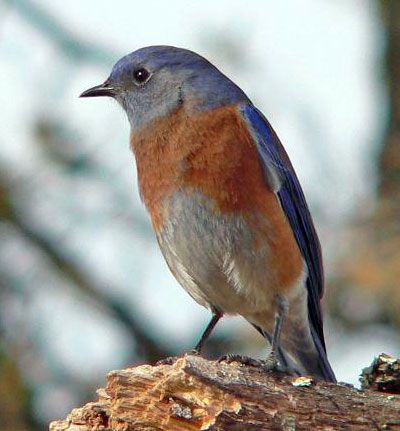
- Chat-Thrushes: A group that includes the western bluebird. These are generally smaller and often feature more colorful plumage than other thrushes.6
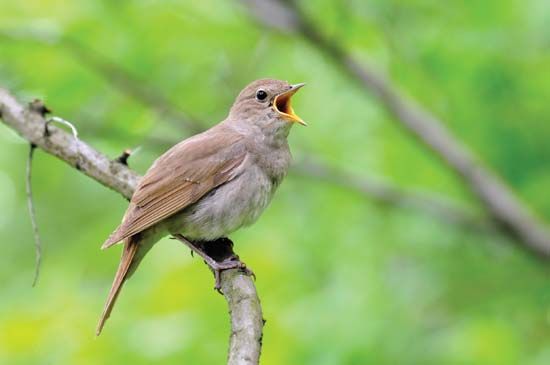
Additionally, the family includes the European nightingale, which is famous for its vocalizations.5
How does habitat loss affect wood thrush populations?
The provided information does not contain details regarding how habitat loss specifically affects wood thrush populations.
Sources
- Wood thrush — Encyclopædia Britannica
- 15 Bird Sounds and the Birds Who Make Them | Trill — Merriam-Webster
- wood thrush — Merriam-Webster
- Thrush — Encyclopædia Britannica
- Turdidae — Encyclopædia Britannica
- American robin — Merriam-Webster
- Ground thrush — Encyclopædia Britannica
- Nightingale thrush — Encyclopædia Britannica
Published on · 2 min read