Thrush
Sorry, the Britannica knowledge base does not contain information regarding the representation of thrushes in various cultures and folklore. The available…
How have thrushes been represented in various cultures and folklore?
Sorry, the Britannica knowledge base does not contain information regarding the representation of thrushes in various cultures and folklore. The available records focus on their biological classification within the Turdidae family, their physical characteristics, and their distribution as songbirds worldwide.12
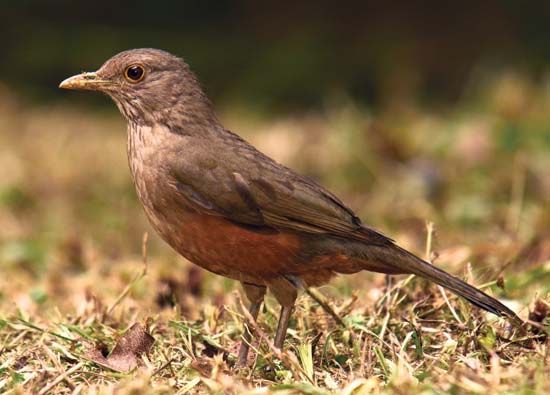
What is the typical breeding behavior and nesting habits of thrushes?
Thrushes, which belong to the songbird family Turdidae, exhibit specific nesting and reproductive habits consistent with their diverse, worldwide distribution.
Nesting Habits
Most thrushes construct open, cup-shaped nests to house their young. While the majority of species utilize arboreal or terrestrial sites for these structures, a few members of the chat-thrush group deviate from this norm by occupying cavities instead.
Breeding Behavior
The reproductive cycle of thrushes typically involves the following characteristics:
- Clutch Size: Females generally lay a clutch of three to six eggs.
- Egg Appearance: The eggs are typically pale in color and are often bluish in appearance.
- Habitat: Thrushes occupy a wide range of arboreal and terrestrial environments, which influences their specific nesting locations.
While general avian reproductive behavior often involves pair formation and shared parental care, thrushes are primarily recognized for their cup-nesting strategy and specific clutch characteristics within the broader context of songbird biology.2
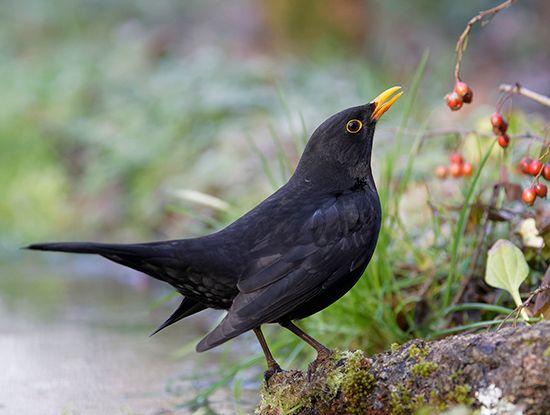
What are some of the most common species of thrushes, and how do they differ?
Thrushes are members of the Turdidae family, a diverse group of songbirds found worldwide. They are generally categorized into distinct groups based on their physical traits and behaviors.
True Thrushes
True thrushes belong to the genus Turdus. They are typically larger and known for their impressive singing abilities. Common examples include:
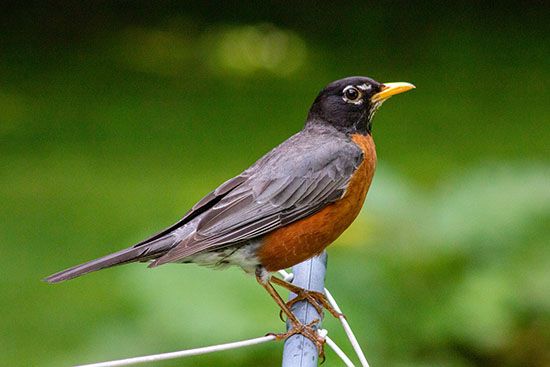
- American Robin: A familiar, migratory bird with a rusty-red breast, often found in North American forests and urban areas.62
- European Blackbird: A well-known songster of the Turdus genus.67
- Fieldfare and Redwing: Other representative species found in Europe.7
Chat-Thrushes
The chat-thrushes (subfamily Saxicolinae) are generally smaller than true thrushes, with more slender legs and often more colorful plumage. They are named for their characteristic harsh, chattering calls.8
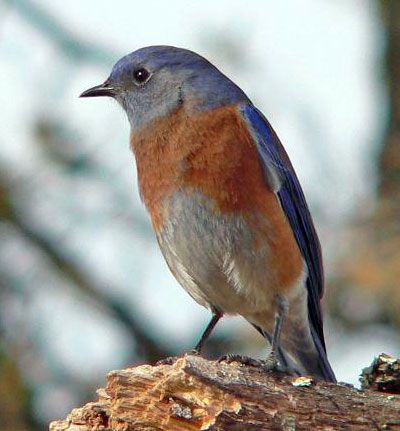
- Bluebirds: Known for their vibrant coloration.78
- European Robin: A small, plump bird distinct from the American robin, often nesting in holes or crannies.2
- Nightingale: Renowned for its complex and beautiful song.68
Nightingale Thrushes
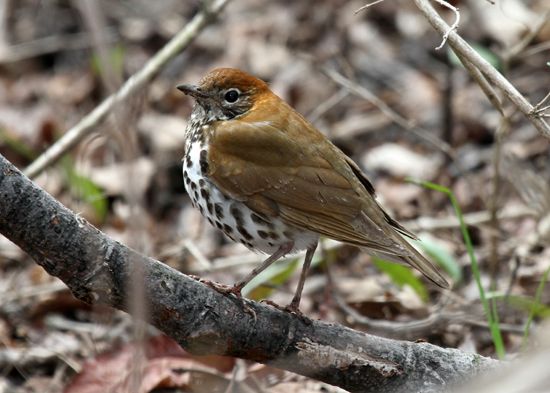
These New World birds (genus Catharus) are characterized by their slender build and rich, melodic songs. The wood thrush and the hermit thrush are notable examples, often featuring spotted underparts in northern species.9
Where are thrushes typically found, and what types of habitats do they prefer?
Thrushes are found virtually worldwide, inhabiting nearly every region except for the polar areas and certain isolated islands. While they are globally distributed, they exhibit the greatest diversity in the Old World, particularly across Africa.26
Regarding their preferred environments, thrushes are highly adaptable and occupy a wide range of both arboreal and terrestrial habitats. Their specific habitat choices often depend on the species:2
- Generalist Habitats: Many thrushes thrive in diverse environments, ranging from forests to urban areas.2
- Montane Forests: Certain groups, such as the ground thrush, specifically inhabit the undergrowth of montane forests.10
- Migratory Patterns: Because many northern species are strong migrants, their habitat usage can shift seasonally as they travel between breeding and wintering grounds.2
It is important to note that the term “thrush” also refers to a fungal infection of the mouth caused by Candida albicans, which is entirely unrelated to the bird family Turdidae.211
Sources
- thrush — Merriam-Webster
- Thrush — Encyclopædia Britannica
- Cuculiform - Nesting — Encyclopædia Britannica
- Reproductive behaviour - Birds — Encyclopædia Britannica
- Gruiform - Nesting — Encyclopædia Britannica
- Turdidae — Encyclopædia Britannica
- Robin — Encyclopædia Britannica
- Chat-thrush — Encyclopædia Britannica
- Nightingale thrush — Encyclopædia Britannica
- Ground thrush — Encyclopædia Britannica
- thrush — Encyclopædia Britannica
Published on · 3 min read