Yellow Jacket
A yellow jacket is any of 35–40 species of social wasps belonging to the genera Vespula and Dolichovespula. Primarily found in the Northern Hemisphere, they…
What is yellow jacket?
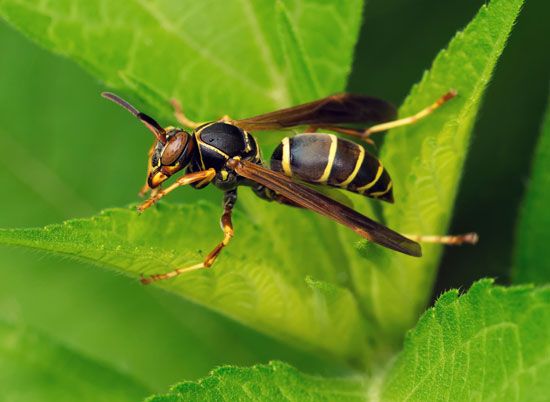
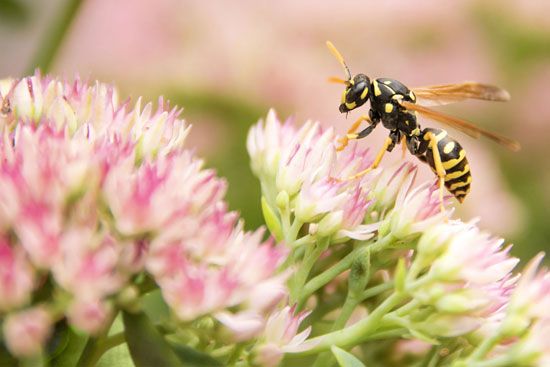
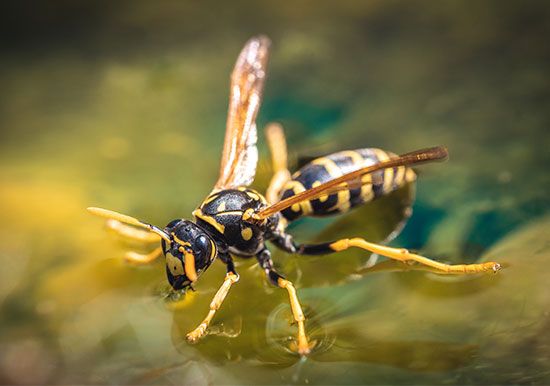
A yellow jacket is any of 35–40 species of social wasps belonging to the genera Vespula and Dolichovespula. Primarily found in the Northern Hemisphere, they are often confused with bees due to their striped, bullet-shaped bodies. However, unlike bees, yellow jackets are hairless, possess a narrow “waist,” and are capable of stinging multiple times.12
Yellow jackets live in colonies with a caste system consisting of a queen, drones, and sterile female workers. They construct paperlike nests from chewed wood fibers and saliva. While some species build nests in trees or on buildings, many prefer to nest underground. They are known for their scavenging behavior, often appearing at picnics to feed on human food, and can become aggressive if their nest is disturbed.132
In addition to the insect, the term “yellow jacket” is sometimes used as slang to refer to pentobarbital in a yellow capsule.3
How do yellow jackets differ from honeybees in their behavior and appearance?
While yellow jackets and honeybees are both striped, bullet-shaped insects belonging to the order Hymenoptera, they possess distinct physical and behavioral differences.
Appearance
- Body Shape: Yellow jackets have a narrow, “nipped” waist and a tapered, fighter-jet-like body, which provides the maneuverability needed for hunting. Honeybees have a more rounded, robust form.1
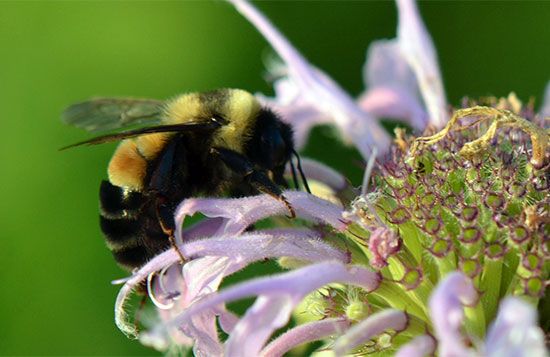
- Hair: Honeybees are covered in a light coat of downy hair, which helps them collect pollen. In contrast, yellow jackets are largely hairless, sporting a “spartan crew cut” appearance.1
Behavior
- Stinging: A honeybee can sting only once, a process that is fatal to the insect. Yellow jackets are capable of stinging multiple times without dying.1
- Diet and Foraging: Honeybees primarily seek nectar and pollen from flowers. Yellow jackets are scavengers and predators; they hunt other insects to feed their larvae and are frequently attracted to human food and waste at picnics, which honeybees generally ignore.1
- Nesting: Yellow jackets construct paperlike nests from chewed wood fibers and saliva, often located underground or in cavities. Honeybees typically live in hives where they store honey.215
What is the role of the queen in a yellow jacket colony?
In a yellow jacket colony, the queen is a fertilized female who serves as the foundation of the society. Her primary and exclusive role within the established colony is egg laying.61
The life cycle of the colony begins in the spring when the queen emerges to build a small nest independently. She lays the initial eggs, which hatch into sterile female workers. Once these workers mature, they take over the essential labor of the colony, including enlarging the paperlike nest, foraging for food, tending to the brood, and defending the hive. While the queen is the reproductive center, she relies entirely on these workers to maintain the colony’s infrastructure and support the development of future generations.61
How are yellow jacket nests constructed and where are they typically found?
Yellow jacket nests are constructed from a paperlike material created by the wasps themselves. Workers produce this substance by chewing dry plant material—typically wood—and mixing it with their saliva to form a pulp, which is then regurgitated to build the structure.1
The architecture of the nest consists of one or more layers of cells arranged vertically, with the openings facing downward. The location of these nests depends on the specific species:1
- Concealed Nests: Species in the genus Vespula typically build their nests in protected cavities, such as underground burrows or within tree trunks.1
- Exposed Nests: Species in the genus Dolichovespula generally construct nests that are left exposed, often hanging from branches, leaves, or the eaves of buildings.1
While some nests are small enough to be held in one hand, they can grow significantly in size; in warmer climates, a mature nest may weigh as much as half a ton.1
Sources
- yellow jacket — Encyclopædia Britannica
- What’s the Difference Between a Bee and a Wasp? — Encyclopædia Britannica
- yellow jacket — Merriam-Webster
- hornet — Encyclopædia Britannica
- Hymenoptera - Social forms — Encyclopædia Britannica
- Beekeeping - Queen bee — Encyclopædia Britannica
Published on · 3 min read