Yonne River
The Yonne River is a 182-mile (293-km) long waterway located in north-central France. It serves as a left-bank tributary of the Seine River, with which it…
What is Yonne River?
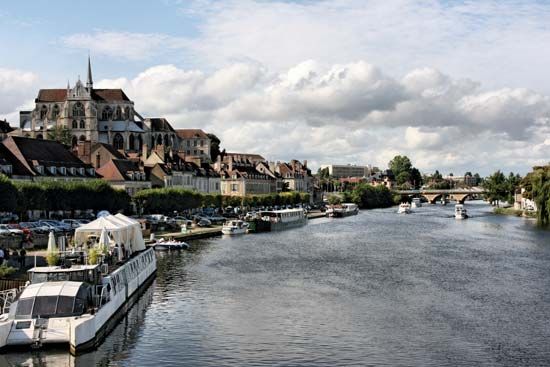
The Yonne River is a 182-mile (293-km) long waterway located in north-central France. It serves as a left-bank tributary of the Seine River, with which it converges at Montereau.12
Rising at the foot of Mont Preneley in the Morvan heights, the river flows north-northwest. Its course includes a dam at Pannessières–Chaumard, which helps regulate the flow of both the Yonne and the Seine. Throughout its journey, the river passes through several notable locations, including Clamecy, Auxerre, Joigny, and Sens. It is accompanied by the Canal du Nivernais and is navigable for approximately 70 miles downstream from Auxerre.1
How do rivers like the Yonne influence the geography of France?
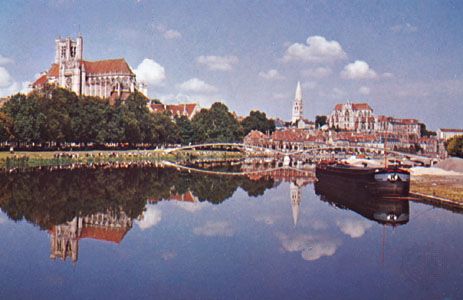
Rivers like the Yonne River play a vital role in shaping the geography and hydrology of France. As a major tributary of the Seine River, the Yonne is unique because it originates in the impermeable crystalline highlands of the Morvan, rather than the sedimentary rocks typical of the Paris Basin.13
This distinct geological origin gives the Yonne a high degree of flow variability, which significantly influences the overall regime of the Seine. To manage this, engineers have constructed dams and storage reservoirs—such as those at Pannessières–Chaumard—to regulate water levels, mitigate flooding, and ensure a consistent supply for navigation and human use.31
Beyond hydrology, these rivers have historically dictated settlement and economic patterns. The Seine’s basin, particularly the fertile Île-de-France, served as the cradle of the French monarchy and remains the nation’s metropolitan heartland. Furthermore, the integration of rivers with canal systems, such as the Canal du Nivernais, has facilitated inland transport and industrial development for centuries.31
What is the purpose of the Canal du Nivernais?
The Canal du Nivernais was primarily constructed to facilitate inland navigation and transport in north-central France. By accompanying the Yonne River through its course, the canal provides a vital waterway link that supports regional commerce and connectivity. It serves as a key infrastructure component that complements the river’s natural path, allowing for the movement of goods and vessels through areas that might otherwise be difficult to navigate due to the river’s varying flow and terrain.1
How do dams help regulate the flow of the Seine River?
Dams and storage reservoirs play a critical role in managing the Seine River by regulating its water levels and mitigating the impact of its natural flow variability. Because the Yonne River originates in impermeable crystalline highlands, it often introduces significant fluctuations into the Seine’s regime. To address this, engineers have implemented several key strategies:
- Flood Mitigation: Large storage reservoirs, such as those built on the Yonne, Marne, Aube, and the Seine itself since 1950, help control water levels during periods of heavy rainfall, reducing the risk of dangerous winter flooding in areas like Paris.33
- Water Supply: These reservoirs ensure a constant water supply during the summer months, preventing the river level from dropping too low and maintaining its status as a navigable waterway.5
- Navigation: By raising the water level through dams, the river is kept consistently navigable, supporting the heavy inland waterway traffic that is vital to the French economy.5
These relatively shallow, large-scale impoundments also serve secondary purposes, functioning as bird sanctuaries and tourist attractions within nature reserves.5
Sources
- Yonne River — Encyclopædia Britannica
- Yonne — Merriam-Webster
- Seine River — Encyclopædia Britannica
- France - Drainage of France — Encyclopædia Britannica
- France - The Seine system — Encyclopædia Britannica
- France - The Rhône system — Encyclopædia Britannica
- European Plain - Drainage — Encyclopædia Britannica
Published on · 2 min read