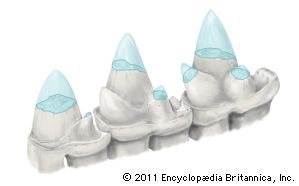
Amphitherium
Amphitherium is an extinct genus of early mammals that lived during the Middle Jurassic period, approximately 176 million to 161 million years ago. It is…
What is Amphitherium?
Amphitherium is an extinct genus of early mammals that lived during the Middle Jurassic period, approximately 176 million to 161 million years ago. It is recognized as the earliest representative of the pantotheres, a group of early mammals believed to be the ancestral stock from which all later higher mammals evolved.1
The genus is primarily known from a lower jaw discovered in Europe1. It is scientifically distinguished by the unique structure and significant number of its teeth.1
What are pantotheres and why are they important?
Pantotheres are an order of generalized mammals that were widespread during the Jurassic period. They are scientifically significant because they are widely considered to be the ancestral stock that gave rise to all later higher mammals, including marsupials and placental mammals.13
The group is characterized by its evolutionary importance as a bridge between early, primitive mammals and more modern lineages. The genus Amphitherium serves as the earliest known representative of the pantotheres, providing researchers with vital clues about the transition toward higher mammalian forms through the study of its distinctive dental structure. In some biological classifications, the pantotheres are grouped within the subclass Theria, which encompasses the majority of mammalian life.34
How do scientists study mammals from the Jurassic period?
Scientists study Jurassic mammals by analyzing fossils discovered in rock strata, which provide critical evidence of their diversity and evolutionary history. Researchers employ several key methodologies to interpret these remains:78
- Morphological and Functional Analysis: By examining skeletal structures, skulls, and teeth, scientists can infer the diet, locomotion, and ecological niche of extinct species. For instance, dental analysis helps determine if a mammal was an insectivore or a carnivore.97
- Biomechanical Modeling: Similar to studies of other extinct vertebrates, researchers use biomechanical examination of limbs and joints to estimate movement capabilities, such as swimming or digging adaptations.97
- Phylogenetic Analysis: Scientists use cladistics to construct phylogenetic trees, which help clarify evolutionary relationships between early mammals and their descendants.9
- Soft Tissue Preservation: Exceptional finds, such as those from the Jiulongshan Formation, may include carbonized impressions of skin and hair, offering rare insights into the integumentary systems of these ancient animals.7
These combined approaches allow paleontologists to reconstruct the lives of early mammals, revealing that they were a widespread and diverse group long before the end of the Jurassic period.7
What features distinguish early mammals from reptiles?
Early mammals and reptiles are distinguished by several key anatomical and physiological differences that evolved as mammals adapted to highly active lifestyles. While the transition between these groups was gradual—often described as a mosaic pattern of evolution—the following features serve as primary markers:
Skeletal and Cranial Differences
- Jaw and Ear Structure: A diagnostic feature of mammals is the composition of the lower jaw, which consists of a single bone, the dentary, articulating directly with the squamosal bone of the skull. In contrast, reptiles possess a lower jaw made of multiple bones. During the transition to mammals, the reptilian articular and quadrate jaw bones migrated to the middle ear, becoming the malleus and incus (auditory ossicles), which significantly improved hearing efficiency.1011
- Skull and Braincase: Mammalian skulls are characterized by a significant expansion of the brain. The braincase floor is formed by the sphenoid bones, and the side walls include the alisphenoid bone, which is derived from the reptilian palate.12
- Secondary Palate: Mammals possess a secondary palate that separates the nasal passages from the oral cavity. This allows for continuous breathing while chewing or suckling, a feature not found in reptiles.1012
Dentition
- Heterodonty: Unlike most reptiles, which typically have a uniform row of conical teeth, mammals exhibit heterodont dentition. This means their teeth are specialized into distinct types, including incisors, canines, and molars, allowing for more efficient food processing.1011
Physiology and Integument
- Endothermy and Insulation: Mammals are endothermic (warm-blooded), maintaining a constant body temperature independent of the environment. This physiological trait is supported by the presence of hair for insulation and a highly efficient, four-chambered heart.10
- Skin: Mammalian skin is composed of a cornified epidermis and a dermis that helps regulate body temperature and blood pressure. Unlike the skin of many reptiles, mammalian skin is often associated with specialized glands, such as sweat and mammary glands.13
Sources
- Amphitherium — Encyclopædia Britannica
- Gymnophiona - Annotated classification — Encyclopædia Britannica
- pantothere — Merriam-Webster
- Pantotheria — Merriam-Webster
- pterosaur — Encyclopædia Britannica
- Theria — Merriam-Webster
- dinosaur - Modern studies — Encyclopædia Britannica
- Castorocauda — Encyclopædia Britannica
- Jurassic Period - Jurassic life — Encyclopædia Britannica
- mammal - The evolution of the mammalian condition — Encyclopædia Britannica
- mammal - Skeleton — Encyclopædia Britannica
- reptile - Skull and dentition — Encyclopædia Britannica
- mammal - Skin and hair — Encyclopædia Britannica
Published on · 3 min read