Hallopora
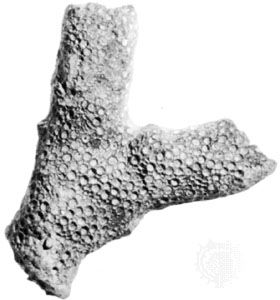
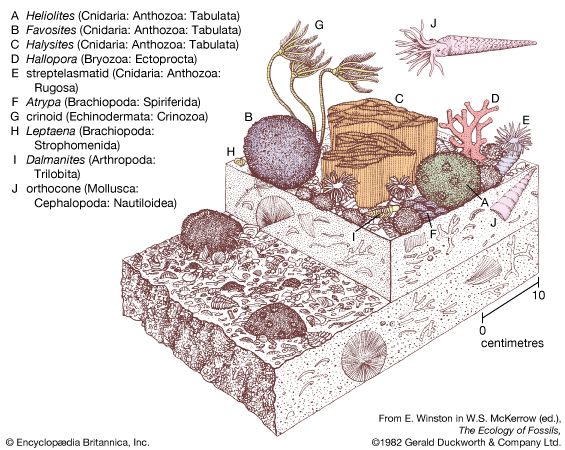
Hallopora is a genus of extinct bryozoans, commonly referred to as moss animals. These organisms are identified in the fossil record within marine rocks…
What is Hallopora?
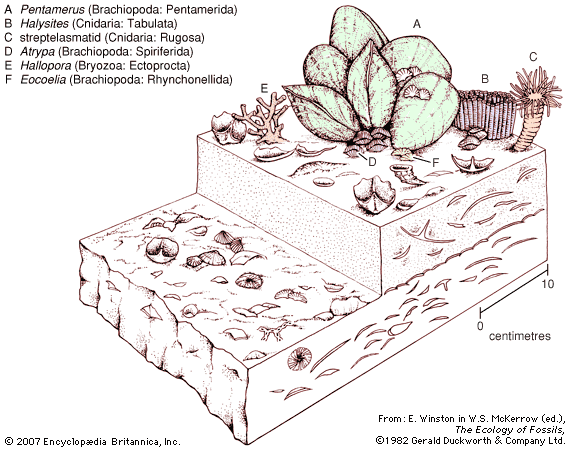
Hallopora is a genus of extinct bryozoans, commonly referred to as moss animals. These organisms are identified in the fossil record within marine rocks dating from the Ordovician to the Silurian periods, spanning approximately 505 to 408 million years ago.12
The genus is characterized by its distinct internal structure and the notably large size of its pores. Because various species of Hallopora are well-documented, they are frequently utilized by paleontologists for the purpose of stratigraphic correlation.1
What are bryozoans and how do they live?
Bryozoans, also known as moss animals, are aquatic invertebrates that form colonies composed of numerous connected units called zooids. While individual zooids are typically less than one millimeter long, their colonies can grow into various shapes, including crusts on stones, shells, or vegetation.34
How They Live
- Feeding: Bryozoans use a ciliated ring of tentacles called a lophophore to capture planktonic food particles from the water. In marine species, these tentacles form a funnel that directs food toward the mouth.35
- Habitat: They are widely distributed in both fresh and salt water. Marine species are most abundant on the continental shelf, while freshwater species prefer clear, quiet, or slowly flowing water. They often colonize submerged surfaces like ship hulls, piers, and kelp.3462
- Colonial Integration: Colonies function as integrated organisms, often sharing a network that distributes nutrients. They reproduce through a combination of sexual reproduction and asexual budding, which allows them to expand their colonies or create new ones.78
How do fossils help scientists date rock layers?
Fossils are essential tools for scientists to determine the relative age of rock layers and correlate them across different geographic locations. This process relies on several key geological principles:
The Principle of Faunal Succession
The law of faunal succession states that fossilized plants and animals appear in the rock record in a predictable, orderly sequence over time. Because life forms have evolved and changed throughout Earth’s history, specific rock layers containing unique assemblages of fossils can be identified as belonging to a particular interval of geologic time.910
Index Fossils
To date and correlate strata effectively, geologists look for index fossils. An ideal index fossil is:
- Distinctive: Easily recognizable to avoid misidentification.119
- Widespread: Found across large geographic areas.119
- Short-lived: Existed for a brief period of geologic time, allowing for precise dating.119
- Abundant: Plentiful enough to be easily discovered.119
Biozones and Correlation
By tracking the first and last appearances of various species, scientists define biozones, which provide a fine-scale framework for dating rocks. While fossils provide relative ages, they are often calibrated using absolute dating methods—such as measuring radioactive isotopes in volcanic minerals—to confirm the timing of these biological sequences.12913
What was the environment like during the Ordovician period?
The Ordovician Period (485.4 to 443.4 million years ago) was a time of profound environmental transformation characterized by high sea levels, shifting plate tectonics, and significant climatic fluctuations.1415
Paleogeography and Sea Levels
During this period, four major continents were separated by three primary oceans. Rapid seafloor spreading at oceanic ridges raised the seafloor, leading to some of the highest global sea levels in the Phanerozoic Eon.zoic Eon](https://www.britannica.com/science/Phanerozoic-Eon). Consequently, vast areas of the continents were flooded; for instance, the Laurentia craton—which included much of modern North America—was almost entirely submerged under shallow epicontinental seas.161417
Climate and Atmosphere
Atmospheric carbon dioxide levels were estimated to be 14–16 times higher than today, driven by intense volcanic activity and limited silicate weathering due to the lack of land vegetation. This created a greenhouse climate with warm temperatures from the Equator to the poles. However, the period ended with a dramatic shift: the movement of Gondwana over the South Pole and a drawdown of carbon dioxide triggered a brief but intense ice age. This glaciation caused sea levels to drop by nearly 160 meters, contributing to a major mass extinction that claimed approximately 85 percent of all species.18141917
Sources
- Hallopora — Encyclopædia Britannica
- moss animal - Distribution and abundance — Encyclopædia Britannica
- moss animal — Encyclopædia Britannica
- moss animal - Colonies — Encyclopædia Britannica
- moss animal - Reproduction and life cycle — Encyclopædia Britannica
- moss animal - Food and feeding — Encyclopædia Britannica
- moss animal - Marine bryozoans — Encyclopædia Britannica
- moss animal - Freshwater bryozoans — Encyclopædia Britannica
- index fossil — Encyclopædia Britannica
- dating - Principles and techniques — Encyclopædia Britannica
- law of faunal succession — Encyclopædia Britannica
- dating - Distinctions between relative-age and absolute-age measurements — Encyclopædia Britannica
- geochronology - Stages and zones — Encyclopædia Britannica
- A Journey Through Time Since the Precambrian - Ordovician Period: 485.4 million to 443.4 million years ago — Encyclopædia Britannica
- Ordovician Period - Microfossils and plankton — Encyclopædia Britannica
- Ordovician Period — Encyclopædia Britannica
- Ordovician Period - Mass extinction at the end of the Ordovician — Encyclopædia Britannica
- Ordovician Period - Sea level — Encyclopædia Britannica
- Ordovician Period - Paleoclimate — Encyclopædia Britannica
- Ordovician Period - Paleogeography — Encyclopædia Britannica
Published on · 3 min read