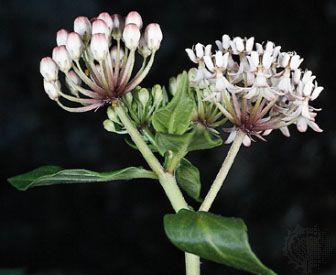
Apocynaceae
Plants in the Apocynaceae family have evolved diverse strategies to survive in varied environments, ranging from tropical forests to arid regions.
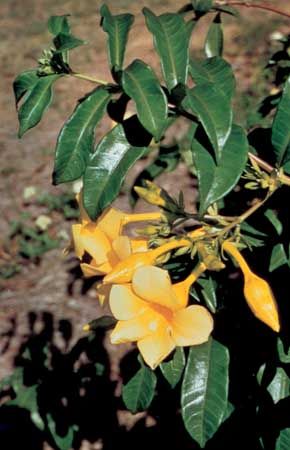
How have Apocynaceae plants adapted to their environments?
Plants in the Apocynaceae family have evolved diverse strategies to survive in varied environments, ranging from tropical forests to arid regions.
Chemical Defense
Nearly all members of the family produce milky, poisonous sap containing alkaloids and cardiac glycosides. These toxins serve as a potent defense against herbivores. For example, milkweeds contain cardenolides that protect them from many predators, though some insects, like the monarch butterfly, have adapted to sequester these toxins to become unpalatable to birds.12
Structural and Succulent Adaptations
In arid environments, some Apocynaceae have evolved into succulents, such as the African genera Adenium, Pachypodium, and Stapelia. These plants store water in fleshy tissues or large underground tubers. To attract pollinators in harsh conditions, some species, like the carrion flower, produce odors that mimic decaying matter to lure flies.12
Reproductive Specializations
The family exhibits complex floral adaptations to ensure successful reproduction. Many species in the subfamily Asclepiadoideae package pollen into bundles called pollinia, which attach to visiting insects to facilitate efficient cross-pollination.12
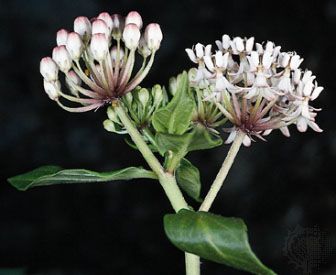
How are plants in the Apocynaceae family distributed geographically?
Plants in the Apocynaceae family, commonly known as the dogbane family, are distributed primarily throughout the tropical and subtropical regions of the world.12
While they are most prevalent in these warmer climates, the family is diverse, encompassing approximately 400 genera and 4,555 species of trees, shrubs, woody vines, and herbs1. Their global presence includes specialized forms adapted to various environments, such as the African succulent genera Adenium and Pachypodium.1
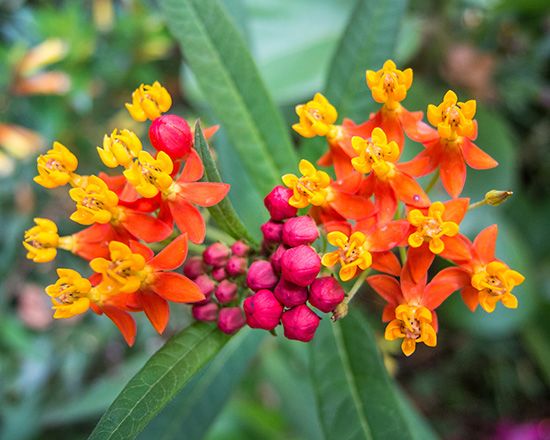
How do plants in the Apocynaceae family reproduce?
Plants in the Apocynaceae family reproduce primarily through sexual means, utilizing specialized floral structures to facilitate pollination.
Pollination Mechanisms
Many members of the family, particularly those in the subfamily Asclepiadoideae, have evolved highly specialized reproductive features. Instead of loose pollen, these plants package their pollen into bundles known as pollinia. These structures are designed to attach to visiting insects, such as flies, which then transport the pollen to other flowers to ensure cross-pollination.9
Floral Adaptations
To attract the necessary pollinators, various species have developed specific sensory lures. For instance, some succulent members of the family, such as the carrion flower, produce odors that mimic decaying matter. While offensive to humans, these scents are highly effective at attracting flies, which serve as the primary agents for transferring pollen between plants.9
Seed Development
Following successful pollination, the reproductive process concludes with the formation of fruit. In the Apocynaceae family, this fruit is typically a dry pod, or follicle, that splits open at maturity to release numerous seeds. These seeds are often equipped with tufts or wings, which aid in their dispersal.9
What is the evolutionary history of the Apocynaceae family?
The evolutionary history of the Apocynaceae family, commonly known as the dogbane family, is best understood through the lens of modern molecular phylogenetics. As a member of the order Gentianales, the family has undergone significant taxonomic revision, most notably through its broad circumscription to include the former Asclepiadaceae (milkweed family).2
This realignment is supported by DNA sequencing and shared morphological traits, such as the presence of milky, often poisonous sap and a highly modified female reproductive structure (gynoecium). The family’s evolution is marked by complex adaptations for pollination, particularly within the subfamily Asclepiadoideae. These plants evolved specialized mechanisms, such as the packaging of pollen into pollinia and the development of intricate floral structures to facilitate precise insect-mediated pollination.2
Furthermore, the ongoing coevolutionary relationship between these plants and their predators—such as the monarch butterfly—highlights the adaptive nature of the family’s chemical defenses, specifically the production of cardenolides8.
Sources
- Apocynaceae — Encyclopædia Britannica
- Apocynaceae — Merriam-Webster
- pollination - Structural — Encyclopædia Britannica
- pollination — Encyclopædia Britannica
- tree - Leaf adaptations — Encyclopædia Britannica
- succulent — Encyclopædia Britannica
- desert plant — Merriam-Webster
- Gentianales - Apocynaceae — Encyclopædia Britannica
- Asteraceae - Pollination — Encyclopædia Britannica
- seed dispersal - Self-dispersal — Encyclopædia Britannica
- seed - Self-dispersal — Encyclopædia Britannica
- cross-pollination — Encyclopædia Britannica
- plant reproductive system - Variations in reproductive cycles — Encyclopædia Britannica
- Reproductive behaviour - Insects — Encyclopædia Britannica
- orchid - Floral structure — Encyclopædia Britannica
- angiosperm - Annotated classification — Encyclopædia Britannica
- dogbane family — Merriam-Webster
- Botanical Sex: 9 Alluring Adaptations — Encyclopædia Britannica
- angiosperm - Paleobotany and evolution — Encyclopædia Britannica
- palm - Evolution — Encyclopædia Britannica
Published on · 3 min read