Ardipithecus
Ardipithecus is a genus of extinct early hominids that lived in what is now Ethiopia between approximately 5.8 and 4.4 million years ago. It includes two…
What is Ardipithecus?
Ardipithecus is a genus of extinct early hominids that lived in what is now Ethiopia between approximately 5.8 and 4.4 million years ago. It includes two primary species: Ar. kadabba and Ar. ramidus.12
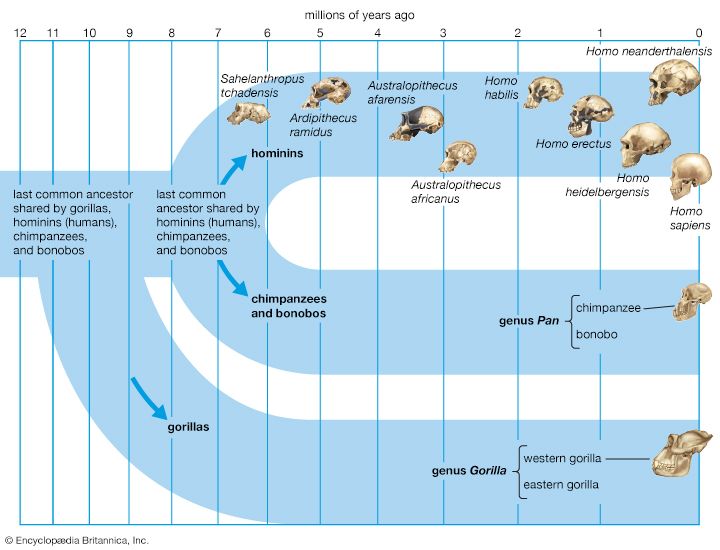
The genus is significant for filling a major gap in human evolution. Unlike earlier assumptions that the last common ancestor of humans and chimpanzees resembled a modern, knuckle-walking chimpanzee, Ardipithecus fossils indicate that early hominids did not pass through a chimpanzee-like stage. Instead, features such as knuckle-walking and specialized fruit-eating traits evolved in the chimpanzee lineage after it diverged from the human line.3
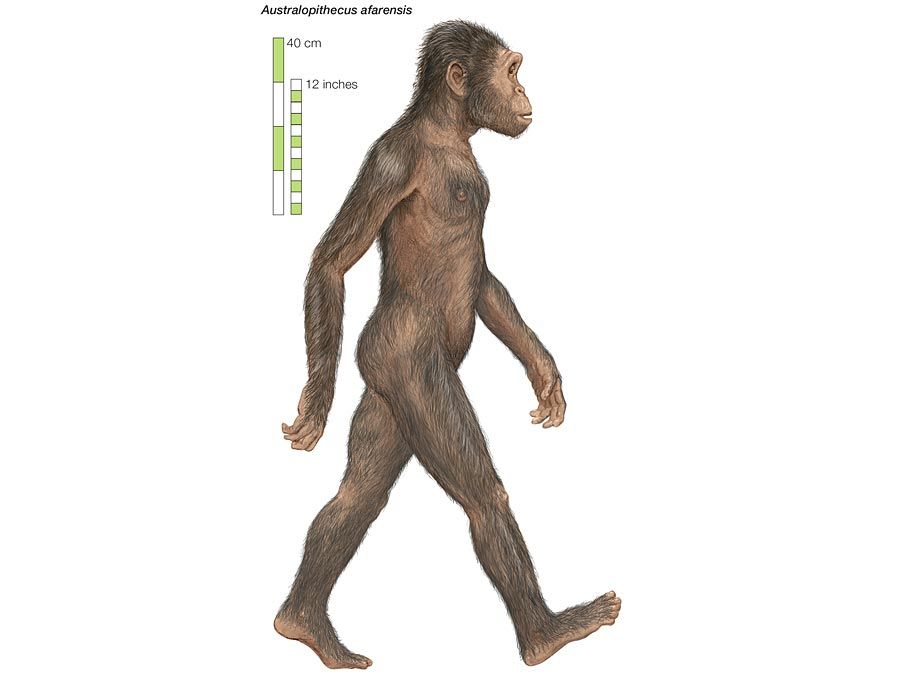
Anatomically, Ardipithecus displays a unique mosaic of traits. It possessed a small, apelike brain and a grasping big toe for climbing, yet its pelvis and skull base suggest it was capable of bipedalism. It was a woodland omnivore, well-adapted to an arboreal environment. Ardipithecus is considered the most likely ancestor of the later genus Australopithecus.1453
Where were Ardipithecus fossils discovered?
Ardipithecus fossils have been discovered exclusively in Ethiopia, specifically within the Middle Awash study area and the nearby Gona study area.6
Key discovery sites include:
- Aramis: Researchers first surveyed this area in 1981, returning in 1992 to focus on sediments dated to 4.4 million years ago. This site yielded the first hominid fossils of the genus, including the famous partial female skeleton nicknamed “Ardi.”6
- Gona: Additional Ar. ramidus fossils were recovered here by an independent research project led by Dr. Sileshi Semaw. Later, fossils belonging to the older chronospecies Ar. kadabba were also identified in Late Miocene sediments at this location.6
The fossils were found in geological contexts that provided significant data regarding the ancient environment, which was characterized as a woodland floodplain rather than a dense forest or open savanna.65
How old are the Ardipithecus fossils?
Ardipithecus fossils date to between 5.8 million and 4.4 million years ago, spanning the late Miocene Epoch to the early Pliocene Epoch.6
The genus includes two primary species with distinct age ranges:
- Ar. ramidus: Fossils of this species, including the famous partial skeleton known as “Ardi,” have been dated to approximately 4.4 million years ago.78
- Ar. kadabba: This earlier chronospecies has been recovered from sediments dating to between 5.2 and 5.8 million years ago.9
These dates were established through the study of volcanic ash horizons and geological strata within the Middle Awash and Gona study areas in Ethiopia.79
What physical features did Ardipithecus have?
Ardipithecus possessed a unique anatomical mosaic that distinguishes it from both modern apes and later hominids, reflecting a lifestyle adapted to both terrestrial and arboreal environments.2
Craniodental Features
- Skull and Brain: The skull of Ar. ramidus featured a prognathic (projecting) snout and a small cranial capacity of approximately 300–350 cc, similar to that of a chimpanzee. Notably, the foramen magnum was positioned centrally under the skull, a key indicator of bipedal posture.291
- Dentition: Unlike modern apes, Ardipithecus lacked large, honing canines associated with intermale aggression. Its teeth featured enamel of intermediate thickness—thinner than that of Australopithecus but thicker than that of living chimpanzees—suggesting a diet as a woodland omnivore rather than a fruit specialist.295
Locomotor Anatomy
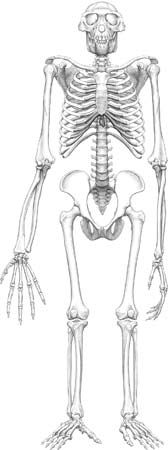
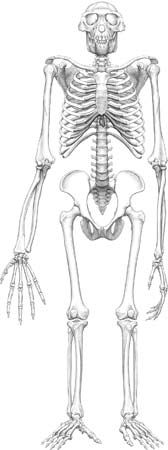
- Pelvis: The pelvis combined apelike and humanlike traits. It featured a short, broad ilium oriented to allow for a flexible lower back, which is a marker of bipedalism, while the lower pelvis (ischium) remained apelike to anchor strong climbing muscles.29
- Limbs and Extremities: Ardipithecus had long arms and fingers suited for climbing. Its feet were unique, featuring a rigid midfoot for walking but retaining a fully opposable great toe for grasping branches. These proportions do not match those of modern African apes or humans, suggesting a distinct evolutionary path.952
Sources
- Australopithecus - Ardipithecus kadabba and Ar. ramidus — Encyclopædia Britannica
- Ardipithecus - Anatomical features — Encyclopædia Britannica
- Ardipithecus - Role in human evolution — Encyclopædia Britannica
- Ardipithecus — Merriam-Webster
- Ardipithecus - Habitat — Encyclopædia Britannica
- Ardipithecus - The discovery of Ardipithecus — Encyclopædia Britannica
- Ardipithecus — Encyclopædia Britannica
- Aramis — Encyclopædia Britannica
- human evolution - The fossil evidence — Encyclopædia Britannica
- Hadar — Encyclopædia Britannica
- Homo habilis - Dating the fossils — Encyclopædia Britannica
Published on · 3 min read