Bathypelagic Zone
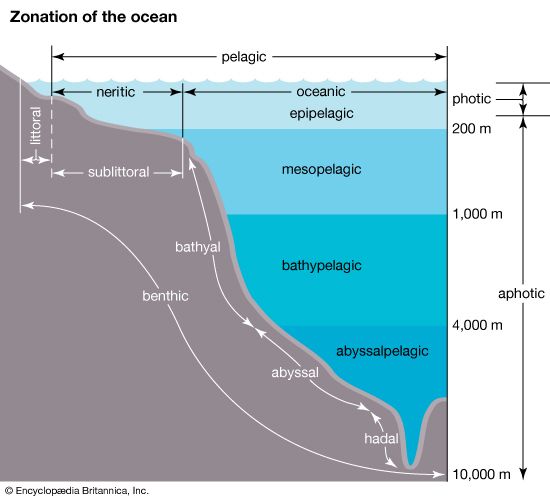
The bathypelagic zone is a worldwide layer of deep ocean water located approximately 3,000 to 13,000 feet (1,000 to 4,000 meters) below the surface.
What is bathypelagic zone?
The bathypelagic zone is a worldwide layer of deep ocean water located approximately 3,000 to 13,000 feet (1,000 to 4,000 meters) below the surface.12
As part of the pelagic environment, this zone sits beneath the mesopelagic zone and above the abyssalpelagic zone. Because it exists within the aphotic zone, the region is characterized by a lack of sunlight, which prevents photosynthesis from occurring. Despite these extreme conditions, the bathypelagic zone supports a diverse array of marine life, including various species of eels, fishes, and mollusks.21
What is the difference between the pelagic and benthic environments?
Marine environments are broadly categorized into two distinct realms based on their physical location within the ocean: the pelagic environment and the benthic environment.3
The Pelagic Environment
The pelagic environment encompasses the entire water column of the ocean, representing the largest volume of any inhabited environment on Earth. It is divided into two primary provinces:2
- Neritic Province: The water column located above the continental shelf, which typically features higher nutrient levels due to riverine runoff.3
- Oceanic Province: The open waters that exist beyond the continental shelf.3
Life in the pelagic zone is categorized into phytoplankton, zooplankton, and nekton (free-swimming organisms like fish).2
The Benthic Environment
The benthic environment refers to the seafloor and the organisms that inhabit it, collectively known as the benthos. This realm is categorized by its proximity to the shore and depth:34
- Epifauna: Organisms that live on the surface of the seafloor or on bottom objects.4
- Infauna: Organisms that live buried within the seafloor sediments.4
Unlike the pelagic zone, which is defined by the water itself, the benthic environment is defined by the substrate, ranging from the intertidal littoral zone to the deepest hadal zone of the ocean trenches.3
How do animals in the aphotic zone survive without sunlight?
Animals in the aphotic zone—the deep-ocean layer where sunlight does not penetrate—rely on specialized survival strategies to obtain energy and interact with their environment.
Energy Sources
Because photosynthesis is impossible without light, these organisms utilize two primary food sources:
- Marine Snow: Much of the life in the deep sea depends on organic debris, such as dead organisms and waste, that “rains down” from the upper, sunlit layers of the ocean.67
- Chemosynthesis: Near deep-sea hydrothermal vents, organisms thrive through chemoautotrophic processes. Bacteria oxidize sulfur compounds to derive chemical energy, forming the base of a food web that supports mussels, clams, and specialized worms. Many of these animals maintain symbiotic relationships with these bacteria to secure their nutrition.47
Adaptations for Survival
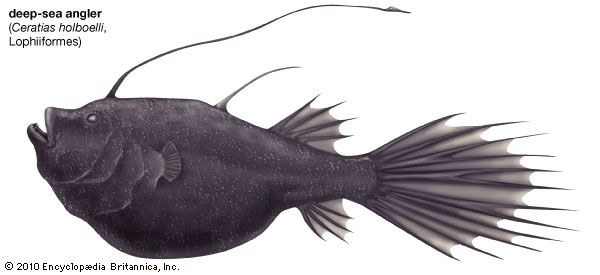
- Bioluminescence: Many deep-sea creatures use bioluminescence to navigate the darkness. They may use light organs, or photophores, to attract prey, signal mates, or confuse predators. Some fish, such as the anglerfish, use a luminous lure to draw prey toward their jaws.89
- Camouflage: Some organisms use bioluminescence to match the intensity of faint light from above, effectively hiding their silhouettes from predators lurking below.8
- Pressure Tolerance: To survive the extreme hydrostatic pressure of the deep ocean, these animals lack air-filled compartments like swim bladders or lungs.10
What are the characteristics of the abyssalpelagic zone?
The abyssalpelagic zone is a division of the pelagic environment that encompasses the deepest parts of the open ocean, extending from a depth of 4,000 metres down to the recesses of deep-sea trenches.12
Key characteristics of this zone include:
- Depth and Location: It represents the deepest layer of the water column, situated below the bathypelagic zone, which spans from 1,000 to 4,000 metres.12
- Environmental Conditions: As part of the aphotic zone, this region is characterized by total darkness, meaning no photosynthesis can occur. Consequently, the zone lacks the primary production found in surface waters, and life here relies on organic material—often in the form of marine snow—that sinks from the upper layers of the ocean.122
- Biological Context: While the pelagic environment was historically considered uniform, the abyssalpelagic zone is part of a vast, interconnected system where the water column provides essential nutrients and organic fallout to the benthic environment below.122
Sources
- bathypelagic zone — Encyclopædia Britannica
- Marine ecosystem - Geography, oceanography, and topography — Encyclopædia Britannica
- pelagic zone — Encyclopædia Britannica
- benthos — Encyclopædia Britannica
- deep-scattering layer — Encyclopædia Britannica
- Bioluminescence - The role of bioluminescence in behavior — Encyclopædia Britannica
- Marine bioluminescence — Encyclopædia Britannica
- Marine ecosystem - Organisms of the deep-sea vents — Encyclopædia Britannica
- Biosphere - Hydrostatic pressure — Encyclopædia Britannica
- Marine ecosystem - Plankton — Encyclopædia Britannica
- life - Temperature and desiccation — Encyclopædia Britannica
- abyssal zone — Encyclopædia Britannica
- Marine ecosystem - Links between the pelagic environments and the benthos — Encyclopædia Britannica
Published on · 3 min read