Bread Palm
The term bread palm refers to any of approximately 65 species of cycads belonging to the genus Encephalartos in the family Zamiaceae, which are native to…
What is Bread palm?
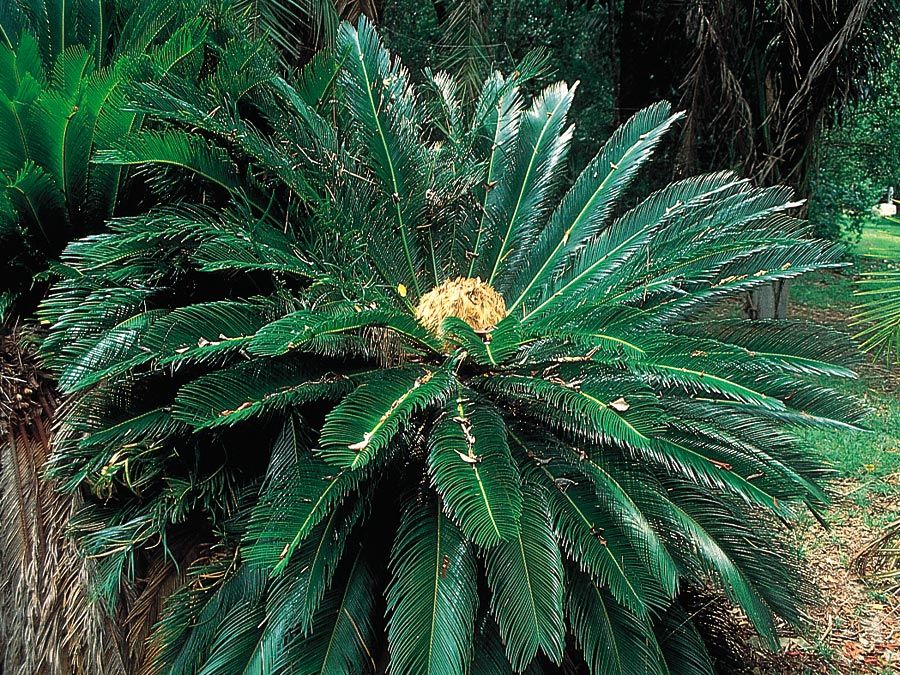
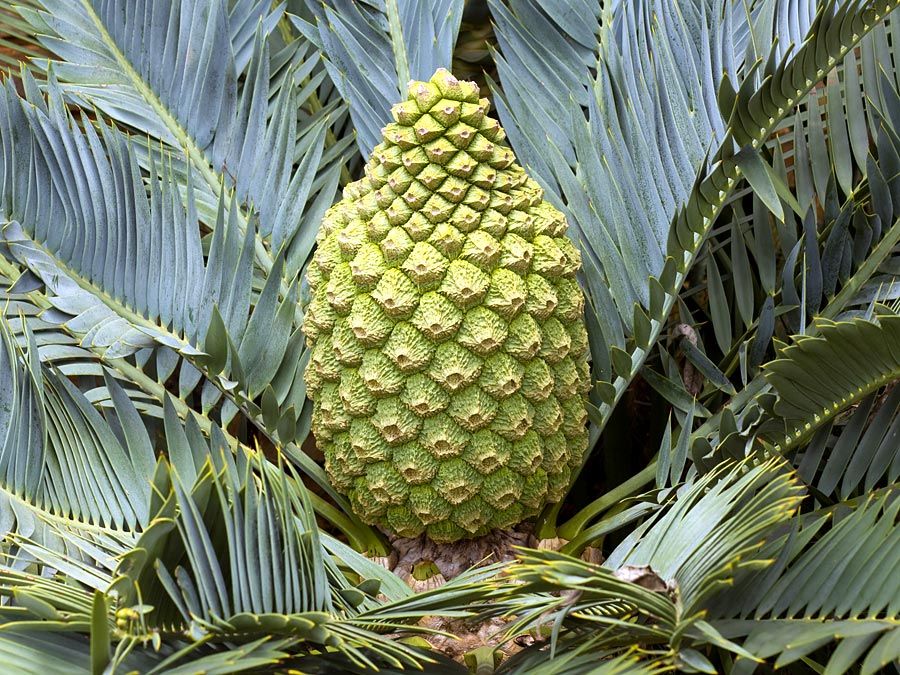
The term bread palm refers to any of approximately 65 species of cycads belonging to the genus Encephalartos in the family Zamiaceae, which are native to Africa.1
The name is derived from a breadlike foodstuff traditionally prepared from the mealy, starchy center of the plant’s stem and potentially its seeds, which feature fleshy coverings. These plants can reach heights of nearly 6 meters (20 feet) and are characterized by stiff, spreading, pinnate leaves that recurve at the tips.1
Due to their aesthetic appeal, several species of Encephalartos are cultivated as greenhouse and conservatory plants. Unfortunately, this popularity has led to excessive collection from the wild, causing some species to become critically endangered. It is essential to support conservation efforts to protect these unique plants from extinction.1
What are the main differences between cycads and true palm trees?
Although cycads and true palm trees often share a similar appearance, they are biologically distinct groups with fundamental differences in their evolution and reproduction.
Biological Classification
- Palms: Belong to the family Arecaceae within the order Arecales. They are angiosperms, meaning they are flowering plants that produce seeds enclosed within a fruit.4
- Cycads: Belong to the order Cycadales. They are gymnosperms, a group of seed-bearing plants that do not produce flowers or fruits; instead, they bear their seeds in cones.51
Key Structural Differences
- Reproduction: Palms produce flowers and fruits, whereas cycads rely on cones. Furthermore, cycad reproduction is considered primitive, as they utilize flagellated, motile sperm to fertilize their seeds—a trait shared with ferns rather than flowering plants.6
- Leaves: While both have pinnate (featherlike) leaves, palm leaves develop from a single meristem that forms a plicated blade, which then separates into pinnae. Cycad leaves are often stiff and leathery, and in the genus Cycas, new leaves uncoil in a manner similar to ferns.471
- Stems: Palm stems contain collateral vascular bundles and silica bodies. In contrast, cycad stems are characterized by a large, fleshy pith surrounded by a narrow zone of soft wood, often covered by an “armour” of persistent leaf bases.451
Why must some cycad extracts be processed to remove toxins?
Some cycad extracts must be processed to remove toxins because they contain cycasin, a potent glucoside. This compound is a known neurotoxin that can cause severe toxic and carcinogenic effects when ingested by mammals.89
While the stems of some cycads can yield edible starch, this material is not inherently safe for consumption without careful preparation. In the case of the cycad sago (Cycas revoluta), the extracted material requires thorough processing to eliminate these dangerous toxins before it can be safely used as food. Because these plants possess properties that are hazardous to both humans and livestock, they have historically been categorized as noxious in some regions. It is vital to prioritize safety and follow traditional, rigorous detoxification methods when preparing any plant material known to contain such harmful substances.1093
How does the process of harvesting sago starch work?
The process of harvesting sago starch from the true sago palm (Metroxylon sagu) is a meticulous procedure centered on the plant’s life cycle:
- Timing: The palm is harvested when it reaches maturity, typically around 15 years, just as the flower spike appears. At this stage, the pith (the central portion of the stem) is gorged with starch. If the tree is left to fruit, the starch is absorbed and the tree dies, making timely harvest essential.3
- Extraction: The trunk is cut down, divided into sections, and split open to access the starchy pith. This material is then grated into a powder.3
- Refining: The powder is kneaded with water over a strainer. The starch passes through into a trough below, while the woody fibers are separated and discarded.3
- Processing: The resulting starch undergoes several washings to produce sago meal. For export, this meal is mixed with water to form a paste, which is then rubbed through sieves of varying sizes to create grains known as pearl or bullet sago.3
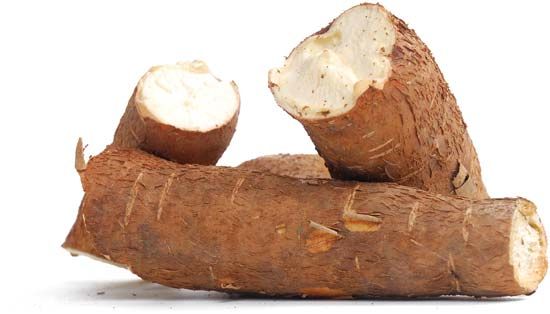
While sago can also be derived from cycads or cassava root, it is important to note that cycad-derived starch requires additional, rigorous processing to remove the neurotoxin cycasin before it is safe for consumption.35
Sources
- Cycas — Encyclopædia Britannica
- bread palm — Encyclopædia Britannica
- sago — Encyclopædia Britannica
- Arecales — Encyclopædia Britannica
- cycad — Encyclopædia Britannica
- cycadophyte - Cycads — Encyclopædia Britannica
- gymnosperm - Cycadophyta — Encyclopædia Britannica
- cycasin — Merriam-Webster
- Did you know? — Merriam-Webster
- cycadophyte - Ecology and habitats — Encyclopædia Britannica
Published on · 3 min read