Butterwort
Butterwort (genus Pinguicula) is a group of more than 120 species of small carnivorous plants belonging to the family Lentibulariaceae. These plants are…
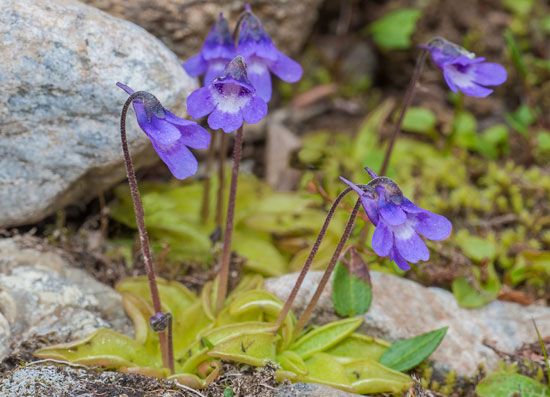
What is a butterwort plant?
Butterwort (genus Pinguicula) is a group of more than 120 species of small carnivorous plants belonging to the family Lentibulariaceae. These plants are primarily found in wetlands and other moist, nutrient-poor habitats across the Northern Hemisphere, as well as parts of South America.1
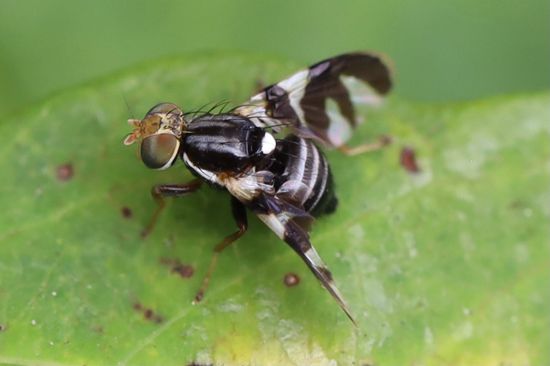
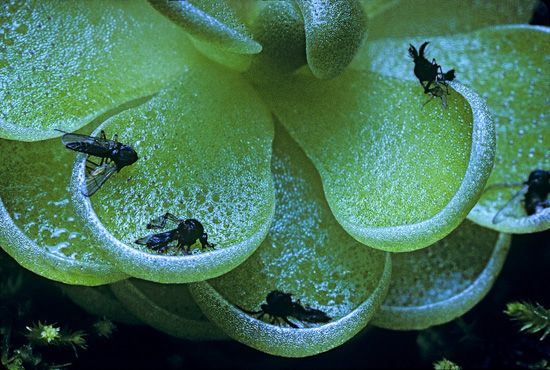
Butterworts are photosynthetic but supplement their nutrient intake—particularly nitrogen—by trapping and digesting small insects like fruit flies and gnats1. Their leaves are covered in specialized glands:
- Peduncular glands secrete a sticky mucilage that lures and traps prey, acting like flypaper.1
- Sessile glands release digestive enzymes to break down the trapped insects, allowing the plant to absorb the resulting nutrients.1
Some species exhibit thigmotropism, where leaf margins curl to better contain the prey during digestion. While they are fascinating examples of botanical adaptation, many species face threats from habitat loss and climate change.1
Where do butterwort plants usually grow?
Butterwort plants (Pinguicula) are widely distributed, typically thriving in wetlands and other moist habitats characterized by nutrient-poor soil.1
Their geographic range includes:
- Northern Hemisphere: They are found throughout subarctic and temperate regions, including northern North America, Greenland, and Eurasia.1
- Mountainous Regions: Species like the alpine butterwort (P. alpina) inhabit high-elevation areas in Iceland, central and northern Europe, northern Asia, and the Himalayas.1
- Warmer Climates: While most species prefer cold environments, some are native to the southeastern United States, the Caribbean, Mexico, Central America, the Atlantic coast of Europe, and the Mediterranean coast of northwestern Africa.1
- South America: They are also native to Peru, Bolivia, Chile, and Argentina.1
Because these plants grow in nutrient-deficient soils, they rely on their carnivorous nature to supplement their intake of essential nutrients like nitrogen.1
What do butterworts eat and how do they catch their food?
Butterworts (Pinguicula) are carnivorous plants that supplement their diet by trapping and digesting small insects, such as fruit flies and gnats, as well as windblown pollen. While they are photosynthetic and produce their own energy from sunlight, they rely on this prey to obtain essential nutrients like nitrogen that are scarce in their native wetland environments.12
They capture food using specialized glands on their sticky, “buttery” leaves:1
- Luring and Trapping: Peduncular glands secrete a sticky mucilage that emits an attractive odor and mimics nectar. When an insect lands on the leaf, it becomes ensnared in the mucilage, much like a flypaper trap.1
- Thigmotropism: In some species, the leaf margins curl toward the struggling insect. This movement helps contain the prey and directs more mucilage toward the insect.1
- Digestion: Once the prey is encased, sessile glands on the leaf surface release digestive enzymes. The plant then absorbs the resulting nutrient-rich fluids through holes in the leaf surface.1
How does the sticky surface of butterwort leaves help the plant survive?
The sticky surface of butterwort leaves is a vital adaptation that allows the plant to thrive in nutrient-poor wetlands and bogs. While these plants are photosynthetic and produce their own energy, they rely on their specialized leaves to capture prey, which provides essential nutrients like nitrogen that are otherwise unavailable in their environment.21
The leaves are covered in two types of glands that facilitate this survival strategy:
- Luring and Trapping: Peduncular glands secrete a sticky mucilage that mimics nectar and emits an attractive odor. This substance acts like flypaper, ensnaring small insects such as gnats and fruit flies upon contact.1
- Digestion: Once prey is trapped, sessile glands release digestive enzymes to break down the insect. The plant then absorbs the resulting nutrient-rich fluids through holes in the leaf surface.1
In some species, the leaves exhibit thigmotropism, curling their margins to better contain the prey and concentrate digestive fluids, ensuring the plant efficiently extracts the nutrients necessary for its survival.1
Sources
- Butterwort — Encyclopædia Britannica
- Do Carnivorous Plants Eat Their Prey? — Encyclopædia Britannica
Published on · 3 min read