Canyon
A canyon is a deep, steep-walled, V-shaped valley carved into the earth by a river flowing through resistant rock. The term is derived from the Spanish word…
What is canyon?
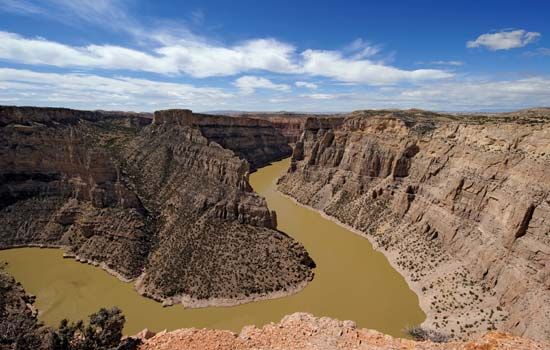
A canyon is a deep, steep-walled, V-shaped valley carved into the earth by a river flowing through resistant rock. The term is derived from the Spanish word cañón, meaning “tube”. While smaller versions of these landforms are often called gorges, both are typically found in the upper courses of rivers where swift currents facilitate rapid erosion.12
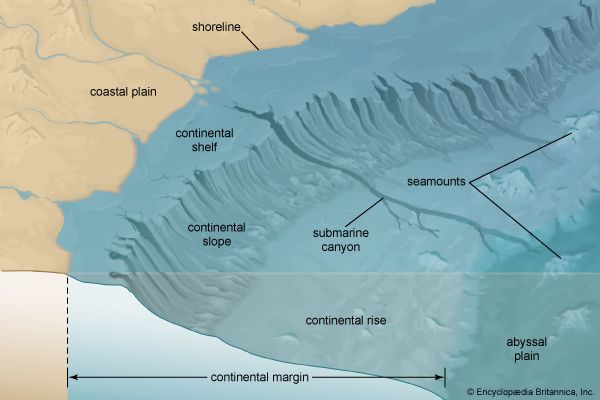
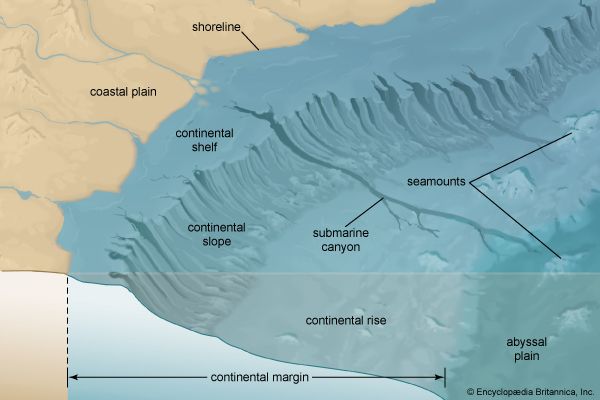
Canyons often form in arid or semiarid regions, where the lack of frequent rainfall prevents the steep, angular walls from softening. Their creation is frequently driven by tectonic activity, such as vertical uplift, which increases a river’s erosive power—a process known as rejuvenation. Beyond terrestrial landscapes, submarine canyons also exist, cutting across continental shelves and slopes, often maintained by deep-water currents or sediment movements.234
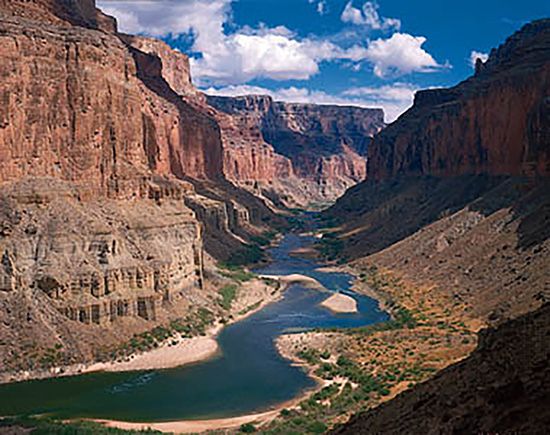
How do rivers carve through solid rock to create canyons?
Rivers carve through solid rock to create canyons primarily through the process of fluvial erosion, where the river acts as a powerful tool of landscape evolution.64
The Mechanism of Erosion
A river’s ability to cut into rock is driven by its flow velocity and the sediment it carries. As a river flows, it entrains materials like mud, sand, and gravel. These particles act as abrasive tools, grinding against the riverbed and wearing away the rock through a process of mechanical abrasion. This scouring action is most effective when the river’s volume and velocity are high, such as during floods.78
The Role of Tectonic Uplift
Canyons often form in regions experiencing vertical uplift. As the land rises, it increases the river’s gradient, which in turn boosts the water’s kinetic energy and erosive power—a process known as rejuvenation. This allows the river to cut deeper into the earth, keeping pace with the rising landscape to maintain its path.69
Widening and Shaping
While the river cuts downward, other natural forces widen the canyon:
- Weathering: Rain, wind, and temperature fluctuations break down rock walls.7
- Chemical Erosion: This gradually wears away softer rock layers.7
- Climate: In semiarid regions, the lack of frequent rainfall prevents the canyon walls from softening and eroding away too quickly, preserving the dramatic, steep-walled landscape.7
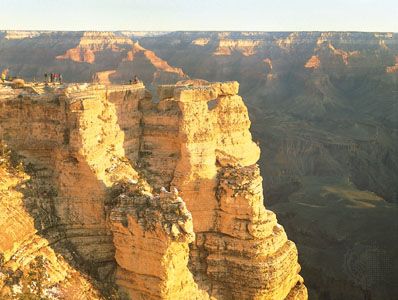
What is the difference between a canyon and a gorge?
In geological terms, there is no fundamental difference between a canyon and a gorge; they are both deep, steep-walled, V-shaped valleys carved by rivers through resistant rock. In common usage, the terms are often treated as synonyms, though “gorge” is frequently used to describe smaller versions of these landforms.1132
Both features are considered to be in the initial phase of valley development and are typically formed by accelerated river entrenchment, often triggered by tectonic activity such as vertical uplift. This process, known as rejuvenation, increases the erosive power of a river, allowing it to cut rapidly into the bedrock. Whether a feature is labeled a canyon or a gorge often depends on regional naming conventions rather than a distinct scientific classification.113245
Are there canyons located on the ocean floor?
Yes, there are indeed canyons located on the ocean floor, known as submarine canyons. These are narrow, steep-sided valleys that cut into the continental slopes and continental rises of the world’s oceans.12
Characteristics and Formation
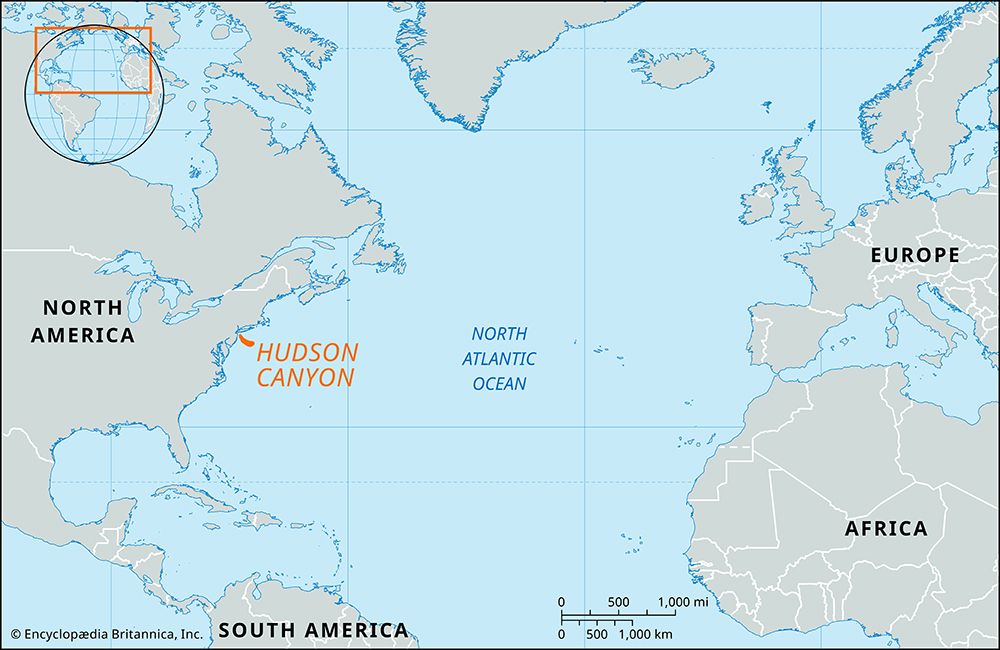
Submarine canyons resemble terrestrial canyons but often feature steeper side slopes, higher gradients, and narrower floors. While some are associated with modern rivers, such as the Hudson Canyon, many were likely initiated by subaerial erosion during the Pleistocene Epoch when sea levels were significantly lower.125
Today, these canyons are primarily shaped and maintained by marine processes, most notably turbidity currents—underwater avalanches of sediment-laden water that scour the seafloor. These systems act as vital conduits, transporting sediment from continental margins to the deep-sea abyssal plains. Some, like the Zemchung Canyon and Monterey Canyon, rival the scale of the Grand Canyon on land.125
Sources
- list of canyons and gorges — Encyclopædia Britannica
- canyon — Merriam-Webster
- canyons — Merriam-Webster
- river - Formation of canyons and gorges — Encyclopædia Britannica
- canyon — Encyclopædia Britannica
- How was the Grand Canyon formed? — Encyclopædia Britannica
- river - Falls attributable to differential erosion — Encyclopædia Britannica
- river - Valleys and canyons — Encyclopædia Britannica
- erosion — Encyclopædia Britannica
- valley — Encyclopædia Britannica
- gorge — Merriam-Webster
- submarine canyon — Encyclopædia Britannica
Published on · 3 min read