Cauliflower
Modern cauliflower (Brassica oleracea variety botrytis) is a product of long-term selective breeding rather than modern genetic engineering. Beginning at…
How has genetic modification or selective breeding impacted modern cauliflower varieties?
Modern cauliflower (Brassica oleracea variety botrytis) is a product of long-term selective breeding rather than modern genetic engineering. Beginning at least 2,000 years ago, humans practiced selective breeding on a common ancestor, the wild mustard plant. By specifically selecting for plants with enlarged, succulent flower buds, breeders successfully developed the distinct cultivar we recognize today as cauliflower.12
While genetic engineering is a powerful tool used in modern agriculture to introduce traits like pest resistance or drought tolerance in crops such as corn and cotton, the development of cauliflower varieties has historically relied on the traditional mating of individuals with desired traits to propagate specific genotypes traditional mating of individuals with desired traits to propagate specific genotypes. This process of selection has been essential in shaping the edible “curd” that defines the vegetable.234
It is important to recognize that while selective breeding is a driver of evolution, intense selection can sometimes reduce genetic diversity, potentially increasing a population’s susceptibility to disease or other stressors.1
How is cauliflower cultivated, and what are the ideal growing conditions?
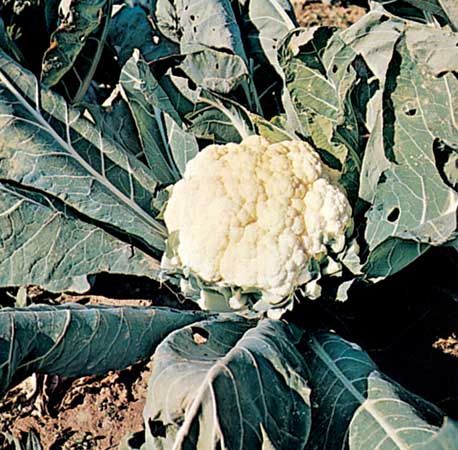
Cauliflower (Brassica oleracea variety botrytis) is a cool-weather annual crop that requires specific environmental conditions to thrive. To produce high-quality heads, the plants need consistent temperatures of approximately 16 °C (60 °F). They perform best in moist, nitrogen-rich soil; if the plants experience drought stress, they will typically produce only small, underdeveloped heads.1
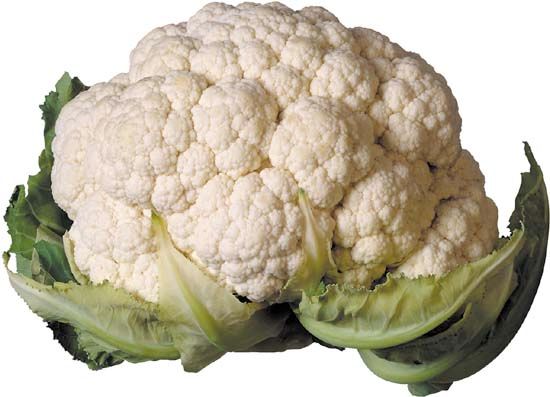
Cultivation involves managing several biological challenges. Because the edible “curd” is an immature inflorescence, it is sensitive to light and heat. Growers often tie the large, broad leaves together over the curd before harvest to shade it, which prevents discoloration and ensures the desired appearance. Farmers must also remain vigilant against common threats, including clubroot and various foliage-eating insects such as aphids, cabbage loopers, and cabbage whites.1
What are some common pests and diseases that affect cauliflower plants?
Cauliflower plants are susceptible to a variety of pests and diseases that can impact crop health and yield. Managing these threats effectively is essential for successful cultivation.
Common Diseases
- Clubroot: This is a significant fungal-like disease caused by Plasmodiophora brassicae. It leads to stunted growth, yellowing, and wilting, with characteristic spindle-like distortions on the roots. It thrives in cool, poorly drained, and acidic soils and can persist in the soil for over a decade.
- Downy mildew: Caused by various oomycetes, this disease appears as downy patches on the undersides of leaves, often accompanied by yellow or brown spots on the upper surfaces. It is most prevalent in cool, humid conditions and can cause seedlings to collapse.
Common Pests
Cauliflower is frequently targeted by foliage-eating insects, including:
- Cabbage loopers: These green, white-lined caterpillars are major economic pests that feed on the leaves of cabbage and related crops.
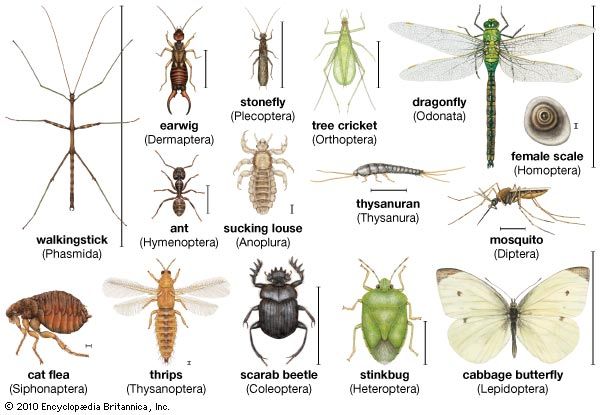
- Cabbage whites: A common butterfly whose larvae feed on the foliage of brassica crops.
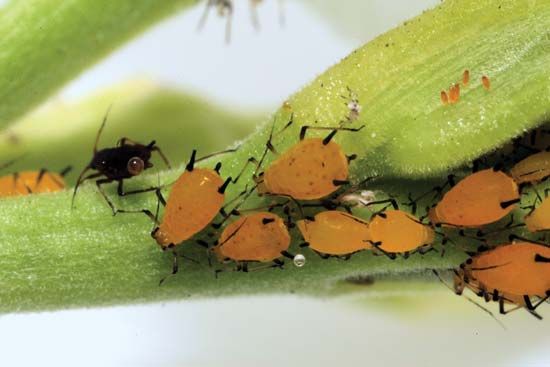
- Aphids: Small insects that can cause significant damage by feeding on plant sap.
To manage these issues, growers often utilize integrated pest management, which combines biological controls, crop rotation, the use of resistant varieties, and the careful application of fungicides or pesticides only as a last resort.
What is cauliflower and which plant family does it belong to?
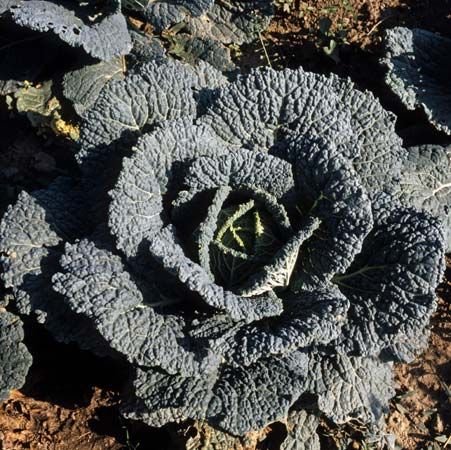
Cauliflower (Brassica oleracea, variety botrytis) is a highly modified form of cabbage that belongs to the mustard family, known as Brassicaceae.112
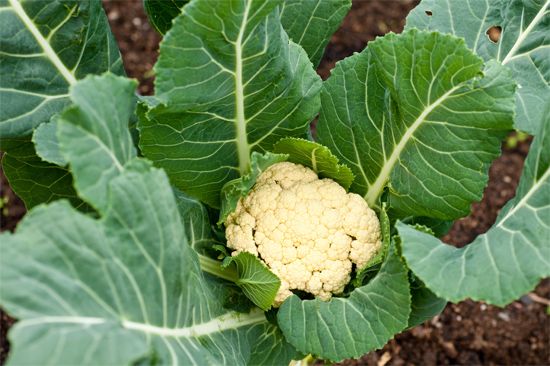
It is an annual plant grown for its edible “curd,” which consists of a mass of partially developed flower structures and fleshy stalks. These plants typically reach about 0.5 meters (1.5 feet) in height and feature large, rounded leaves. While white is the most common commercial variety, cauliflower also exists in colors such as orange, purple, green, and brown.1
Sources
- Cauliflower — Encyclopædia Britannica
- selective breeding — Encyclopædia Britannica
- genetic engineering - Applications — Encyclopædia Britannica
- Cabbage — Encyclopædia Britannica
- genetic modification — Merriam-Webster
- vegetable processing - Blanching — Encyclopædia Britannica
- food preservation - Blanching — Encyclopædia Britannica
- Clubroot — Encyclopædia Britannica
- Downy mildew — Encyclopædia Britannica
- Integrated pest management — Encyclopædia Britannica
- cabbage looper — Encyclopædia Britannica
- brassica — Encyclopædia Britannica
- cauliflower ware — Encyclopædia Britannica
Published on · 3 min read