Century Plant
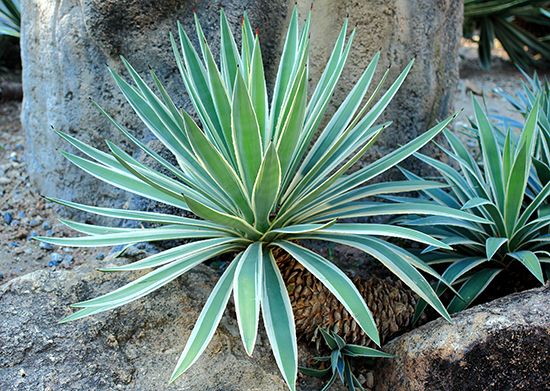
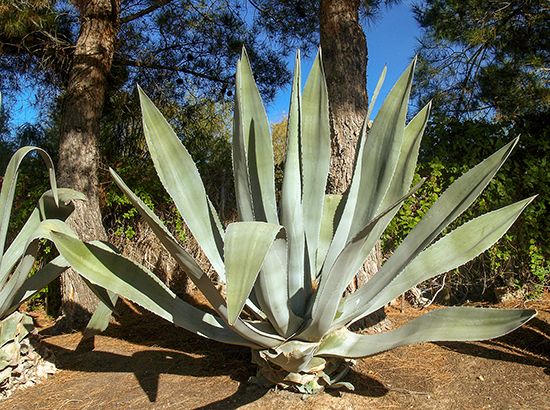
The term "century plant" is a common name applied to several species of Agave, most notably Agave americana. Despite the implication of its name, these…
What is Century plant?
The term “century plant” is a common name applied to several species of Agave, most notably Agave americana. Despite the implication of its name, these plants do not typically live for a century; most do not survive longer than 30 years.12
These plants are characterized by a rosette of succulent or leathery leaves and are monocarpic, meaning each rosette dies after it flowers and fruits. When they do bloom, they produce tall, branching or unbranching inflorescences that can reach heights of more than 9 meters (30 feet). While the main rosette dies after this process, the plant often persists through clonal “pups” that grow at the base.21
Beyond their use as ornamentals in desert landscaping, century plants are economically significant as a source of maguey fiber and agave nectar, a sweetener derived from the plant’s sap.12
How do agave plants survive in arid desert environments?
Agave plants are highly adapted to survive in arid and semiarid environments through specialized physiological and structural traits. Their primary survival strategy involves the use of crassulacean acid metabolism (CAM), a specialized form of photosynthesis.53
Under this system, the plant keeps its stomata—small pores on the leaf surface—closed during the hot, dry daylight hours to minimize water loss through transpiration. Instead, the stomata open at night to take in carbon dioxide, allowing the plant to fix carbon while avoiding the desiccating effects of the sun.53
Structurally, agaves are succulents that store water within their thick, fleshy leaves. This water-storage capacity allows them to endure extended periods of drought. Additionally, their root systems are often broad or deep, enabling them to efficiently capture moisture from their environment.53
What is the difference between an agave plant and a cactus?
While agave plants and cacti are both common in arid environments and often share a succulent appearance, they belong to entirely different plant families and possess distinct biological characteristics.
Key Differences
- Family and Classification: Cacti belong to the family Cactaceae (order Caryophyllales). Agaves belong to the family Asparagaceae (subfamily Agavoideae, order Asparagales), making them more closely related to plants like asparagus and lilies than to cacti.673
- Areoles: The most reliable way to distinguish a cactus from other succulents is the presence of areoles. These are small, cushion-like structures from which spines, flowers, and branches grow. Areoles are unique to the cactus family. Agaves lack areoles; while they often have spines along their leaf edges and a sharp terminal spine, these are part of the leaf structure itself, not growths from a specialized cushion.67
- Leaves: Most cacti have evolved to lose their leaves entirely, with the stem taking over the function of photosynthesis. In contrast, agaves are defined by a rosette of large, fleshy, or leathery leaves that remain the primary site of photosynthesis throughout the plant’s life.673
- Reproduction: Agaves are generally monocarpic, meaning the main rosette dies after a single, massive flowering event. While many cacti also flower, they are typically perennial and do not die after blooming.76
Which animals are responsible for pollinating agave flowers?
Agave flowers are pollinated by a variety of animals, depending on the specific species of the plant. The primary pollinators include:
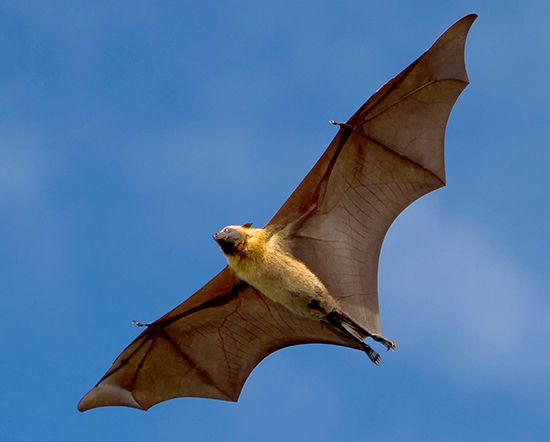
- Bats: Many agave species, such as the century plant, rely on bats for pollination. These plants have evolved to produce copious amounts of nectar and pollen to attract these nocturnal mammals, which are guided to the flowers by their keen sense of smell.910
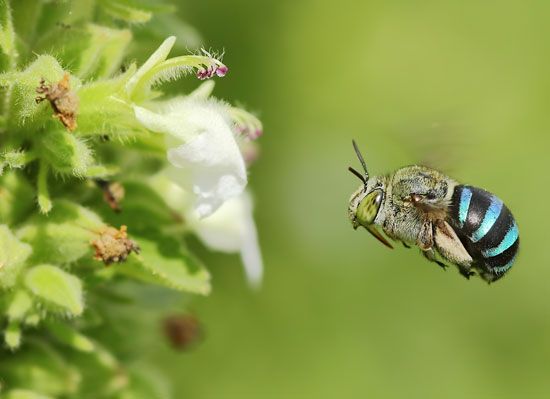
- Insects: Various insects, including bees and hawk moths, also play a significant role in the pollination of agave flowers.10
- Birds: Depending on the species, certain birds may also act as pollinators for agave.10
These pollinators are attracted to the flowers by the large quantities of nectar produced by the plant’s tall inflorescences.10
Sources
- century plant — Encyclopædia Britannica
- century plant — Merriam-Webster
- agave — Encyclopædia Britannica
- Reproduction - Life-cycle reproduction — Encyclopædia Britannica
- Succulent — Encyclopædia Britannica
- cactus — Encyclopædia Britannica
- agave cactus — Merriam-Webster
- Agavoideae — Encyclopædia Britannica
- Bat-loving flowers — Encyclopædia Britannica
- Pollination - Mammals — Encyclopædia Britannica
Published on · 3 min read