Cheirolepis
Cheirolepis is an extinct genus of primitive fish that lived during the Devonian period, approximately 408 to 360 million years ago, with fossils discovered…
What is Cheirolepis?
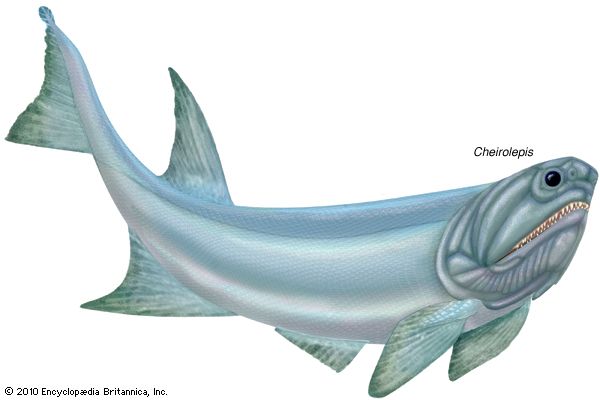
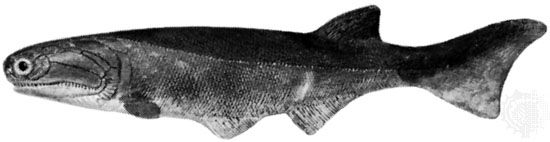
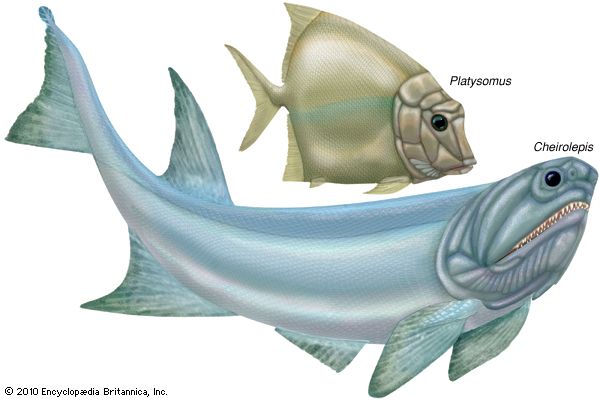
Cheirolepis is an extinct genus of primitive fish that lived during the Devonian period, approximately 408 to 360 million years ago, with fossils discovered in both Europe and North America.1
As a representative of the paleoniscoids—a group of primitive ray-finned fishes—this genus is considered a potential common ancestor to more modern ray-finned fish species. Physically, Cheirolepis was a slim, streamlined predator equipped with numerous teeth. Its anatomy featured large, forward-placed eyes, a single dorsal fin, and an upturned tail supported by a fin underneath. Its pectoral fins were broadly attached, which limited their flexibility.1
What defines the Devonian period?
The Devonian Period, spanning from approximately 419.2 million to 359 million years ago, is widely known as the “Age of Fishes” due to the remarkable diversity and abundance of fish species that inhabited its seas.23
Key Characteristics
- Biological Milestones: This period saw the emergence of forests and ammonites. Crucially, it marked the colonization of land by vertebrates, with the first four-legged amphibians appearing late in the period.2
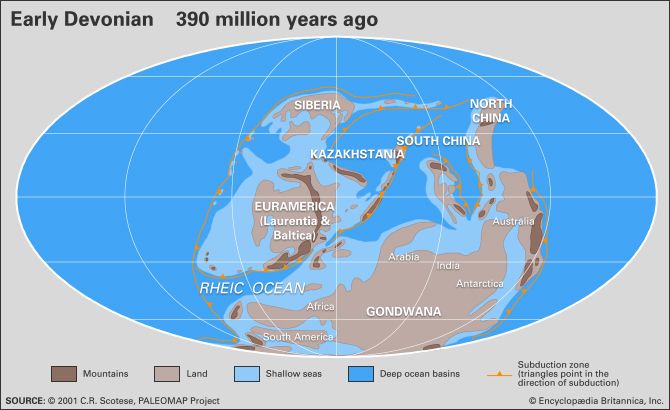
- Geologic Shifts: Early in the period, the continents of Laurentia and Baltica collided to form the supercontinent Laurussia (or Euramerica), a process marked by the Caledonian orogeny mountain-building event. Meanwhile, the southern continents were united as Gondwana.4
- Climate: The Earth was generally warmer than it is today, with equitable climates and limited evidence of polar ice.25
- Extinction Events: The period was punctuated by a series of mass extinction events, such as the Kellwasser and Hangenberg events. These were often linked to episodes of ocean anoxia (low oxygen levels), which eliminated 70 to 80 percent of all animal species.26
What are ray-finned fishes?
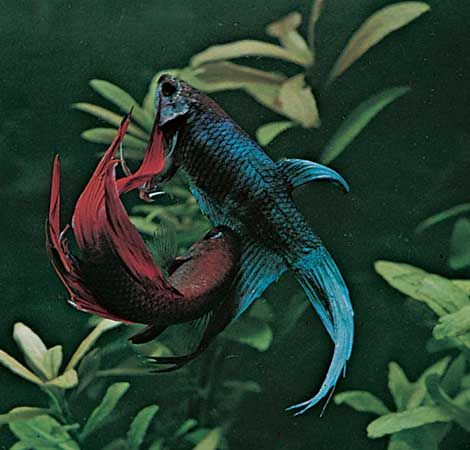
Ray-finned fishes, scientifically known as Actinopterygii, constitute the largest class of fishes, encompassing the vast majority of both living and fossil fish species. They are defined by fins supported by bony or horny rays, which distinguishes them from lobe-finned fishes.789
In existence for approximately 400 million years since the Early Devonian, this group has undergone significant evolutionary changes in body plan, jaw structure, and tail shape to maximize swimming efficiency. The class is divided into three primary evolutionary stages:7
- Chondrostei: The basal stock, including ancient forms like the Palaeonisciformes and modern survivors such as sturgeons and paddlefishes.8
- Holostei: An intermediate evolutionary stage represented today by the bowfin and gars.7
- Teleostei: The modern bony fishes, which include the great majority of living species—such as tuna, salmon, and herrings—and are characterized by highly efficient swimming and feeding mechanisms.87
It is important to note that ray-finned fishes are distinct from rays, which are cartilaginous fishes related to sharks.10
How do fossils help us understand evolution?
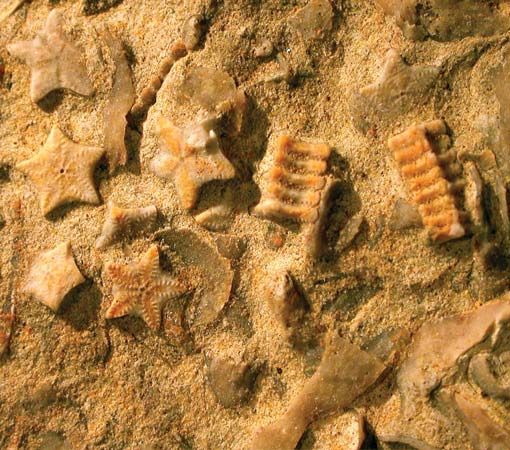
The fossil record serves as a vital historical archive of life on Earth, providing essential evidence for the theory of evolution. By examining the remains or imprints of organisms preserved in sedimentary rock, scientists can track the progressive morphological changes within animal groups over millions of years.11
Understanding Evolutionary Patterns
- Documenting Change: Fossils allow researchers to observe how successive generations acquire or lose specific features, which is often interpreted as an adaptation to changing environments through natural selection.11
- Transitional Forms: Transitional fossils are particularly significant because they exhibit characteristics of both ancestral and derived forms, helping to bridge gaps in the evolutionary history of various lineages.12
- Debating Rates of Evolution: The record reveals both gradual changes and periods of stasis. Some paleontologists support the punctuated equilibrium model, which suggests that significant morphological evolution often occurs in sudden bursts associated with speciation events, rather than solely through slow, continuous change.13
Sources
- Cheirolepis — Encyclopædia Britannica
- A Journey Through Time Since the Precambrian - Devonian Period: 419.2 million to about 359 million years ago — Encyclopædia Britannica
- Devonian Period - Paleoclimate — Encyclopædia Britannica
- Devonian Period - Significant geologic events — Encyclopædia Britannica
- Age of Fishes — Merriam-Webster
- Devonian extinctions — Encyclopædia Britannica
- ray-finned — Merriam-Webster
- fish - Actinopterygii: ray-finned fishes — Encyclopædia Britannica
- ray — Encyclopædia Britannica
- lobe-finned — Merriam-Webster
- fossil record — Encyclopædia Britannica
- transitional fossil — Merriam-Webster
- dating - Principles and techniques — Encyclopædia Britannica
- evolution - Gradual and punctuational evolution — Encyclopædia Britannica
Published on · 3 min read