Chin Cactus
The chin cactus refers to the genus Gymnocalycium, which consists of approximately 50 species of cacti native to South America, specifically in regions of…
What is chin cactus?
The chin cactus refers to the genus Gymnocalycium, which consists of approximately 50 species of cacti native to South America, specifically in regions of Argentina, Paraguay, Uruguay, Bolivia, and Brazil.1
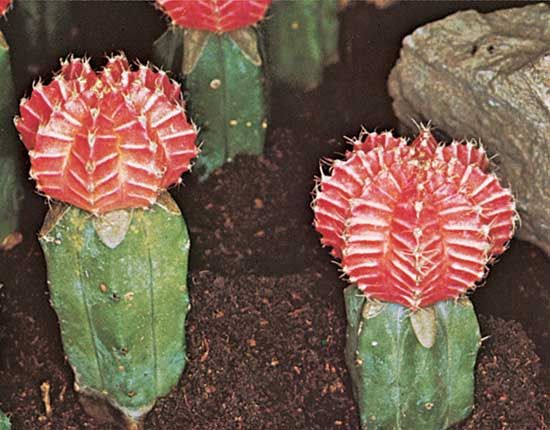
These small, globose to cylindrical plants are named for the chinlike protuberance located below each spine-bearing areole on their ribs. They are popular as ornamentals and are known for their showy, diurnal flowers, which are typically white or cream, though some varieties display shades of pink, yellow, or red. A notable member of this genus is the moon cactus, a red mutant that lacks chlorophyll and must be grafted onto another cactus to survive.1
What is a moon cactus and why is it grafted?
The moon cactus (Gymnocalycium mihanovichii) is a vibrant, colorful mutant variety of the chin cactus. While the term “moonlight cactus” refers to a completely different genus of night-blooming plants (Selenicereus), the moon cactus is specifically recognized for its striking red, yellow, or orange appearance.13
The moon cactus must be grafted onto a normal, green cactus because it lacks chlorophyll. Without this essential pigment, the plant cannot perform photosynthesis to synthesize its own food. By grafting the mutant onto a healthy rootstock, the moon cactus is able to receive the nutrients it needs to survive and grow.1
How do cacti survive in South American climates?
Cacti have evolved several specialized adaptations to survive in the diverse and often arid climates of South America. Their primary strategy involves becoming succulent, meaning they possess thick, fleshy tissues designed for water storage, typically within their stems.45
Key survival mechanisms include:
- Modified Photosynthesis: Many cacti utilize crassulacean acid metabolism, a process where stomata remain closed during the hot day to prevent water loss and open only at night to take in carbon dioxide.4
- Reduced Surface Area: In most species, leaves are absent or modified into spines. This minimizes the surface area available for transpiration. The stems have taken over the role of photosynthesis and contain mucilaginous substances that help retain moisture.56
- Protective Structures: Spines provide shade to protect the plant from intense solar radiation and offer defense against herbivores.6
- Efficient Root Systems: Cacti typically feature thin, shallow, and fibrous root systems that spread widely to quickly absorb superficial moisture from infrequent rains.5
What is the role of chlorophyll in plant growth?
Chlorophyll is a class of pigments essential for photosynthesis, the process by which plants convert light energy into chemical energy. By absorbing solar radiation, chlorophyll enables the conversion of carbon dioxide into carbohydrates, which serve as the primary fuel for plant growth and development.789
Within the plant’s cellular machinery, chlorophyll molecules function in two primary ways:
- Light Harvesting: Large arrays of chlorophyll act as antennae, capturing sunlight across the solar spectrum and transferring that excitation energy to a reaction centre.9
- Energy Conversion: At the reaction centre, specialized chlorophyll pairs initiate a charge-transfer reaction, converting light energy into stored electrical energy across a membrane, which is then used to generate high-energy chemical species.9
Because chlorophyll is vital for producing the nutrients that sustain a plant, its absence or failure to develop leads to chlorosis. This condition, characterized by yellowing or bleached tissue, often results in stunted growth and potential plant death.10
Sources
- chin cactus — Encyclopædia Britannica
- Gymnocalycium — Merriam-Webster
- moonlight cactus — Encyclopædia Britannica
- Succulent — Encyclopædia Britannica
- cactus — Encyclopædia Britannica
- Caryophyllales - Cactaceae — Encyclopædia Britannica
- Chlorophyll: Top Questions — Encyclopædia Britannica
- photochemical reaction - Photochemical steps in photosynthesis — Encyclopædia Britannica
- Chlorosis — Encyclopædia Britannica
- chloroplast: Top Questions — Encyclopædia Britannica
Published on · 2 min read