Puccoon
The term puccoon refers to various North American plants historically utilized by Indigenous peoples to produce dyes extracted from their roots. The name…
What is puccoon?
The term puccoon refers to various North American plants historically utilized by Indigenous peoples to produce dyes extracted from their roots. The name itself is derived from an Algonquian word for dye.12
The plants categorized as puccoon generally fall into two groups:
- Yellow Puccoon: Species within the Lithospermum genus, such as the Indian paint (L. canescens), belong to the borage family (Boraginaceae). These plants are characterized by their small yellow or orange flowers and reddish roots.1
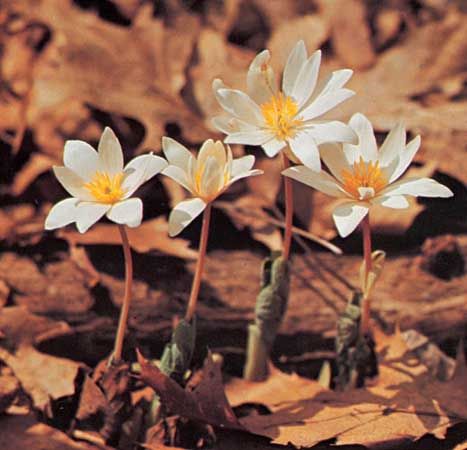
- Red Puccoon: This name is commonly applied to bloodroot (Sanguinaria canadensis), a member of the poppy family (Papaveraceae) known for its pigment-yielding properties.12
Some of these species are occasionally cultivated in wild gardens today.1
How were plant-based dyes traditionally prepared?
Traditional preparation of plant-based dyes relied on extraction methods that were often closely guarded secrets, as most natural colorants exist within complex mixtures that are difficult to isolate using ancient techniques.34
To successfully apply these dyes to fibers, craftsmen often utilized mordants—inorganic salts such as alum, iron, copper, and tin. These substances were essential for “biting” into the fiber, reacting with the dye to create a less soluble form that would adhere to the material. This process was particularly necessary for cotton, which does not take dye as readily as wool or silk.3
Beyond aiding retention, mordants were used to manipulate the final color. For instance, the same dye could produce vastly different shades depending on the metal salt applied. While many plants were tested for their pigment potential, only a small number proved stable enough for widespread use.34
We could dive deeper into the specific chemistry of mordants or the history of iconic dyes like indigo and alizarin.
What are the characteristics of the borage plant family?
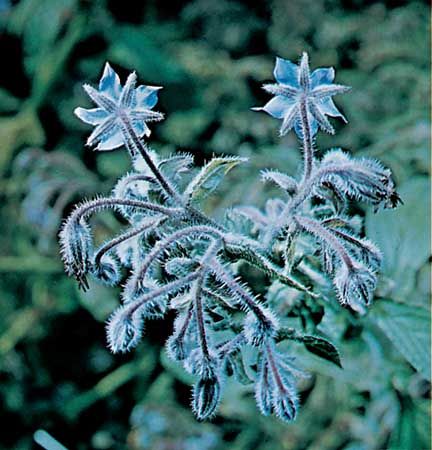
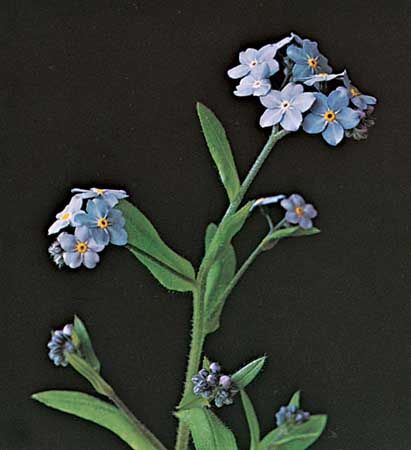
The Boraginaceae family, commonly known as the borage or forget-me-not family, is a diverse group of flowering plants comprising 148 genera and over 2,700 species.5
Key Characteristics
- Physical Appearance: Plants in this family are typically herbaceous, often covered in hairs, and can grow as annuals, perennials, vines, or trees. A distinct feature is their flower clusters, which are frequently coiled like a scorpion’s tail.5
- Structural Traits: Unlike the mint family, which they were once grouped with, borages generally possess round stems and alternate leaves. Their flowers are regular in shape, and the number of stamens matches the number of petals.5
- Color Changes: Many species exhibit a unique color transformation in their petals as they age—shifting from pink to blue, or yellow to pink to blue—driven by changes in the pH of their cellular fluids.5
- Diversity: The family includes garden favorites like lungwort and bluebell, as well as specialized groups like the root-parasitic sand food and the waterleaf family.5
While some species are used medicinally or as food, many are known to be poisonous.5
Why is bloodroot considered a member of the poppy family?
Bloodroot (Sanguinaria canadensis) is classified as a member of the poppy family (Papaveraceae) due to its shared botanical characteristics with other members of this group.89
A defining trait of many plants within the Papaveraceae family—including the genus Sanguinaria—is the presence of colored sap or latex within their stems and rhizomes. Bloodroot is specifically named for the distinct orange-red sap found in its rhizomes, a feature common among various genera in the family. Additionally, the plant exhibits structural similarities typical of the family, such as its cup-shaped flowers and the production of specific chemical compounds known as alkaloids, such as sanguinarine, which are characteristic of many poppy family species.98
The Papaveraceae family is diverse, encompassing a wide range of herbaceous plants that share these physiological and chemical traits, leading botanists to group bloodroot within this taxonomic classification.910
Sources
- puccoon — Encyclopædia Britannica
- puccoon — Merriam-Webster
- dye - Mordants — Encyclopædia Britannica
- dye - Natural dyes — Encyclopædia Britannica
- Boraginaceae — Encyclopædia Britannica
- Borage — Encyclopædia Britannica
- borage — Merriam-Webster
- bloodroot — Encyclopædia Britannica
- Papaveraceae — Encyclopædia Britannica
- bloodroot — Merriam-Webster
- list of plants in the family Papaveraceae — Encyclopædia Britannica
Published on · 3 min read