Coelogyne
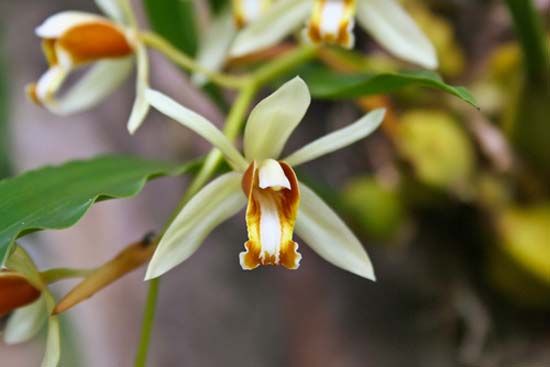
Coelogyne is a genus comprising up to 200 species of orchids native to Asia and various Pacific islands. These plants are primarily epiphytic, though some…
What is Coelogyne?
Coelogyne is a genus comprising up to 200 species of orchids native to Asia and various Pacific islands. These plants are primarily epiphytic, though some species grow on rocks, soil, or decaying wood.1
Key characteristics of the genus include:
- Structure: All members feature pseudobulbs (bulblike stems) topped with one or two leaves1.
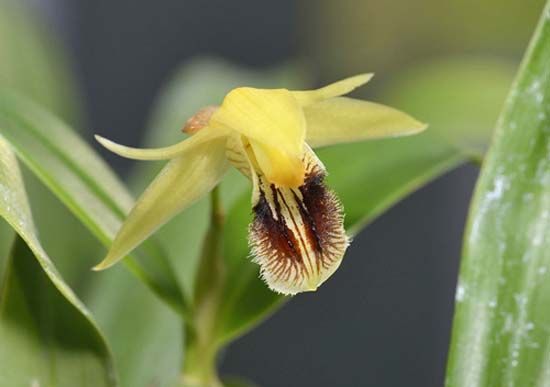
- Flowers: They produce spikes of flowers that vary from small to large and showy, typically appearing in shades of white, tan, or green.1
- Notable Species:
Many Coelogyne species are cultivated for their beauty, and some are well-suited to cooler climates.1
What does it mean for a plant to be epiphytic?
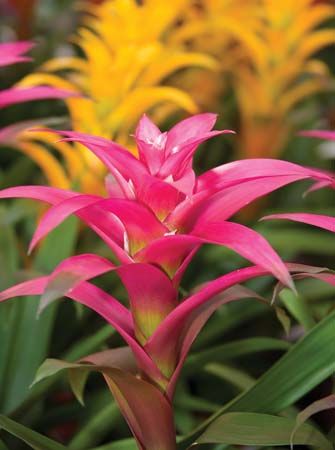
An epiphyte is a plant that grows on another plant or object solely for physical support. Unlike parasitic plants, which derive water or nutrients from a host, epiphytes do not harm the plants they grow upon. They use their host simply as a structure to reach higher levels of the environment, which is particularly advantageous in dense tropical forests where it allows them to access sunlight that would otherwise be blocked by the canopy.23
Because they lack an attachment to the ground, epiphytes obtain moisture from rain and water vapor in the air, often using their roots or specialized leaves to absorb it. They typically acquire necessary minerals from organic debris that collects on their supporting structures. Common examples of epiphytic plants include many species of orchids, ferns, mosses, and members of the pineapple family.2
How do pseudobulbs help orchids survive in their environment?
Pseudobulbs are specialized, thickened stem structures found in many orchid species, particularly those that are epiphytic. These structures serve as vital storage organs, allowing the plants to survive in environments where water and nutrient availability may be inconsistent or limited.456
By acting as reservoirs, pseudobulbs enable orchids to store water and nutrients, providing a buffer during periods of drought or when the plant is temporarily cut off from its primary sources of moisture. This adaptation is especially critical for epiphytes, which grow on trees or other structures rather than in the ground and therefore lack access to the consistent water supply found in soil. The morphological diversity of these structures—ranging from multi-internode stems to those consisting of a single internode—reflects the evolutionary strategies orchids have developed to thrive in varied habitats across the globe.46
What are some other types of orchids found in Asia?
Asia is home to a diverse array of orchid genera, many of which are highly valued for their ornamental beauty and unique growth habits. Some notable examples include:
- Dendrobium: A large genus of approximately 1,500 epiphytic species native to tropical and subtropical Asia. They are known for their varied flower sizes and pseudobulbs, which can range from small and bulblike to long and reedlike.7
- Vanda: This genus consists of about 50 species distributed from East Asia to Australia. These orchids are typically epiphytic with sturdy stems and long-lasting, often fragrant flowers, such as the blue vanda (V. coerulea) and the waling-waling (V. sanderiana).8
- Cymbidium: Primarily distributed in Asia, these orchids are popular as florists’ plants. They can grow in soil or epiphytically and are recognized for their showy, long-lasting flowers that come in a wide range of colors.9
- Phalaenopsis (Moth orchid): Native to southeastern Asia, this genus includes about 60 species. These popular houseplants are mostly epiphytic and feature broad, leathery leaves and long-lasting flowers.10
Sources
- Coelogyne — Encyclopædia Britannica
- epiphyte — Encyclopædia Britannica
- parasitic plant — Encyclopædia Britannica
- orchid - Growth forms — Encyclopædia Britannica
- Bulbophyllum — Encyclopædia Britannica
- pseudobulb — Merriam-Webster
- Dendrobium — Encyclopædia Britannica
- Vanda — Encyclopædia Britannica
- cymbidium — Encyclopædia Britannica
- list of plants in the family Orchidaceae — Encyclopædia Britannica
- moth orchid — Encyclopædia Britannica
- cymbidium — Merriam-Webster
Published on · 3 min read