Condylarthra
The term Condylarthra refers to an informal group of archaic ungulates that thrived from the Late Cretaceous through the Paleogene Period. While they were…
What extinction events affected Condylarthra during their existence?
The term Condylarthra refers to an informal group of archaic ungulates that thrived from the Late Cretaceous through the Paleogene Period. While they were highly diverse during the Paleocene Epoch, they were not wiped out by a single, sudden extinction event. Instead, they experienced a gradual decline as they were replaced by more specialized groups.12
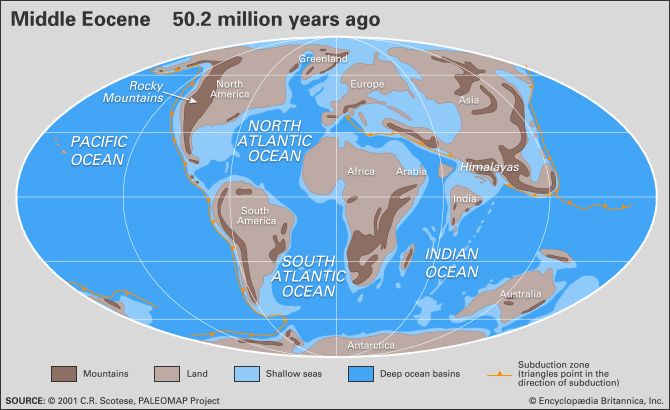
During the Eocene Epoch, archaic groups like the condylarths gradually became extinct as newer, more efficient mammals—such as perissodactyls and artiodactyls—emerged and diversified. Condylarths persisted in various forms until approximately 30 million years ago, during the middle of the Oligocene Epoch, when the last of these lineages eventually died out. Their disappearance is largely attributed to the evolutionary success of the advanced ungulates they helped give rise to, rather than a catastrophic mass extinction event.213
When did Condylarthra live and what was their environment like?
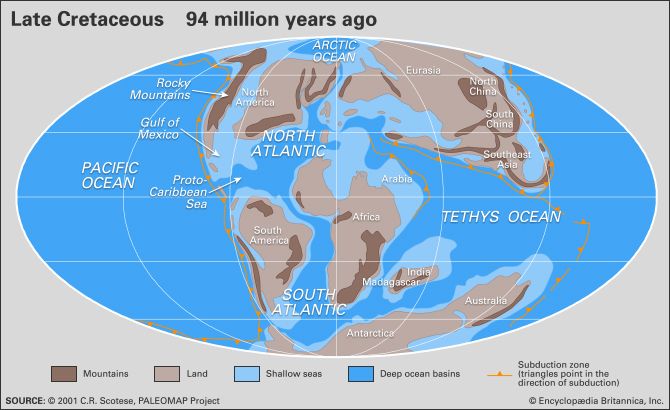
Condylarthra was a diverse group of archaic ungulates that existed from the Late Cretaceous Period (approximately 145 to 66 million years ago) through the middle of the Oligocene Epoch, finally dying out about 30 million years ago. They reached their peak diversity during the Paleocene Epoch (66 to 56 million years ago).1
Environment and Evolution
Condylarths originated in Asia during the Cretaceous, with early forms like the rodent-sized zhelestids living in what is now Uzbekistan. By the Paleocene, they were prominent members of terrestrial ecosystems, particularly in North America, where the climate was generally warming with little to no frost and characterized by alternating wet and dry seasons.14
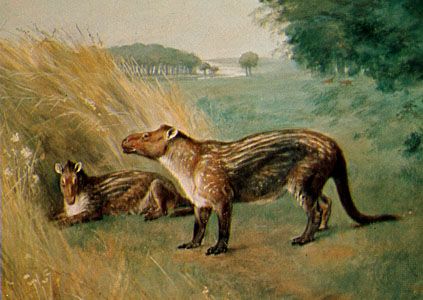
As a group, condylarths were highly adaptable. While some remained small, others like Phenacodus grew to the size of a modern tapir1. Their dental anatomy was varied; some possessed insectivorous-carnivorous traits, while others developed features trending toward herbivory. They are considered the ancestral forms of more advanced ungulates, including perissodactyls and artiodactyls.415
How did scientists first discover and identify Condylarthra fossils?
The provided search results do not contain information regarding the specific historical discovery or the initial identification process of Condylarthra fossils. While the records confirm that these animals are an extinct group of mammals known through the fossil record, the details of their first scientific discovery are not documented in the available data.
What were the major subgroups or families within Condylarthra?
The term Condylarthra is no longer considered a formal taxonomic order in modern paleontology; it is now used informally to describe a diverse, paraphyletic group of archaic ungulates from the Late Cretaceous and early Paleogene periods. Because this group is defined by its role as an ancestral, transitional assemblage rather than a strictly defined clade, it does not have a universally standardized list of subgroups or families.1
However, paleontologists recognize several key forms within this informal grouping that illustrate their diversity:
- Zhelestids: These were the earliest known condylarths, identified as rodent-sized ungulates from the Late Cretaceous of Uzbekistan.1
- Arctocyonids: Often cited as a prominent group within the condylarths, these animals are noted for their specialized, carnivore-like dentition, such as the genus Arctocyon, which possessed long canines and triangular premolars.1
- Phenacodontids: This group includes well-known, larger-bodied forms like Phenacodus, which lived during the Eocene Epoch and reached the size of a modern tapir.1
These animals are significant because they represent the evolutionary stock from which later, more advanced groups—including perissodactyls and possibly cetaceans—eventually emerged.1
Sources
- Condylarthra — Encyclopædia Britannica
- Eocene Epoch — Encyclopædia Britannica
- perissodactyl - Evolution and paleontology — Encyclopædia Britannica
- Tertiary Period - The rise of mammals — Encyclopædia Britannica
- Paleocene Epoch — Encyclopædia Britannica
- artiodactyl - Evolution and paleontology — Encyclopædia Britannica
- artiodactyl - Annotated classification — Encyclopædia Britannica
- Condylarthra — Merriam-Webster
- perissodactyl - Annotated classification — Encyclopædia Britannica
- thrips - Annotated classification — Encyclopædia Britannica
Published on · 3 min read