Continental Crust
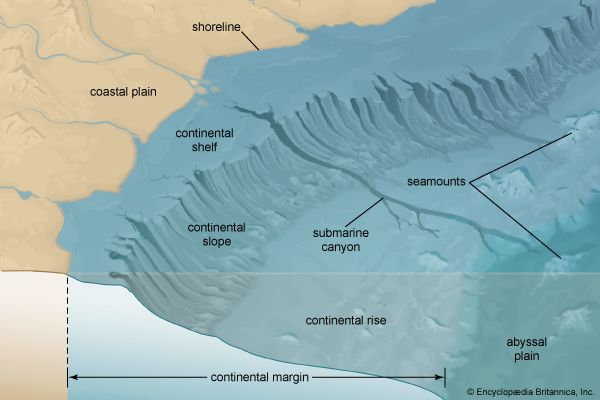
The continental crust is the outermost layer of Earth’s lithosphere, forming the planet’s continents and continental shelves.
What is continental crust?
The continental crust is the outermost layer of Earth’s lithosphere, forming the planet’s continents and continental shelves.1
Characterized by a granitic composition, this crust is less dense—approximately 2.7 grams per cubic cm—and significantly thicker than oceanic crust, averaging about 40 km (25 miles) in depth. Due to its lower density and greater buoyancy, continental crust floats higher in the mantle than oceanic crust, which explains the distinct elevation difference between landmasses and the ocean floor.12
Continental crust is primarily formed at subduction zones through volcanic activity and the accretion of materials. Unlike oceanic crust, which is transient and continuously recycled, continental crust resists subduction. Consequently, it is much older, with a mean age of nearly two billion years, making it a vital repository for understanding Earth’s geologic evolution.123
Why is continental crust so much older than oceanic crust?
The significant age difference between continental and oceanic crust is primarily due to their contrasting physical properties and their roles in the cycle of plate tectonics.13
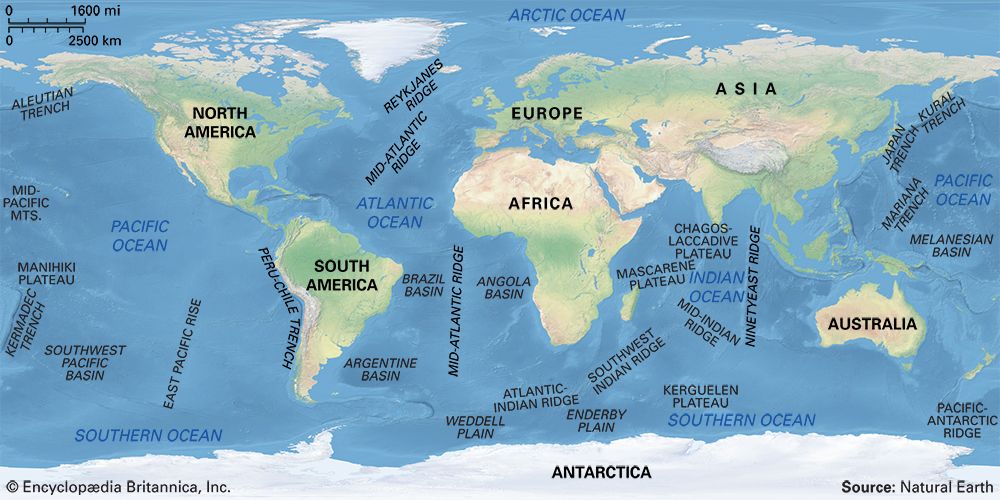
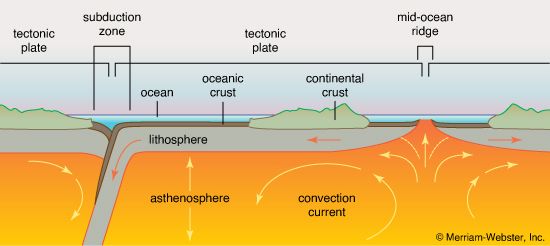
- Oceanic Crust is Transient: New oceanic crust is continuously generated at mid-ocean ridges through seafloor spreading. As this crust moves away from the ridge, it cools and becomes increasingly dense. Eventually, it becomes dense enough to sink back into the mantle at subduction zones, where it is recycled. Because of this constant creation and destruction, the mean age of oceanic crust is relatively young, at approximately 60 million years.3214
- Continental Crust is Buoyant: Continental crust is thicker and less dense than oceanic crust, which gives it greater buoyancy. Because it is so buoyant, it resists being subducted into the mantle. Instead of being recycled, continental crust tends to be preserved over geologic time. Consequently, while oceanic crust is constantly replaced, continental crust can persist for billions of years, with some of the oldest rocks dating back more than 4 billion years.531
How do mountain ranges form when two continental plates collide?
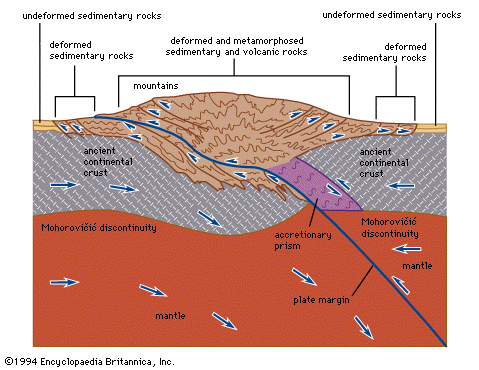
When two continental plates collide, they create towering mountain ranges through a process that terminates subduction. Because continental crust is too buoyant to be subducted into the mantle, the collision forces the crust to thicken and deform rather than sink.783
The formation typically follows these stages:
- Elimination of Oceanic Crust: Before continents collide, they are separated by an ocean basin. As the plates converge, the intervening oceanic lithosphere is subducted. Once this oceanic crust is entirely consumed, the two continental masses meet.8
- Crustal Thickening: Upon collision, the crust is subjected to intense folding and faulting. This compression causes the crust to thicken significantly—reaching depths of 60 to 70 km beneath high ranges—creating “crustal roots” that buoy up the mountains, much like icebergs floating on water.93
- Support Mechanisms: The elevation is maintained by this thick, buoyant crust and, in some cases, by the strength of the underlying cold, thick lithosphere, which can support the weight of the range.3
Famous examples, such as the Himalayas and the Alps, were formed by these massive tectonic collisions.710
What is the difference between the lithosphere and the asthenosphere?
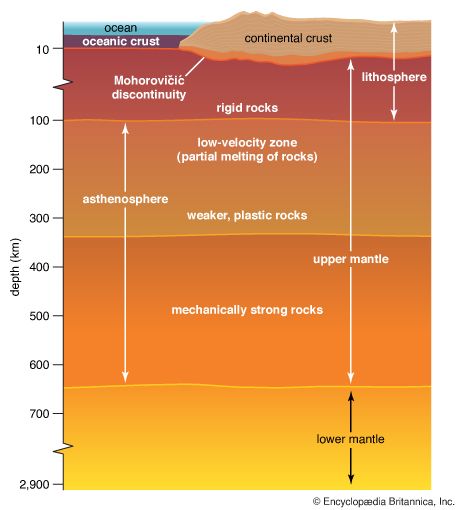
The lithosphere and the asthenosphere are distinguished primarily by their physical properties and behavior within Earth’s interior.11
- Lithosphere: This is the rigid, rocky outer layer of Earth, extending to a depth of approximately 100 km (60 miles). It encompasses the entire crust and the solid, uppermost portion of the mantle. Because it is rigid and brittle, it is broken into several distinct blocks known as tectonic plates.121311
- Asthenosphere: Located directly beneath the lithosphere, this zone extends from about 100 km to 700 km (60 to 450 miles) below the surface. Unlike the rigid lithosphere, the asthenosphere is hotter and more fluid. Its rocks are weaker because they are near their melting temperatures, allowing them to flow slowly. This malleable nature lubricates the underside of the tectonic plates, facilitating their movement.1211
In essence, the lithosphere acts as the rigid shell that moves, while the asthenosphere serves as the ductile, convecting layer that enables that movement.1213
Sources
- continental crust — Encyclopædia Britannica
- North America - General considerations — Encyclopædia Britannica
- plate tectonics - Convergent margins — Encyclopædia Britannica
- mid-ocean ridge — Merriam-Webster
- oceanic ridge - Principal characteristics — Encyclopædia Britannica
- subduction zone — Encyclopædia Britannica
- plate tectonics - Mountain building — Encyclopædia Britannica
- orogeny — Encyclopædia Britannica
- mountain - Mechanisms that support elevated terrains — Encyclopædia Britannica
- mountain - Major mountain belts of the world — Encyclopædia Britannica
- asthenosphere — Encyclopædia Britannica
- lithosphere — Encyclopædia Britannica
- plate tectonics - Earth’s layers — Encyclopædia Britannica
Published on · 3 min read