Mountain
Mountains significantly influence climate by acting as physical barriers to atmospheric flow and altering local weather conditions through elevation and…
How do mountains impact local and global climate patterns?
Mountains significantly influence climate by acting as physical barriers to atmospheric flow and altering local weather conditions through elevation and relief.
Local Impacts
Mountains create diverse mesoclimates and microclimates. As air is forced upward over mountain slopes, it cools and produces orographic precipitation on the windward side. Conversely, the leeward side experiences subsiding, drier air, creating a rain shadow characterized by arid conditions. Additionally, altitude influences temperature, pressure, and humidity, while mountain topography can funnel winds or create local circulation patterns.1
Global and Regional Impacts
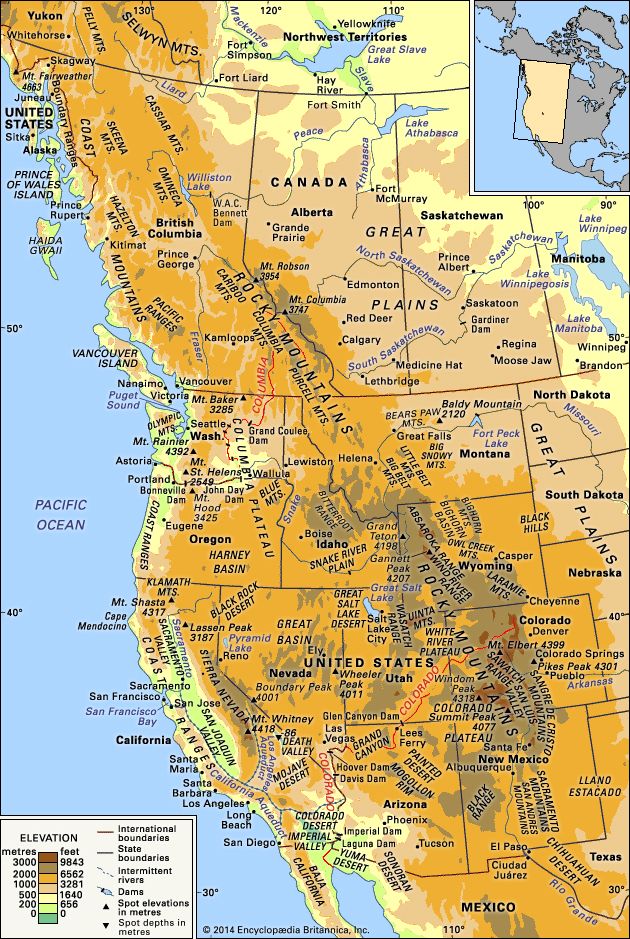
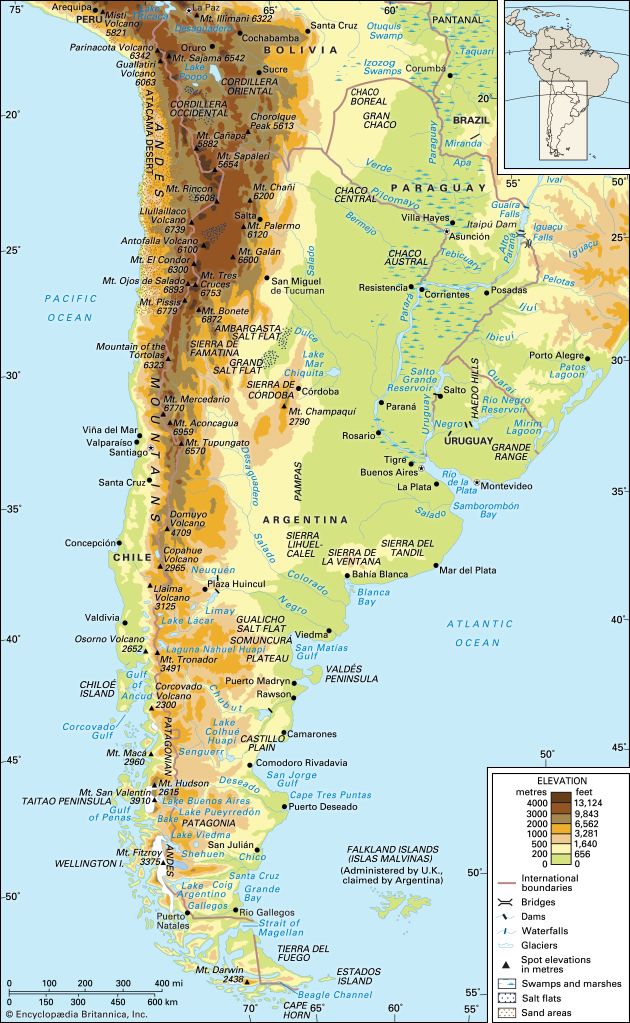
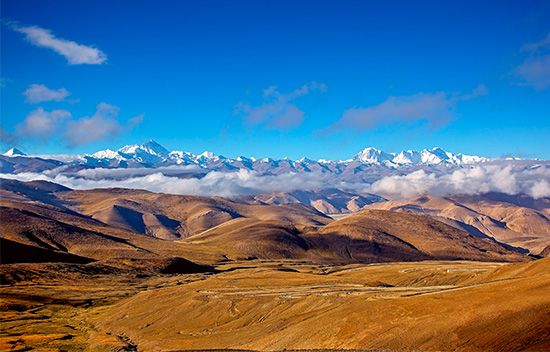
Large-scale mountain ranges, such as the Rockies and Andes, act as barriers to mid-latitude westerly winds. By blocking air masses, these ranges influence regional temperatures; for instance, they can prevent cold continental air from reaching western coasts, resulting in milder winter climates compared to continental interiors at similar latitudes. Large massifs like the Plateau of Tibet further affect atmospheric flow by acting similarly to high-pressure centers, redirecting air movement across the globe.2
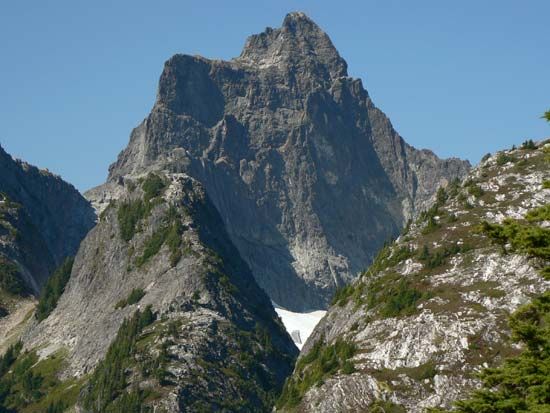
What types of ecosystems and biodiversity can be found in mountain environments?
Mountain environments are characterized by high levels of biodiversity due to their diverse topography and isolated habitats, which often foster the rapid evolution of unique species. Because mountains act as “islands” of cool climates, they frequently harbor distinct biota that have adapted to specific elevations.67
Key Ecosystems
- Alpine Tundra: Found above the timberline, this ecosystem covers about 3 percent of Earth’s land surface. It is defined by treeless, rocky terrain with patchy vegetation like mosses, lichens, and small shrubs. Unlike Arctic tundra, it typically lacks permafrost.89
- Altitudinal Zonation: In ranges like the Andes, life is organized into distinct bands based on altitude, moisture, and soil. These zones range from tropical forests in lower valleys to cold-resistant steppe vegetation and eventually barren peaks near the snow line.10
Biodiversity and Adaptations
Mountain fauna often reflect regional species, but many have evolved specific survival strategies. Some animals, such as mountain goats and sheep, perform vertical migrations to escape harsh winter conditions. Others, like marmots and pikas, have developed behaviors like hibernation or food caching to survive the cold.711
Because mountain ecosystems are often less disturbed by human activity than lowlands, they serve as vital refuges for ancient or displaced species. However, these environments are fragile; they are highly sensitive to habitat degradation, pollution, and the impacts of global warming.61213
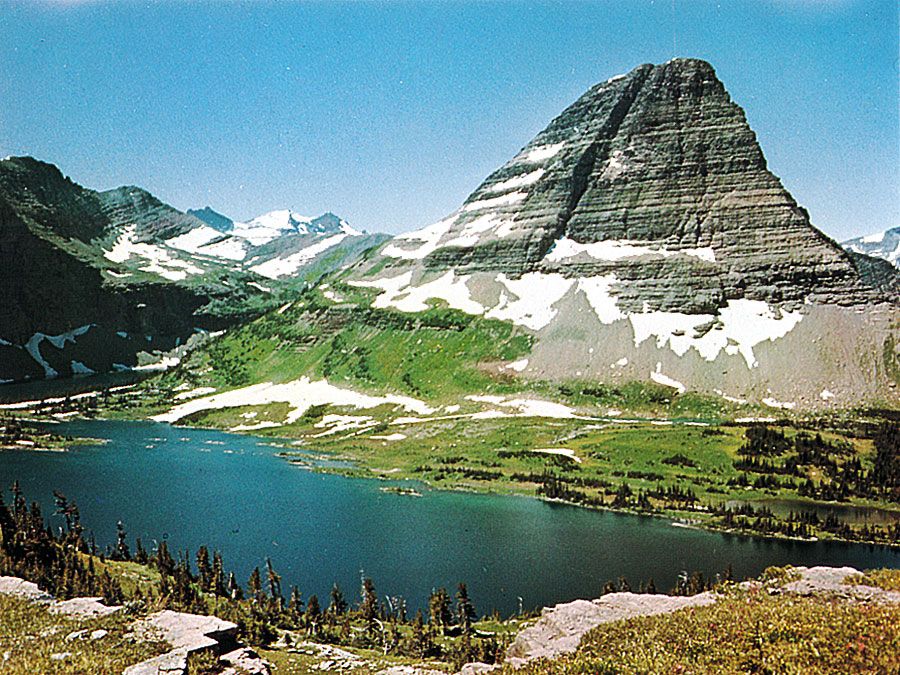
What are some of the world’s most famous mountain ranges, and what makes them unique?
The world’s most famous mountain ranges are primarily defined by their tectonic origins, often marking the boundaries where Earth’s lithospheric plates collide.1415
Major Mountain Ranges
- Himalayas: As the world’s tallest mountain range, the Himalayas formed nearly 50 million years ago when the Indian plate collided with the Eurasian plate. They are characterized by soaring, jagged peaks—including 10 of the world’s 13 highest mountains—and are still actively rising today.16151718
- Andes Mountains: Stretching 5,500 miles along South America, the Andes are the longest continental mountain range. They were created by the subduction of the Nazca Plate beneath the South American Plate, resulting in a system defined by high plateaus and intense volcanic activity as part of the “Ring of Fire”.192015
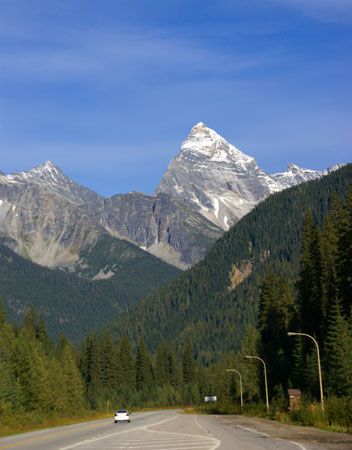
- Rocky Mountains: Forming the “backbone” of western North America, the Rockies consist of over 100 separate ranges. They are unique for their spectacular scenery shaped by past glaciation and volcanic activity, as well as their significant mineral wealth.1
- Alps: These mountains serve as a major physiographic barrier in Europe, separating marine west-coast climates from Mediterranean regions. They are the source of many major European rivers and are highly significant for their pastoral economy and tourism.9
How are mountains formed, and what are the main types of mountain formation processes?
Mountains are primarily formed through tectonic processes that elevate the Earth’s crust, creating regions of high relief and elevation relative to their surroundings. These processes are driven by the movement of lithospheric plates, which interact at convergent or divergent boundaries.2324
Main Types of Mountain Formation
- Continent-Continent Collision: When two continental plates collide, the crust is compressed and thickened, forcing rock upward. This process creates massive mountain belts, such as the Himalayas, which feature crystalline rocks thrust onto the surface.2324
- Subduction-Related Orogenesis: Occurring at convergent margins, this process involves one plate sinking beneath another. This generates significant magmatism and episodic uplift, as seen in the Andes Mountains. These mountains often feature volcanic activity and can grow higher over time as long as the subduction process remains active.2524
- Block Faulting: This occurs when crustal blocks are pushed up or pulled apart by tectonic forces. When blocks are pulled apart, the intervening land may subside, creating basins and ranges (such as the Basin and Range Province). Conversely, elevated blocks with steep slopes, known as horsts, can form between subsiding areas.2324
- Terrane Accretion: As oceanic plates subduct, elevated regions or “terranes” within the ocean basin may be scraped off and added to the continental margin. These collisions create pulses of mountain building, as observed along the western margin of North America.26
- Residual Mountains: These are formed not by active uplift, but by the erosion of surrounding weaker rock, leaving behind more resistant masses. Examples include Mount Katahdin and older chains like the Appalachian Mountains.23
Sources
- Highland climate — Encyclopædia Britannica
- Atmosphere - Mountain barriers — Encyclopædia Britannica
- Orographic precipitation — Encyclopædia Britannica
- orographic rain — Merriam-Webster
- Rain shadow — Encyclopædia Britannica
- Mountain ecosystem - Origin — Encyclopædia Britannica
- Andes Mountains - Plant and animal life — Encyclopædia Britannica
- Tundra - Alpine mammals — Encyclopædia Britannica
- Mountain ecosystem - Fauna — Encyclopædia Britannica
- Tundra — Encyclopædia Britannica
- Tundra - Distribution — Encyclopædia Britannica
- Mountain ecosystem - Biological productivity — Encyclopædia Britannica
- endangered species - Human beings and endangered species — Encyclopædia Britannica
- paleogeography - Mountain ranges — Encyclopædia Britannica
- Rocky Mountains — Encyclopædia Britannica
- Alps — Encyclopædia Britannica
- Himalayas - Physical features — Encyclopædia Britannica
- Andes Mountains — Encyclopædia Britannica
- Andes Mountains - Geology — Encyclopædia Britannica
- Himalayas - Physiography of the Himalayas — Encyclopædia Britannica
- mountain - Major mountain belts of the world — Encyclopædia Britannica
- How are mountains formed? — Encyclopædia Britannica
- mountain - Geomorphic characteristics — Encyclopædia Britannica
- plate tectonics - Mountains by subduction — Encyclopædia Britannica
- Himalayas - Geologic history — Encyclopædia Britannica
- continental landform - Orogenic geomorphic systems — Encyclopædia Britannica
- plate tectonics - Mountains by terrane accretion — Encyclopædia Britannica
- volcano - Determinants of size and shape — Encyclopædia Britannica
Published on · 5 min read