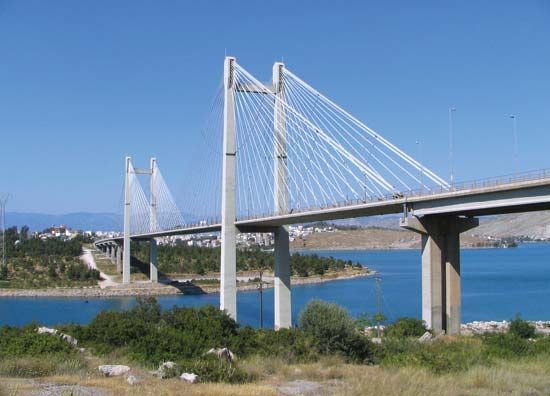
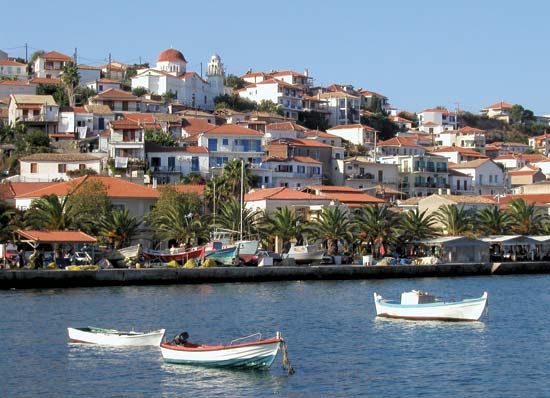
Côte d’Azur
The provided search results do not contain information regarding the specific role of the Côte d'Azur in French art and literature. While the documents…
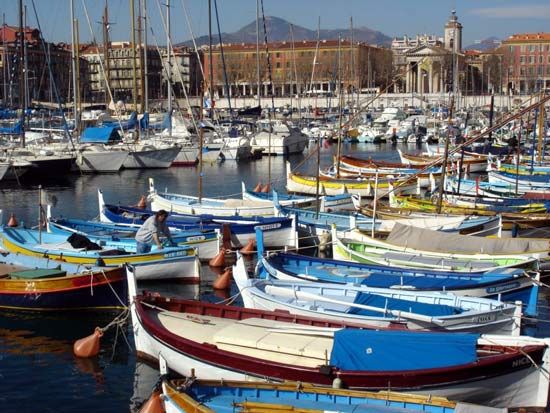
What role does the Côte d’Azur play in French art and literature?
The provided search results do not contain information regarding the specific role of the Côte d’Azur in French art and literature. While the documents detail the region’s geography, tourism, and culinary traditions, as well as broader trends in 20th-century French literature centered in Paris, they do not explicitly connect the two subjects.
Sorry, the Britannica knowledge base does not contain this information.
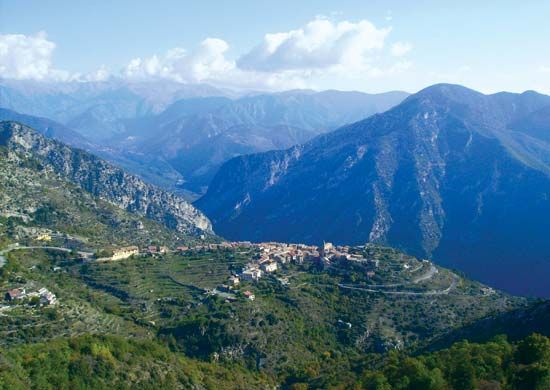
Where is the Côte d’Azur located, and what are its geographical boundaries?
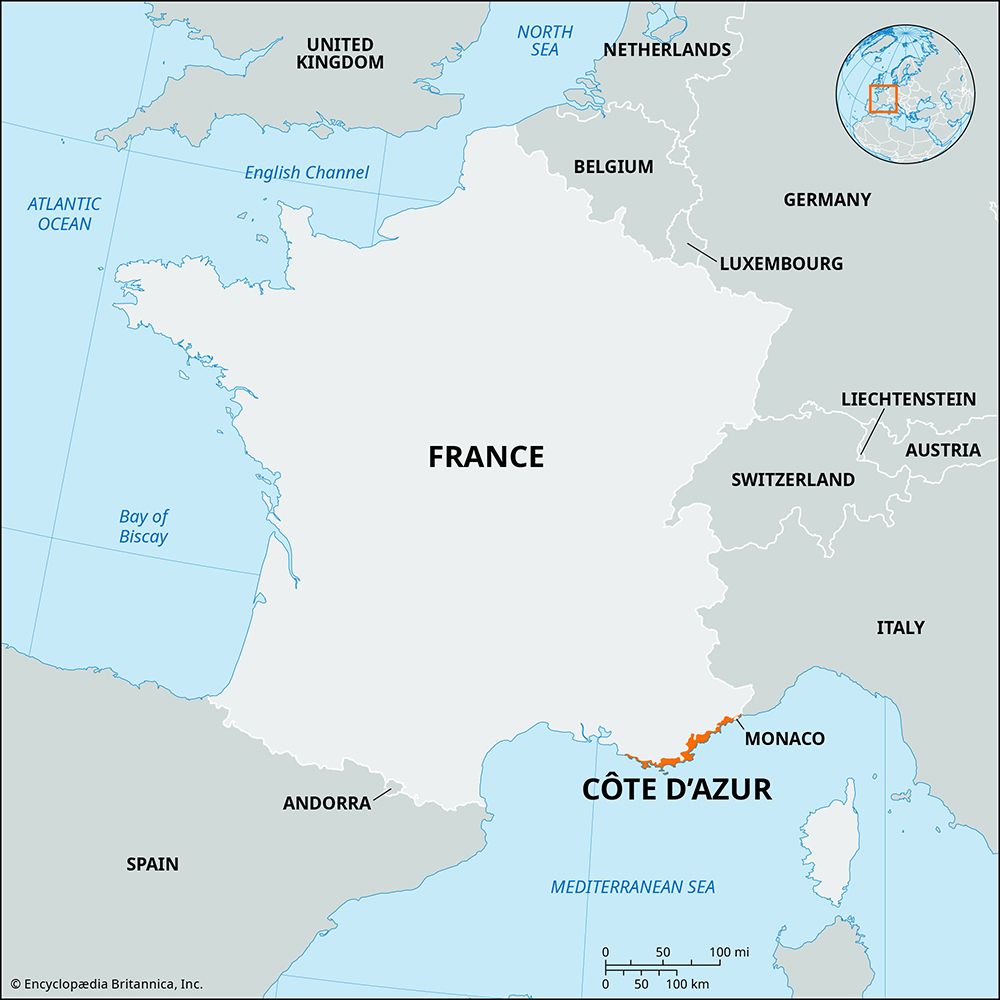
The Côte d’Azur, also known as the “Azure Coast,” is a cultural region located in southeastern France along the Mediterranean Sea. It forms the French portion of the Riviera, a coastal stretch that extends from Cannes in France to La Spezia in Italy.312
Geographically, the region encompasses the area between Menton and Cannes within the Alpes-Maritimes département, while also extending into the southern part of the Var département. The area is sheltered to the north by the Maritime Alps, which contributes to its exceptionally mild winters and sunny, warm climate. The coastal landscape is characterized by rugged scenery, limestone headlands, and numerous urban centers, including Nice and Antibes, as well as traditional inland villages perched on cliffs.12
What is the origin of the name ‘Côte d’Azur’ and when did it come into use?
The name Côte d’Azur translates from French as “Azure Coast” or “Coast of Azure,” a reference to the distinctive deep blue color of the Mediterranean Sea along this stretch of the coastline.3
While the term is widely recognized as the cultural name for the French Riviera, the provided search results do not specify the exact date or historical origin of when the name first came into use.13
What is the historical significance of the Côte d’Azur, and how did it become a popular tourist destination?
The Côte d’Azur holds significant historical and cultural importance as a premier Mediterranean destination, renowned for its mild climate, rugged coastal scenery, and status as a hub for both leisure and modern industry.
Historical Significance and Tourism
The region’s rise as a tourist destination began in the 19th century, driven by its exceptionally sunny weather and sheltered geography provided by the Maritime Alps. This favorable climate long attracted the “leisured rich,” particularly during the winter months.3
A pivotal moment in its popularity occurred in 1834 when Lord Brougham visited Cannes to avoid a cholera epidemic in Nice. His decision to return regularly for three decades set a trend that established the area as a fashionable resort destination. Over time, the development of luxury villas, hotels, and infrastructure—such as the scenic Corniches motor roads—further cemented its appeal.3
Beyond tourism, the region has evolved into a center for innovation. Its “sunbelt” image and high quality of life have successfully attracted major technology firms to research facilities like Sophia Antipolis, blending traditional Mediterranean culture with modern economic development.32
Sources
- Côte d’Azur — Encyclopædia Britannica
- Riviera — Encyclopædia Britannica
- Côte d'Azur — Merriam-Webster
- French literature - The avant-garde — Encyclopædia Britannica
- French literature - Sartre — Encyclopædia Britannica
Published on · 2 min read