Ground Cuckoo
A ground cuckoo refers to any of approximately 15 species of birds within the subfamily Neomorphinae of the cuckoo family (Cuculidae), which are…
What is Ground cuckoo?
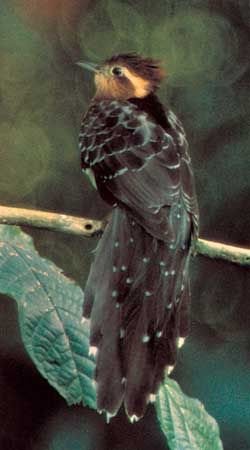
A ground cuckoo refers to any of approximately 15 species of birds within the subfamily Neomorphinae of the cuckoo family (Cuculidae), which are characterized by their terrestrial habits.1
These birds are found in various regions, including the Neotropics and Southeast Asia. While some species, such as the striped cuckoo and pheasant cuckoo, are brood parasites, many others are nonparasitic and build their own nests. The group includes diverse species such as:12
- Roadrunners: Two species known for living in open scrub and cactus deserts.13
- Neotropical species: Including the lesser ground cuckoo, widespread in Costa Rica and other parts of Central America, and the large, heavy-billed Neomorphus species.1
- Asian species: Large birds of the genus Carpococcyx, which can reach up to 60 cm (24 inches) in length.1
While the term is sometimes used synonymously with the roadrunner, it encompasses a much broader range of terrestrial cuckoo species.14
What is brood parasitism?
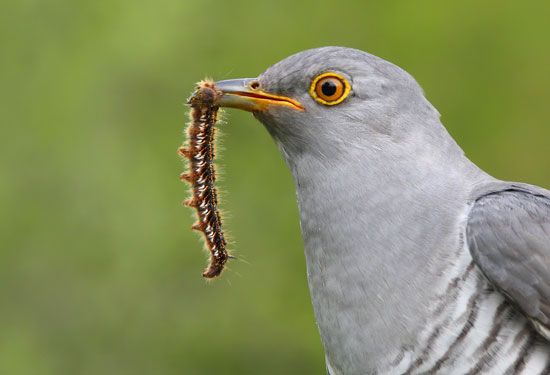
Brood parasitism is a form of social parasitism in which a bird of one species lays its eggs in the nest of another species, leaving the host to provide all parental care for the offspring. This behavior is also considered a type of kleptoparasitism, as the parasite exploits the host’s energy for nest building and child-rearing.567
Key aspects of this reproductive strategy include:
- Host Exploitation: The parasite does not build its own nest. Instead, it deposits eggs in the nests of other birds, often while the host is away.689
- Adaptations: Many brood parasites, such as cuckoos, have evolved egg mimicry, where their eggs resemble those of the host to avoid detection and rejection.9
- Impact on Host: While some instances may not significantly harm the host, many parasitic young—particularly cuckoos—may evict the host’s eggs or nestlings from the nest to eliminate competition for food and parental attention.69
- Prevalence: This strategy is practiced by all cowbirds and approximately 50 species of cuckoos, among others.9
How do roadrunners adapt to desert environments?
Roadrunners (Geococcyx californianus) have evolved several behavioral and physical adaptations to thrive in the arid deserts of the southwestern United States and Mexico.
- Self-Maintenance: Because water is scarce in their habitat, roadrunners utilize dust baths to maintain their plumage. By fluttering in dry dirt and preening the dust from their feathers, they effectively remove grease, dry skin, and external parasites without needing water.11
- Locomotion and Hunting: While they are capable of flight, they are primarily terrestrial, preferring to run across sagebrush, chaparral, or mesquite flats. Their speed—reaching up to 15 miles per hour—allows them to hunt effectively by circling prey, such as lizards and snakes, before attacking with their stout bills.1112
- Nesting: To protect their offspring in harsh environments, they construct substantial nests made of twigs, typically positioned low in cacti or small trees.12
What are the main differences between New World and Old World cuckoos?
The primary differences between New World and Old World cuckoos are rooted in their evolutionary history, distribution, and reproductive strategies. While the family Cuculidae is found globally, many of its subfamilies are restricted to specific hemispheres.14
Distribution and Classification
- Old World: This region is home to the subfamilies Cuculinae, Centropodinae, and Couinae. The “typical” cuckoos of the genus Cuculus are widespread across Europe, Asia, Africa, and Australia.14
- New World: The subfamily Crotophaginae is found exclusively in the New World. The Neomorphinae (ground cuckoos) are primarily New World, though one genus exists in Southeast Asia.14
- Shared: The subfamily Phaenicophaeinae is represented in the tropics of both hemispheres.14
Reproductive Strategies
A major distinction lies in their nesting habits:
- Brood Parasitism: This behavior—laying eggs in the nests of other species—is found in all members of the Old World subfamily Cuculinae and three species of the Neomorphinae. These birds have evolved complex adaptations like egg mimicry and nest-mate eviction to ensure their offspring survive.1516
- Non-parasitic: Many New World cuckoos, such as the yellow-billed and black-billed cuckoos, are non-parasitic. They build their own nests and share parental duties, including incubation and feeding, with their mates.15
Sources
- Ground cuckoo — Encyclopædia Britannica
- ground cuckoo — Merriam-Webster
- Cuculiform - Habitat utilization — Encyclopædia Britannica
- Cuculiform - Nonparasitic cuckoos — Encyclopædia Britannica
- brood parasitism — Merriam-Webster
- parasitism — Encyclopædia Britannica
- Passeriform - Territoriality and courtship — Encyclopædia Britannica
- Cuculiform - Brood parasitism — Encyclopædia Britannica
- kleptoparasitism: Top Questions — Encyclopædia Britannica
- Reproductive behaviour - Group care — Encyclopædia Britannica
- racerunner — Encyclopædia Britannica
- 10 Fascinating Region-Specific Animals | Roadrunner — Merriam-Webster
- Roadrunner — Encyclopædia Britannica
- Cuckoo — Encyclopædia Britannica
- Cuculiform - General features — Encyclopædia Britannica
- Cuculiform - Distribution — Encyclopædia Britannica
Published on · 3 min read