Cueva De Las Manos
Cueva de las Manos is an archaeological site in the Santa Cruz province of Argentina, renowned for its extensive collection of rock art dating back over…
What is Cueva de las Manos?
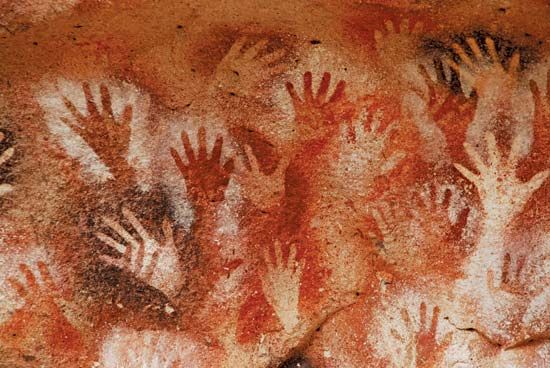
Cueva de las Manos is an archaeological site in the Santa Cruz province of Argentina, renowned for its extensive collection of rock art dating back over 9,000 years. Located in the Río Pinturas canyon, the site is most famous for more than 2,000 stenciled handprints created using mineral pigments like iron oxides and manganese oxide.1
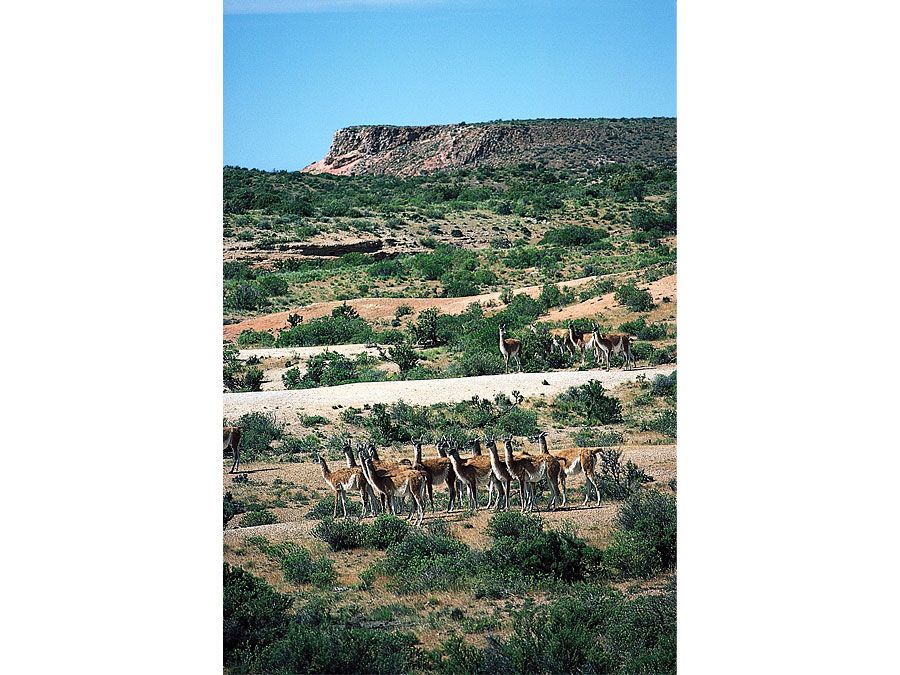
Beyond hand motifs, the cave features depictions of guanacos, rheas, hunting scenes, and geometric patterns. Archaeologists have categorized the art into three stylistic groups spanning from approximately 7,300 BCE to 700 CE, reflecting the evolution of the hunter-gatherer societies that inhabited the region.1
While the exact purpose of the art remains a subject of debate, theories suggest it may have served religious or shamanistic functions, marked territorial boundaries, or acted as a rite of passage for adolescents. Designated a UNESCO World Heritage site in 1999, it remains a vital record of early human expression.1
Where is Cueva de las Manos located?
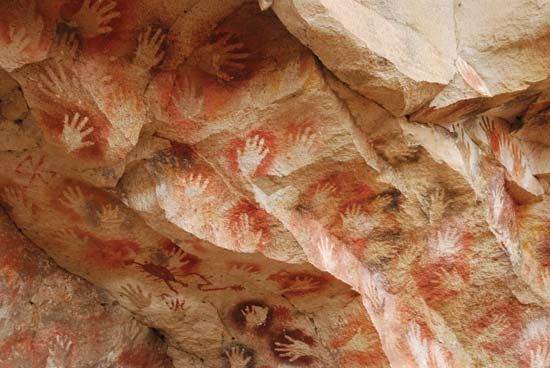
Cueva de las Manos is located in the province of Santa Cruz, Argentina. Specifically, the site is situated within the canyon of the Río Pinturas (Pinturas River), positioned between the towns of Perito Moreno and Bajo Caracoles.1
What is the main feature found inside the Cueva de las Manos?
The main feature of the Cueva de las Manos is its extensive collection of more than 2,000 stenciled handprints, which are rendered in black, white, red, yellow, and purple hues.1
While the site is named for these hand motifs—which were primarily created by blowing natural pigment through a reed to form a stencil—the cave also contains a variety of other significant artistic elements, including:
- Hunting scenes: Early depictions showing groups or individual hunters targeting guanacos.1
- Animal figures: Representations of rheas, cats, and motionless guanacos.1
- Geometric patterns: Various designs such as zigzags, circles, dots, and lines.1
These artworks, which date back over 9,000 years, are categorized into three distinct stylistic groups that reflect the evolution of the hunter-gatherer societies that inhabited the Río Pinturas canyon.1
How old are the paintings in Cueva de las Manos?
The paintings at Cueva de las Manos span a vast period of human history, with the earliest works dating back more than 9,000 years. Archaeological research and studies of the site’s stylistic groups provide the following timeline for the art:1
- Stylistic Group A (Río Pinturas I): Beginning c. 7,300 BCE, this period features hunting scenes depicting the pursuit of guanacos.1
- Stylistic Group B (Río Pinturas II–III): Beginning c. 5,000 BCE, this phase introduced figures of motionless guanacos and large concentrations of hand stencils. A later sub-group (B1) dating to c. 1330 BCE shows more schematic figures.1
- Stylistic Group C (Río Pinturas IV): Beginning c. 700 CE, this final period is characterized by bright red geometric patterns and silhouettes.1
While some sources estimate the age of the art to be between 13,000 and 9,500 years old, the established stylistic groupings indicate that the site was inhabited and decorated across several millennia, with the final period of activity occurring around 700 CE.21
Sources
- Cueva de las Manos — Encyclopædia Britannica
- Rock art - North and South America — Encyclopædia Britannica
Published on · 2 min read