Chaco Boreal
The Chaco Boreal was the central focus of the Chaco War (1932–1935), a devastating conflict driven by territorial disputes and economic interests. Following…
What was the significance of the Chaco Boreal in the Chaco War between Bolivia and Paraguay?
The Chaco Boreal was the central focus of the Chaco War (1932–1935), a devastating conflict driven by territorial disputes and economic interests. Following its loss of coastal territory in the War of the Pacific, Bolivia sought access to the Atlantic via the La Plata river system. The Chaco Boreal, a vast, arid lowland, stood in the way of this route, and Bolivia believed the region contained valuable oil reserves.1
The war resulted in significant loss of life, with approximately 100,000 casualties. Ultimately, Paraguay secured clear title to most of the disputed territory, though Bolivia was granted a corridor to the Paraguay River and a port. The conflict remains a somber reminder of the human cost of territorial disputes, which modern leaders have since attributed to the influence of foreign interests.12
How has the Chaco Boreal region been historically inhabited and used by indigenous peoples?
Historically, the indigenous peoples of the Chaco Boreal and the broader Gran Chaco region were primarily organized into small tribal units, often no larger than extended families, due to their subsistence as hunters, gatherers, and fishermen.3
Traditional Livelihood and Settlement
Settlement patterns were heavily dictated by the availability of fresh water, with groups often clustering along stream courses. In the drier western areas, tribes were forced to be highly mobile, shifting camps frequently as water holes dried up. Conversely, in the wetter eastern regions, the presence of fish runs and the practice of limited, productive cultivation allowed for larger, more stable settlements.34
These groups utilized the diverse resources of the Chaco forest, including edible pods, fruits, berries, and tubers. Because stone was absent, they fashioned implements from wood and bone, while the fibers of the carraguatas plant served various domestic needs.3
Cultural Evolution and the Horse
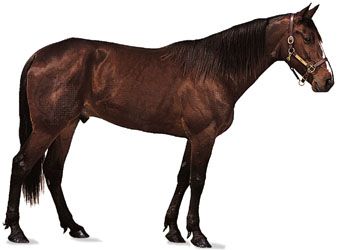
The introduction of the horse by the Spanish fundamentally transformed many Chaco societies. Tribes such as the Caduveo, Abipón, Mocoví, Toba, and Lengua transitioned into mounted, predatory nomads. This shift led to:45
- Increased Mobility: Bands grew in size, sometimes reaching 500 to 1,000 people.4
- Social Stratification: Warfare and the acquisition of wealth (livestock and slaves) intensified class distinctions, most notably among the Caduveo, who developed a hierarchy of nobles, warriors, serfs, and slaves.4
- Conflict: Territorial disputes became more frequent as groups competed for resources and raided both Spanish settlements and other indigenous tribes.4
While some groups maintained traditional foot-based lifestyles, such as the Wichí and Zamuco, many indigenous populations eventually faced severe decline due to European disease and colonial expansion.351
How has the Chaco Boreal influenced the cultural identity of the countries it spans?
The Chaco Boreal has significantly shaped the national identities of Paraguay, Bolivia, and Argentina primarily through the lens of conflict, territorial struggle, and the challenges of frontier development.
The Legacy of the Chaco War
For Paraguay and Bolivia, the Chaco Boreal is inextricably linked to the Chaco War (1932–1935). This conflict was a defining moment for both nations:
- Paraguay: The war is a central pillar of national history. By securing clear title to most of the region, Paraguay solidified its territorial integrity, though the war’s aftermath contributed to political instability, including the rise of authoritarian figures like Alfredo Stroessner.12
- Bolivia: The loss of the Chaco Boreal—following the earlier loss of its coastal territory in the War of the Pacific—deepened the nation’s sense of being landlocked. The economic devastation caused by the war fueled demands for social reform among the Bolivian masses, eventually influencing the country’s political trajectory.81
Frontier Identity and Development
Beyond the war, the region has functioned as a “frontier” in the cultural imagination of these countries. In Argentina, the Gran Chaco—of which the Boreal is a part—has historically been a target for state-promoted settlement and industrial exploitation, particularly through the quebracho logging industry and cattle ranching.9
While the region remains largely arid and sparsely populated, its status as a challenging, untamed landscape has influenced how these nations view their interior territories. Despite the historical significance of the region, Paraguay has notably avoided aggressive colonization policies, leaving much of the area as a vast, rugged expanse that contrasts with the more densely populated and developed regions of the country.10
What are the main differences between the Chaco Boreal and other parts of the Gran Chaco region?
The Gran Chaco is a vast alluvial plain divided into three primary regions based on the flow of the Pilcomayo and Bermejo rivers. The Chaco Boreal is distinguished from the Chaco Central and Chaco Austral by its specific geographic location north of the Pilcomayo River.11
Key differences include:
- Geographic Positioning: While the Gran Chaco as a whole spans Argentina, Paraguay, and Bolivia, the Chaco Boreal is the northernmost segment, occupying approximately 100,000 square miles.1113
- Water Scarcity: Although the entire Gran Chaco faces challenges with drainage and saline groundwater, the difficulty in locating and maintaining potable water supplies is often cited as being most severe in the Chaco Boreal.1
- Development and History: Unlike the southern portions of the Chaco, which have seen more intensive state-promoted settlement and industrial exploitation, the Chaco Boreal remains largely undeveloped. Paraguay, which acquired the majority of the region following the Chaco War, has historically avoided aggressive colonization policies, leaving it as a vast, rugged expanse.13
Sources
- Chaco Boreal — Encyclopædia Britannica
- Chaco War — Encyclopædia Britannica
- Gran Chaco - Early settlement — Encyclopædia Britannica
- South American nomad - Composite bands — Encyclopædia Britannica
- South American nomad - Hunters, gatherers, and fishermen of the Gran Chaco — Encyclopædia Britannica
- Gran Chaco - European colonization and economic activity — Encyclopædia Britannica
- South American Indian - The European conquest — Encyclopædia Britannica
- history of Paraguay - The Chaco War — Encyclopædia Britannica
- Argentina - The Gran Chaco — Encyclopædia Britannica
- Gran Chaco — Merriam-Webster
- Gran Chaco — Encyclopædia Britannica
- Paraguay — Encyclopædia Britannica
- Gran Chaco - Plant life — Encyclopædia Britannica
- Gran Chaco - Drainage — Encyclopædia Britannica
Published on · 4 min read