Curculio
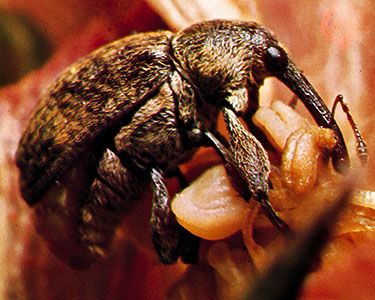
Curculio refers to a genus of stout-bodied weevils belonging to the family Curculionidae (order Coleoptera). These insects are widely recognized for their…
What is Curculio?
Curculio refers to a genus of stout-bodied weevils belonging to the family Curculionidae (order Coleoptera). These insects are widely recognized for their specialized feeding habits and distinct physical features.123
Key characteristics include:
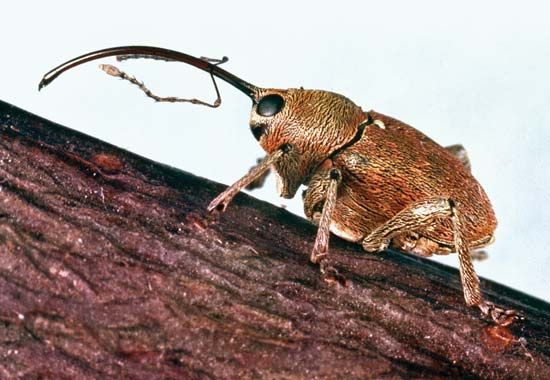
- Physical Structure: Many species, particularly those known as acorn and nut weevils, possess extremely long, slender snouts used for feeding and boring holes to deposit eggs.23
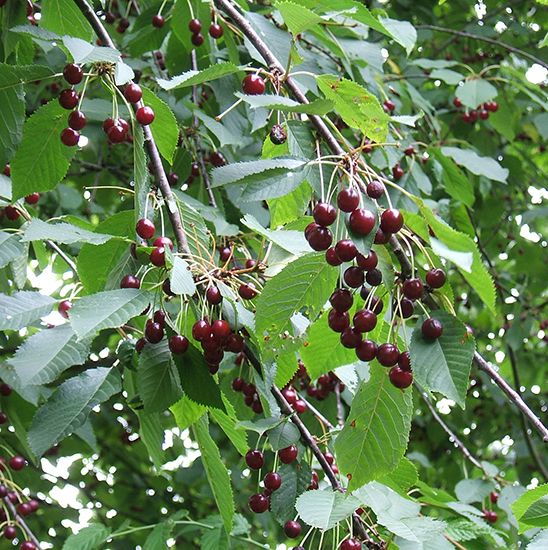
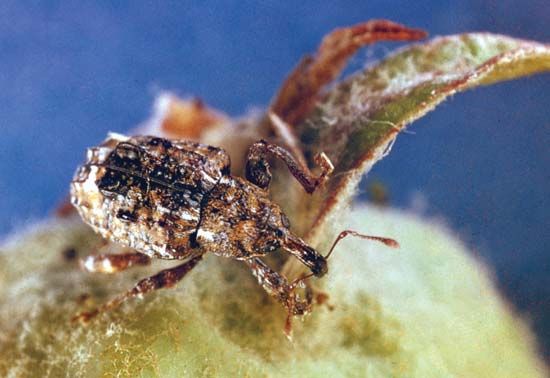
- Feeding Habits: While some species are notorious pests that attack fruits—such as the plum curculio, which targets apples, peaches, and plums—others, like Curculio proboscides, specifically feed on nuts such as chestnuts and acorns.21
- Life Cycle: Females typically bore holes into fruit or nuts to lay their eggs. After the larvae feed and develop inside the host, they emerge to pupate in the ground.21
The family Curculionidae is one of the largest in the insect world, comprising approximately 40,000 species with diverse adaptations.3
How do weevils use their snouts to lay eggs?
Weevils utilize their specialized snouts as a primary tool for both feeding and reproduction. The snout, which features mandibles at its tip, allows the female to bore or puncture holes into plant tissues, such as nuts or the skin of young fruits like apples, peaches, and plums.123
Once the female has successfully bored a hole into the host material, she deposits her eggs directly into the wound. In the case of the plum curculio, the female often makes an additional crescent-shaped cut near the puncture site after laying the egg. This evolutionary development of the snout is considered a key factor in the success of the Curculionidae family, as it enables them to access protected plant parts for their larvae to develop. After hatching, the larvae feed on the interior of the fruit or nut before eventually emerging to pupate in the soil.1352
What are the differences between acorn weevils and plum curculios?
While both the acorn weevil and the plum curculio belong to the family Curculionidae, they exhibit distinct preferences for their host plants and specific behaviors.
Acorn and Nut Weevils
Acorn and nut weevils (subfamily Curculioninae) are characterized by their exceptionally long, slender snouts, which in females can reach nearly twice the length of their bodies. These weevils are specialized to target specific nuts; for instance, Curculio proboscides focuses on large chestnuts, while C. rectus and C. baculi primarily infest acorns. They use their snouts to chew holes directly into the nut to deposit their eggs.1
Plum Curculio
The plum curculio is a significant agricultural pest known for attacking stone fruits and pome fruits, including apples, peaches, and plums. Unlike the nut-specific weevils, the plum curculio is recognized for a distinct reproductive behavior: after boring a hole to deposit an egg, the female typically creates a crescent-shaped cut in the fruit’s skin near the puncture site. This behavior is a hallmark of the species and serves to protect the developing larva.
We could dive deeper into the various methods used to manage these pests in agricultural settings.
Why are some weevils considered major agricultural pests?
Weevils (family Curculionidae) are considered major agricultural pests primarily because they are phytophagous, meaning they feed exclusively on plants. Their success as a family is largely attributed to the development of the snout, which allows them to bore into various plant parts—including seeds, fruits, stems, and roots—to feed and deposit their eggs.36
Several factors contribute to their status as destructive pests:
- Specialized Feeding: Larvae often feed internally on vital plant parts, such as the seeds or fibers within a cotton boll or the cambium of trees, which can destroy crops or kill the host plant entirely.376
- Protected Development: Because many species, such as the boll weevil, complete their larval and pupal development inside the plant tissue, they are often shielded from external threats, including the application of insecticides.7
- Economic Impact: Infestations can lead to significant yield losses. For example, the boll weevil historically caused crop losses of 30 to 50 percent in infested areas, necessitating intensive, long-term eradication programs.7
- Resilience: Some species have developed resistance to chemical controls, requiring the use of integrated pest management strategies, such as crop rotation, biological controls, and the development of resistant plant varieties.789
Sources
- acorn and nut weevil — Encyclopædia Britannica
- Curculio — Encyclopædia Britannica
- weevil — Encyclopædia Britannica
- curculionid — Merriam-Webster
- Plum curculio — Encyclopædia Britannica
- Boll weevil — Encyclopædia Britannica
- Coleoptera - As plant feeders — Encyclopædia Britannica
- Agricultural technology - Biological controls — Encyclopædia Britannica
- Agricultural technology - Chemical control of insects — Encyclopædia Britannica
Published on · 3 min read