Damsel Bug
A damsel bug is a predacious insect belonging to the family Nabidae within the order Heteroptera. These insects are beneficial in agricultural and natural…
What is damsel bug?
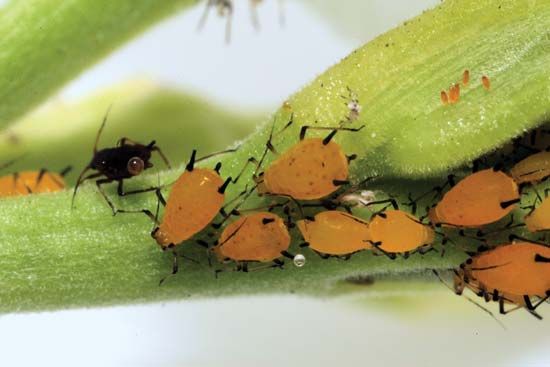
A damsel bug is a predacious insect belonging to the family Nabidae within the order Heteroptera. These insects are beneficial in agricultural and natural settings because they feed on various pests, including aphids, insect eggs, and small caterpillars.12
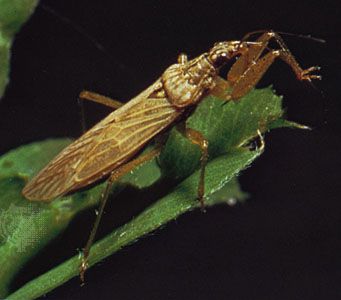
There are approximately 300 species of damsel bugs worldwide, with the genus Nabis being among the most common. They generally fall into two physical categories:1
- Smaller, yellow-brown individuals measuring about 8 mm (0.3 inch) in length with well-developed wings.1
- Larger, shiny black individuals that typically possess very short wings.1
A distinctive feature of the damsel bug is its forelegs, which are slightly thickened and equipped with a double row of spines. When the leg bends, these spines function as grasping organs to secure prey.1
Why are damsel bugs considered beneficial for gardens?
Damsel bugs (family Nabidae) are considered highly beneficial for gardens because they are effective predators that help manage populations of harmful garden pests.21
Their role as natural pest control is primarily due to their diet, which consists of:
- Aphids: Small sap-sucking insects that can damage plant health.21
- Caterpillars: Small larvae that often feed on foliage.21
- Insect eggs: By consuming eggs, they help prevent future pest infestations before they begin.1
Equipped with specialized forelegs featuring a double row of spines, these insects act as efficient hunters, using their legs as grasping organs to secure their prey. By naturally reducing the number of destructive insects, they serve as a valuable ally in maintaining a healthy, balanced garden ecosystem.12
How do the forelegs of a damsel bug help it hunt?
The forelegs of a damsel bug are specialized tools designed for efficient hunting. Each foreleg is slightly thickened and features a double row of spines along its surface.1
When the insect prepares to capture prey, these legs function as grasping organs: as the leg bends, the tibia and tarsus fold tightly against the thickened femur. The double row of spines acts like a trap, securing the victim and preventing it from slipping free while the bug feeds. This adaptation allows the damsel bug to effectively hold onto its prey, which typically includes aphids, small caterpillars, and insect eggs.314
What are some other types of predatory insects?
Many predatory insects serve as vital natural allies in gardens and ecosystems by controlling populations of harmful pests. Beyond the damsel bug, several other groups are well-known for their predatory habits:
- Ladybugs (Family Coccinellidae): Both the larvae and adults of these beetles are voracious predators. They are particularly effective at managing aphids, scale insects, and mites, often consuming thousands of pests during their lifespans.78
- Mantises (Order Mantodea): These large, typically slow-moving insects are ambush predators. They use specialized front legs with spined femurs to seize and hold prey in a viselike grip. They feed exclusively on living insects and are highly regarded for their ability to consume a wide variety of garden pests.9
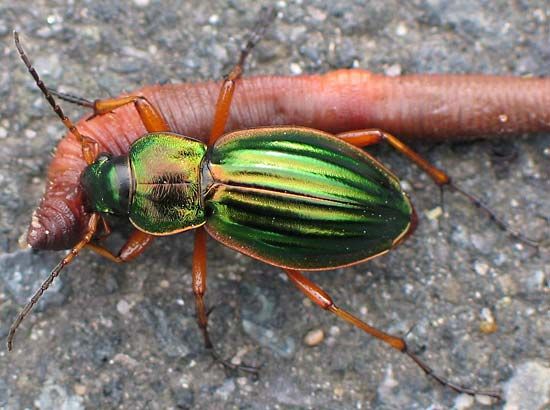
- Ground Beetles (Family Carabidae): These beetles are active hunters that emerge at night to search for prey, including caterpillars, snails, and worms. Many species are considered beneficial because they target insects that are harmful to humans and plants.710
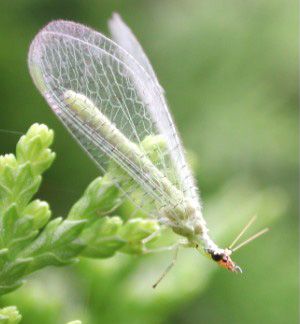
- Green Lacewings (Family Chrysopidae): The larvae of these insects, often called “aphidlions,” are aggressive predators. They possess prominent sucking mouthparts used to capture and drain the body fluids of aphids and other soft-bodied insects.11
- Assassin Bugs (Family Reduviidae): These insects are skilled predators that often use modified front legs to grasp their victims. They typically paralyze their prey quickly by injecting a salivary secretion, allowing them to feed on a wide range of insects, including caterpillars.5
Sources
- damsel bug — Encyclopædia Britannica
- damsel bug — Merriam-Webster
- arachnid - External features — Encyclopædia Britannica
- Nabidae — Merriam-Webster
- heteropteran - Food habits — Encyclopædia Britannica
- heteropteran - Legs — Encyclopædia Britannica
- Coleoptera - As predators — Encyclopædia Britannica
- mantis — Encyclopædia Britannica
- green lacewing — Encyclopædia Britannica
- ladybug — Encyclopædia Britannica
- ground beetle — Encyclopædia Britannica
Published on · 3 min read