Alexandrian Laurel
The term "Alexandrian laurel" refers to two distinct plants, which can lead to some confusion.
What is Alexandrian laurel?
The term “Alexandrian laurel” refers to two distinct plants, which can lead to some confusion.
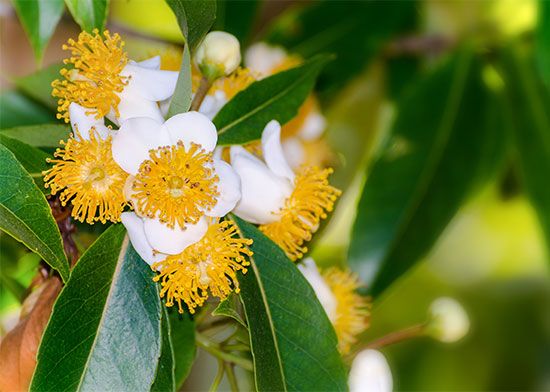
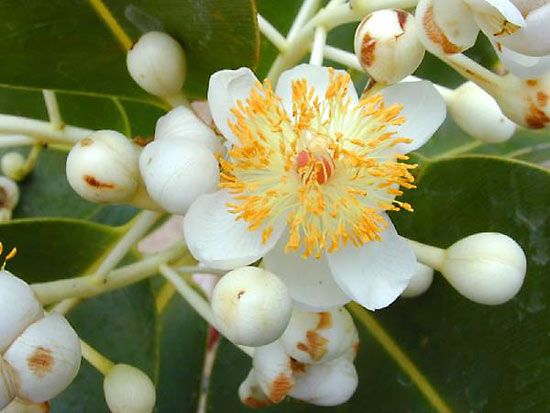
- Calophyllum inophyllum: This is an evergreen tree in the family Calophyllaceae, widely cultivated in tropical regions from East Africa to Australia. It is known for its salt-spray resistance, glossy leaves, and fragrant white flowers. Its seeds are used to produce a medicinal oil called dilo, and its wood is traditionally used for canoe construction.1
- Danaë racemosa: This is a leafless shrub native to the Levant, also commonly referred to by the name Alexandrian laurel.2
How is dilo oil used in traditional medicine?
What are the characteristics of a drupe fruit?
A drupe, commonly known as a stone fruit, is a type of simple fleshy fruit derived from a single ovary of an individual flower.34
The structure of a drupe is defined by its pericarp, which is divided into three distinct layers4:
- Exocarp: The outer layer, which typically forms a thin skin or peel.3
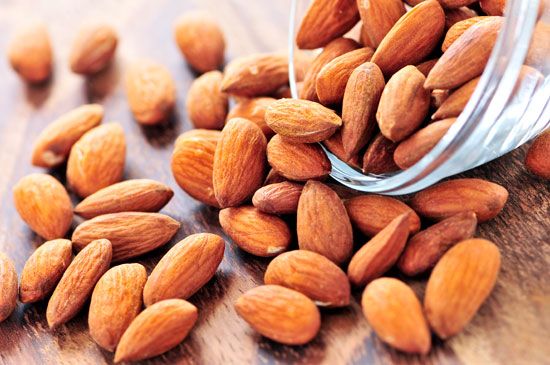
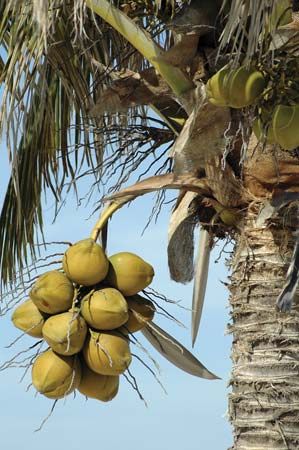
- Mesocarp: The middle layer, which is usually thick and fleshy, though it can occasionally be tough or fibrous (as seen in almonds or coconuts).3
- Endocarp: The inner layer, known as the pit or putamen. This layer is hard and stony and adheres to the seed.34
Drupes usually contain a single seed, though they may rarely contain two or three, in which case only one typically develops fully. Common examples include cherries, peaches, olives, mangoes, and walnuts. In some cases, such as raspberries and blackberries, many small drupes are clumped together to form an aggregate fruit, with each individual unit referred to as a druplet.34
Why are some plants resistant to salt spray?
Plants that thrive in environments exposed to salt spray or saline soils are known as halophytes. These plants have evolved specialized physiological and structural adaptations to manage high salinity levels that would be toxic to most other vegetation.5
Key mechanisms for salt resistance include:
- Salt Accumulation: Some species, such as glassworts, actively accumulate salts within their stems and leaves, effectively sequestering the minerals to prevent interference with cellular processes.5
- Structural Adaptations: Many salt-tolerant plants exhibit features common to xerophytes, such as waxy leaf coatings that help prevent water loss and protect against the dehydrating effects of salt spray.6
- Surface Characteristics: Certain plants, like the saltbush, possess leaves that appear scurfy or mealy, which can assist in managing salt exposure and moisture retention.7
These adaptations allow halophytes to survive in “physiologically dry” habitats—areas where salt concentration makes it difficult for plants to absorb water—such as salt marshes and saline soils.65
Sources
- Alexandrian laurel — Merriam-Webster
- Alexandrian laurel — Encyclopædia Britannica
- Drupe — Encyclopædia Britannica
- Angiosperm - Fruits — Encyclopædia Britannica
- Xerophyte — Encyclopædia Britannica
- Salt marsh — Encyclopædia Britannica
- saltbush — Encyclopædia Britannica
Published on · 2 min read